
Menstrual Cycle Activity Changes Tied to Estradiol Levels

Women’s health researchers are gaining new insights into how hormonal fluctuations may influence everyday movement. A recent study published in npj Women’s Health suggests that changes in estradiol levels throughout the menstrual cycle may be associated with shifts in daily physical activity, opening new possibilities for wearable-based reproductive health monitoring.
The menstrual cycle consists of several phases, including the follicular phase, ovulation, and the luteal phase. Estradiol levels remain low during the early follicular phase, rise steadily before ovulation, and peak shortly before the release of an egg.
To investigate whether these hormonal changes relate to physical activity, researchers monitored 26 healthy young women who were not using hormonal contraceptives. Participants wore a shank-mounted inertial measurement unit (IMU) that measured active energy expenditure over 28 days.
The investigators compared movement patterns with established hormone datasets from previous menstrual-cycle studies. Their analysis revealed a significant association between estradiol fluctuations and physical activity levels. Notably, increases in activity tended to occur about two days after estradiol levels rose, suggesting a possible delayed physiological response.
The strongest relationship observed in the study involved estradiol rather than progesterone. Researchers found that active energy expenditure generally increased after estradiol rose and decreased after hormone levels declined, particularly around ovulation.
Interestingly, activity levels were also higher during the early follicular phase than during the late follicular phase. This increase appeared to result from participants taking more steps rather than expending more energy per step.
These findings support growing interest in wearable technologies as tools for reproductive health research. Beyond measuring heart rate, temperature, and sleep patterns, wearable activity trackers may provide complementary information about hormonal changes throughout the menstrual cycle.
For healthcare professionals and nurses, such data could eventually contribute to more personalized approaches to women’s health management and menstrual-cycle assessment.
Understanding the relationship between hormones and physical activity has implications beyond menstrual health. Researchers suggest that improved knowledge of hormonal influences on energy expenditure could help clinicians better understand conditions associated with altered hormone profiles, including PCOS and menopause.
However, the authors emphasize several limitations. Hormone measurements and activity data came from different participant groups, making the findings observational at the cohort level rather than evidence of direct hormone tracking. The study also involved a relatively small population of healthy young women, limiting broader applicability.
Despite these limitations, the research highlights a promising direction for future studies. Larger investigations that simultaneously measure hormone levels and physical activity in the same participants could help determine whether wearable devices can serve as reliable tools for monitoring menstrual-cycle physiology and supporting reproductive healthcare.

 Oral Hormone Replacement Therapy Raises Blood Clot Risk
Key Points Oral hormone replacement therapy.
 Maternal Diet Fails to Reduce Infant Egg and Peanut Allergy
Key Points A large Australian randomized.
 Prenatal Paracetamol Exposure Linked to Smaller Ovaries
Key Points Prenatal paracetamol exposure was.
 AI in Women’s Health May Reinforce Gender Bias, Study Warns
Key Takeaways Researchers caution that AI.
 Early Menopause Risk Higher in Rural Women: New Study
Key Points Early menopause affects more.
 Parkinson’s Disease and Alzheimer’s Pathology in Women
Key Takeaways Women with Parkinson’s disease.
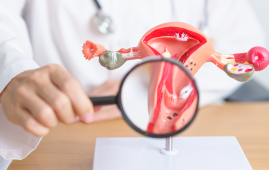 HPV Vaccination Supports Cervical Cancer Prevention Efforts
Key Points Summary HPV vaccination is.
 Women’s Healthcare Advances Through FemTech
Key Summary FemTech has grown from.
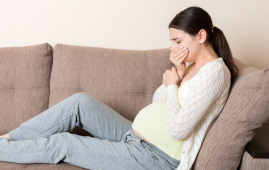 Pregnancy Nausea May Signal Anxiety and Depression Risk
Key Summary A prospective study published.
 Vitamin D3 in Pregnancy May Improve Child Memory
Key Takeaways High-dose prenatal vitamin D3.
Leave a Comment