Image by Freepik

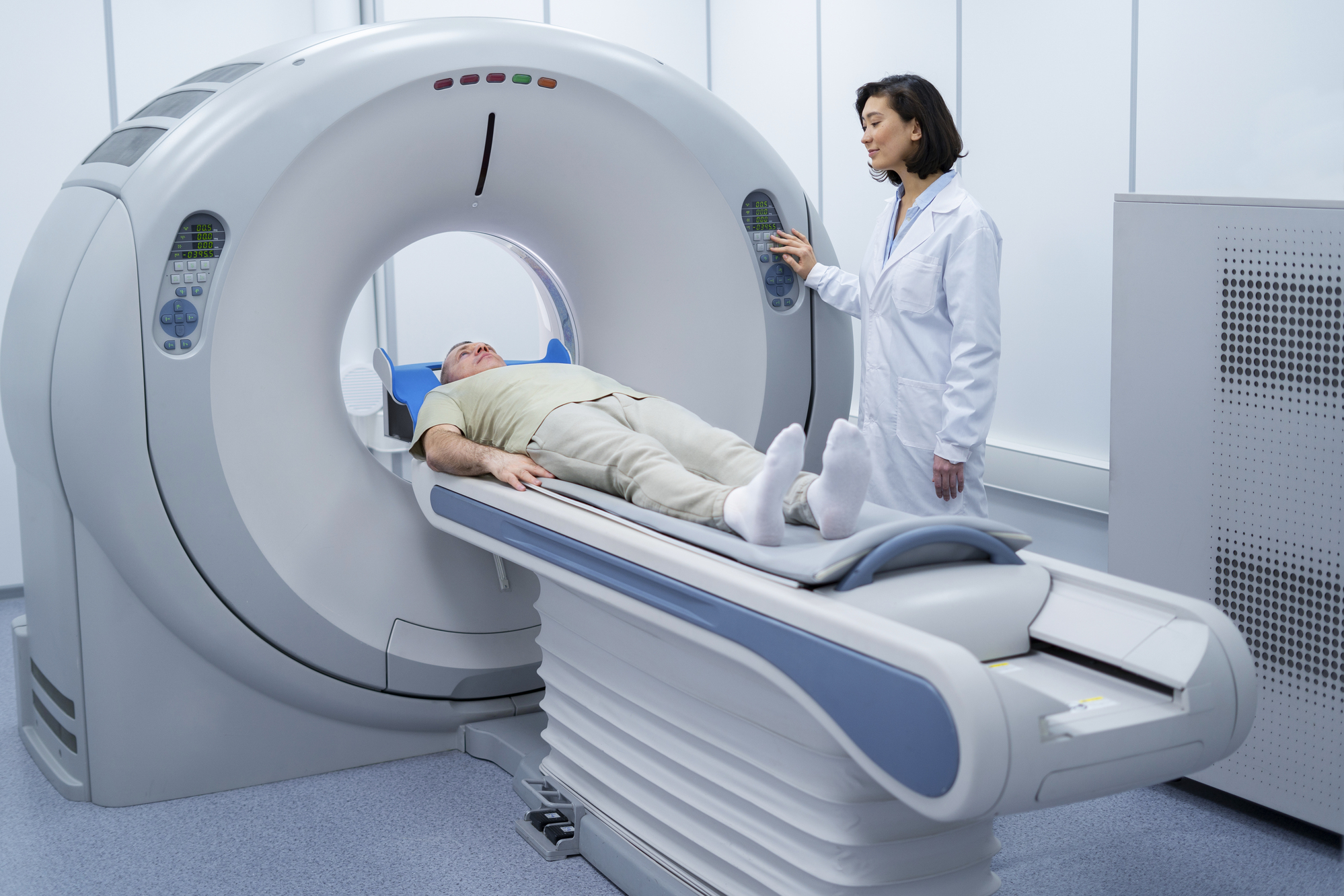
According to a recent Northwestern Medicine study published May 23 in JAMA, CT scans are better than genetics at predicting a middle-aged person’s risk for a heart illness, such as a heart attack.
“Finding the best way to identify who is at risk for developing heart disease can help determine what needs to be done to lower their risk,” said lead study author Dr. Sadiya Khan, an assistant professor of medicine and preventive medicine at Northwestern University Feinberg School of Medicine and a Northwestern Medicine cardiologist. “This finding can help doctors and patients in managing risk for heart disease, which is the leading cause of death in the U.S.”
Doctors currently utilize traditional risk-factor readings, such as blood pressure and cholesterol, to evaluate a person’s likelihood of getting coronary heart disease or artery blockages in the heart. However, some people may have a heart attack or other heart disease without any of the conventional risk indicators detecting it.
Because the risk of heart disease can be inherited, experts are hopeful that a person’s DNA will reveal who is most at risk, according to Khan. Polygenic risk scores, which are a compilation of more than 6 million regularly occurring genetic variations related with heart disease, were proposed as a potential breakthrough for customized medicine.
However, the new Northwestern study contrasts genetics and CT scans for coronary artery calcium and shows that the CT scan outperforms genetics in predicting risk for heart disease in middle age.
“These findings support recommendations to consider CT screening to calculate risk for heart disease in middle-aged patients when their degree of risk is uncertain or in the intermediate range,” Khan said.
The study drew on data from two cohort studies, one in the United States and one in Rotterdam, the Netherlands. To predict the likelihood of getting heart disease, the researchers analyzed data on risk factors for heart disease (smoking status, cholesterol levels, blood pressure), genetics, and CT scan data. The trial will be followed for up to 17 years.
The researchers investigated how employing CT scans or polygenic risk scores impacted the risk predicted for individuals based on conventional risk factors—blood pressure and cholesterol—and whether the inclusion of either of these markers (CT or genetics) placed them in a new risk category. Low risk signifies that a person has a less than 7.5% chance of having heart disease in the next ten years. Statins are advised if it is higher than 7.5%.
The use of genetic data had no effect on a person’s risk category based on traditional risk variables (blood pressure and cholesterol). Only when the CT scan was taken into account did half of the study participants fall into the high-risk category.
“The data from the CT scan can help identify individuals who may benefit from medications, such as statins, to reduce their risk of heart disease,” Khan said.

 Psychedelic-Assisted Psychotherapy: Music in Treatment
Key Takeaways Psychedelic-assisted psychotherapy combines psychedelic.
 Cardiovascular Frailty Links Heart Health and Aging
Key Points Cardiovascular frailty may connect.
 Laser Blended Vision: Simple Test Predicts Success
Key Points A simple phoropter-based test.
 Pink Noise Boosts Brain Waste Clearance During Sleep
Key Points Pink noise delivered during.
 Psilocybin Microdosing Research Raises Key Questions
Key points: Psilocybin microdosing research shows.
 Maternal Illness Linked to Epigenetic Fetal Brain Changes
Maternal illness during pregnancy may influence.
 SGLT2 Inhibitors Boost Cardiac Energy Through PANK1
Key Points SGLT2 inhibitors directly activate.
 Daraxonrasib Approved for Metastatic Pancreatic Cancer
Key Points FDA approved daraxonrasib (RASONQUE).
 Nicotine E-Cigarettes Help More Smokers Quit Than NRT
Key Points Nicotine e-cigarettes helped more.
 AI Identifies Key Gene Driving Hematopoietic Stem Cell Aging
Key Points AI analysis identified Pbx1.
Leave a Comment