
Study Reveals Macrophages' Role in Rheumatoid Arthritis Inflammation

There is ongoing debate over the precise genesis and precursor differentiation pathway of tissue macrophages. New research provides insight into blood progenitors of pathogenic tissue macrophages, which will be discussed at the 2024 congress of EULAR, the European Alliance of Associations for Rheumatology.
An autoimmune condition that causes inflammation and degeneration of joints is rheumatoid arthritis (RA). As of right now, there is no known cure, and while there are numerous therapies available, each person responds to them differently, indicating an unclear pathologic variety.
With data from five large-scale investigations, single-cell RNA sequencing has allowed for the deep analysis of myeloid cell subsets in both healthy and inflammatory tissues in RA, leading to the discovery of new harmful cell states and subsets. However, a rigorous investigation on subgroup overlap between studies and compartments—for example, blood vs synovial tissue—has not yet been conducted.
Researchers Sebastien Viatte said, “We wanted to map monocyte subsets and states across studies and compartments to identify blood monocyte precursors of inflammatory synovial macrophage subsets observed in people with RA.” Viatte was giving a presentation at the 2024 EULAR meeting in Vienna.
In light of this, the team decided to investigate whether human blood monocyte states of quiescence are already committed to a transcriptional pathway associated with inflammation in the synovium. First, single-cell RNA sequencing was performed on peripheral blood mononuclear cells (PBMC) that had been enriched for monocytes by negative selection and came from both healthy volunteers and RA patients with clinically well-controlled illness (quiescent PBMC). Based on the similarity of their expression scores, the researcher then mapped onto their template using documented myeloid cell subsets.
To produce a final taxonomy of monocyte states in healthy human blood, hierarchical approaches were utilized to combine similar clusters and produce a consensus map. Random forests were then employed to combine over-clustered data and find unique myeloid cell states. Lastly, PBMC from 19 RA patients with uncontrolled inflammation were thoroughly immunophenotyped, and inflammatory cell states with higher abundance in RA were detected. This provided experimental support at the protein level.
All in all, this effort produced a comprehensive reference atlas that includes 11 distinct monocyte states from various anatomical compartments that are pertinent to RA. For instance, it was possible to demonstrate that several clusters reflect the same subset of inflammatory synovial macrophages and that they have transcriptional similarities with a population of IL1B+ monocytes found in quiescent peripheral blood.
The results also showed that people with uncontrolled RA had expanded levels of four quiescent monocyte states that are present in the peripheral blood of both patients and healthy individuals. These most likely represent pathogenic tissue macrophage progenitors in the blood.
This work is significant because it reveals putative blood origins of pathogenic tissue macrophages and proposes a new taxonomy of monocyte cells relevant to RA, with 11 continuous cell states that actively change into each other across anatomical compartments.
For more information: OP0111 Quiescent human blood monocyte states are pre-committed to an inflammatory synovial transcriptional program, Scientific Abstracts (2024). DOI: 10.1136/annrheumdis-2024-eular.5134

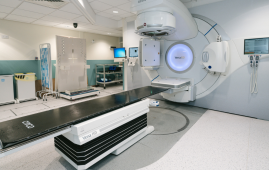 Low-Dose Radiation Therapy Shows Promise in Early Knee OA
Key Points Low-dose radiation therapy was.
 Oral Hormone Replacement Therapy Raises Blood Clot Risk
Key Points Oral hormone replacement therapy.
 GLP-1 Health Information: Quality, Completeness, & Engagement
Key Points A study assessed 128.
 DNA Damage Response May Drive Biological Aging
Key Points Chronic DNA damage response.
 Maternal Diet Fails to Reduce Infant Egg and Peanut Allergy
Key Points A large Australian randomized.
 Psychedelic-Assisted Psychotherapy: Music in Treatment
Key Takeaways Psychedelic-assisted psychotherapy combines psychedelic.
 Cardiovascular Frailty Links Heart Health and Aging
Key Points Cardiovascular frailty may connect.
 Laser Blended Vision: Simple Test Predicts Success
Key Points A simple phoropter-based test.
 Pink Noise Boosts Brain Waste Clearance During Sleep
Key Points Pink noise delivered during.
 Psilocybin Microdosing Research Raises Key Questions
Key points: Psilocybin microdosing research shows.
Leave a Comment