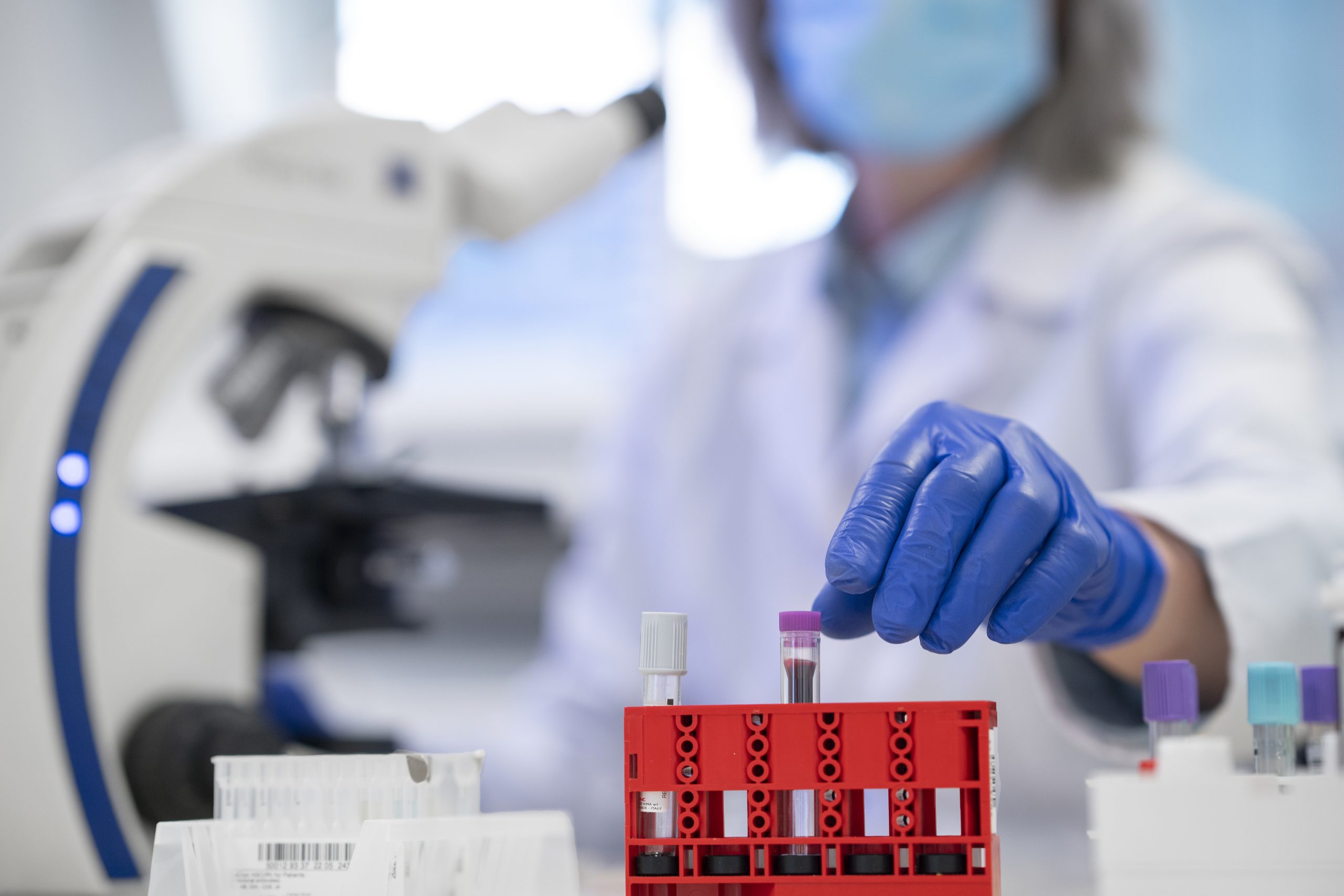
Image by Freepik

During antiretroviral therapy, HIV hides in reservoirs inside CD4+ T lymphocytes, white blood cells that play a role in activating the immune system against infection.
The existence of these viral havens explains why antiretroviral therapy must be continued for the duration of a patient’s life in order to prevent the virus from multiplying. According to the World Health Organization, more than 38 million people will be living with HIV by the end of 2021.
A study team led by Université de Montréal medical professor Petronela Ancuta and her Ph.D. student Debashree Chatterjee published today in the journal Cell Reports that a protein, the aryl hydrocarbon receptor, or AhR, plays a critical role in viral latency for the first time.
“In our study, we show that AhR, a transcription factor regulating the expression of certain genes, has an antiviral effect in patients’ CD4+ T cells,” said Ancuta. To help HIV remain silent in reservoir cells, the molecule has an effect on the expression of HIC1, another transcription factor known to inhibit HIV replication.
To demonstrate this, the researchers used the CRISPR/Cas9 technology to knock down AhR expression. They also utilized medicines that either stimulate or inhibit AhR activation. The scientists observed viral proliferation in CD4+ T cells of persons living with HIV and on antiretroviral therapy using these two techniques that neutralized AhR function.
‘Shock and kill,’ they say
As a result, the study’s initial authors, Ancuta and Chatterjee, and their colleagues propose utilizing medications that limit AhR activity as a “shock and kill” type of elimination technique. When HIV-infected cells are reactivated in the presence of AhR inhibitors (shock phase), they become apparent to the immune system and can be targeted and killed.
The AhR pathway is activated in certain types of malignant tumors by chemicals from the environment, such as cigarette smoke, toxins, or ligands produced from gut microbiota and cellular metabolism. The anti-inflammatory activity that results hinders an appropriate anti-tumor immune response.
“In clinical trials, drugs that block AhR are already used to fight cancer,” said Ancuta, a researcher at UdeM’s teaching hospital’s research center, the CRCHUM. “In further studies, we hope to test these inhibitors to see if we can eliminate the HIV or considerably reduce the size of viral reservoirs in people living with HIV who are on antiretroviral therapy.”
Ancuta will continue to collaborate with Carine Van Lint, a specialist in HIV transcription at Université libre de Bruxelles, and with McGill University medical professor Jean-Pierre Routy to validate this new therapeutic target in order to better understand the molecular mechanism underlying viral latency.
“Today, we have succeeded in showing in patients’ cells how this AhR pathway is activated,” said Ancuta. “With the help of state-of-the-art technology such as spatial transcriptomics, we want to go further and specifically characterize it in the tissue of people living with HIV. That would allow us to validate this therapeutic target in humans in the context of HIV.

 Long-Acting HIV Treatment May Help Drug-Resistant Cases
Key Takeaways A UCSF study found.
 Night Shift Work Alters Key Circadian Gene Expression
A recent study published in Frontiers.
 Tirzepatide Weight Loss: Fat Mass and Muscle Findings
Key points Tirzepatide was associated with.
 Coffee and Gut Microbiome: Brewing and Metabolic Effects
Key Points Coffee contains caffeine, chlorogenic.
 Low-Dose Radiation Therapy Shows Promise in Early Knee OA
Key Points Low-dose radiation therapy was.
 Oral Hormone Replacement Therapy Raises Blood Clot Risk
Key Points Oral hormone replacement therapy.
 GLP-1 Health Information: Quality, Completeness, & Engagement
Key Points A study assessed 128.
 DNA Damage Response May Drive Biological Aging
Key Points Chronic DNA damage response.
 Maternal Diet Fails to Reduce Infant Egg and Peanut Allergy
Key Points A large Australian randomized.
 Psychedelic-Assisted Psychotherapy: Music in Treatment
Key Takeaways Psychedelic-assisted psychotherapy combines psychedelic.
Leave a Comment