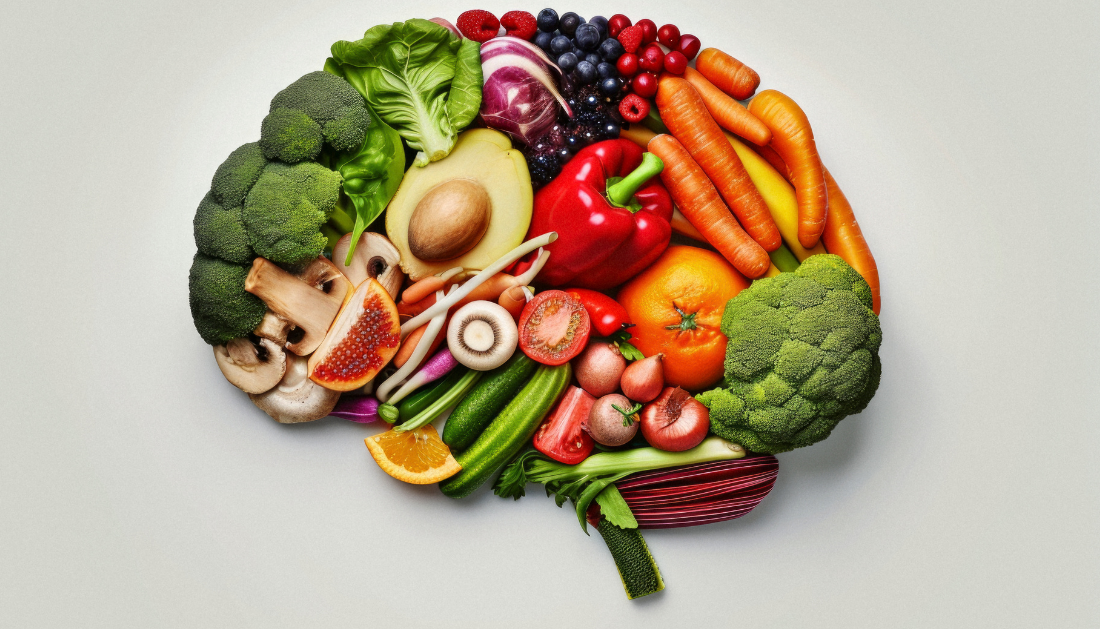
Recent study emphasizes the importance of balanced diets for enhanced brain health.

Diet and brain health are strongly correlated, according to a recent study. A balanced diet is essential for mental health, brain structure, and cognitive performance, according to a study that analyzed dietary information and health markers from 181,990 UK Biobank participants.
Rich, varied diets were significantly associated with increased grey matter and improved cognitive abilities. This study highlights the role that dietary decisions have in preserving brain function and recommends public policies that support easily available, healthful eating.
Important Details:
Increased brain grey matter, enhanced cognitive function, and greater mental health are all correlated with balanced diets.
The study analyzed a large amount of data on the eating patterns and health parameters of close to 182,000 people using AI and machine learning.
The results highlight how food decisions and their effects on brain health are influenced by genetic and socioeconomic factors.
University of Warwick as the source
The significant connection between dietary decisions and brain health has been emphasized by a new study.
The study, which was published in Nature, demonstrated the connection between improved mental health, cognitive function, and brain health and a balanced, healthful diet.
Researchers from the University of Warwick conducted the study, which provides insight into how our dietary choices have a substantial impact on both our physical and mental health.
Discover the latest insights and discussions on neurology from the Global Neurology Summit 2024.
New insights into the relationship between nutrition and overall well-being were revealed by analyzing the dietary choices of a large sample of 181,990 participants from the UK Biobank against a range of physical evaluations, including cognitive function, blood metabolic biomarkers, brain imaging, and genetics.
Each participant’s dietary choices were gathered using an online survey that the team divided into ten categories (such as alcohol, fruits, and meats). The researchers used machine learning, a subset of AI, to analyze the enormous dataset.
Compared to individuals with a less diverse diet, those with a balanced diet were connected to improved mental health, superior cognitive skills, and even higher levels of grey matter in the brain, which is linked to intelligence.
The study also emphasized the necessity of making small, incremental dietary changes, especially for people who are used to eating very tasty but low-nutrient meals. People who gradually cut back on their diet of fat and sugar may discover that they naturally lean toward better food options.
The authors hypothesize that genetic variables may also play a role in the relationship between nutrition and brain health, demonstrating how a person’s lifestyle choices and genetic predispositions interact to influence wellness.
The University of Warwick’s Professor Jianfeng Feng, the lead author, emphasized the need to form healthy eating habits early in life. He declared: “Developing a healthy balanced diet from an early age is crucial for healthy growth.
“To foster the development of a healthy balanced diet, both families and schools should offer a diverse range of nutritious meals and cultivate an environment that supports their physical and mental health.”
Speaking to the research’s wider ramifications, Prof. Feng stressed how important it is for public policy to support easily accessible and reasonably priced healthy food options.
“Since dietary choices can be influenced by socioeconomic status, it’s crucial to ensure that this does not hinder individuals from adopting a healthy balanced dietary profile,” he stated.
“Implementing affordable nutritious food policies is essential for governments to empower the general public to make informed and healthier dietary choices, thereby promoting overall public health.”
Wei Cheng, a co-auditor at Fudan University, continued: “Our findings underscore the associations between dietary patterns and brain health, urging for concerted efforts in promoting nutritional awareness and fostering healthier eating habits across diverse populations.”
“This exciting research further demonstrates that a poor diet detrimentally impacts not only our physical health but also our mental and brain health,” said Dr. Richard Pemberton, GP and Certified Lifestyle Physician at Hexagon Health, who was not involved in the study.
“This study supports the need for urgent government action to optimise health in our children, protecting future generations. We also hope this provides further evidence to motivate us all to make better lifestyle choices, to improve our health, and to reduce the risk of developing chronic disease.”
For more information: Associations of dietary patterns with brain health from behavioral, neuroimaging, biochemical and genetic analyses, Nature Mental Health, https://doi.org/10.1038/s44220-024-00226-0

 Brain-Computer Interface Uses EEG in Unresponsive Patients
Key findings at a glance Mind-controlled.
 Gamma Oscillations Restored in Alzheimer’s Disease Mice
Key takeaways Researchers restored parvalbumin (PV).
 Coffee Consumption Linked to Lower Recurrent VTE Risk
Key points at a glance Study.
 Body Roundness Index Linked to Higher Heart Attack Risk
Key findings at a glance Study.
 Maternal Diet Fails to Reduce Infant Egg and Peanut Allergy
Key Points A large Australian randomized.
 Visual Impairment Linked to Higher Dementia Risk
Key findings at a glance A.
 Long-Acting HIV Treatment May Help Drug-Resistant Cases
Key Takeaways A UCSF study found.
 Night Shift Work Alters Key Circadian Gene Expression
A recent study published in Frontiers.
 Tirzepatide Weight Loss: Fat Mass and Muscle Findings
Key points Tirzepatide was associated with.
 Coffee and Gut Microbiome: Brewing and Metabolic Effects
Key Points Coffee contains caffeine, chlorogenic.
Leave a Comment