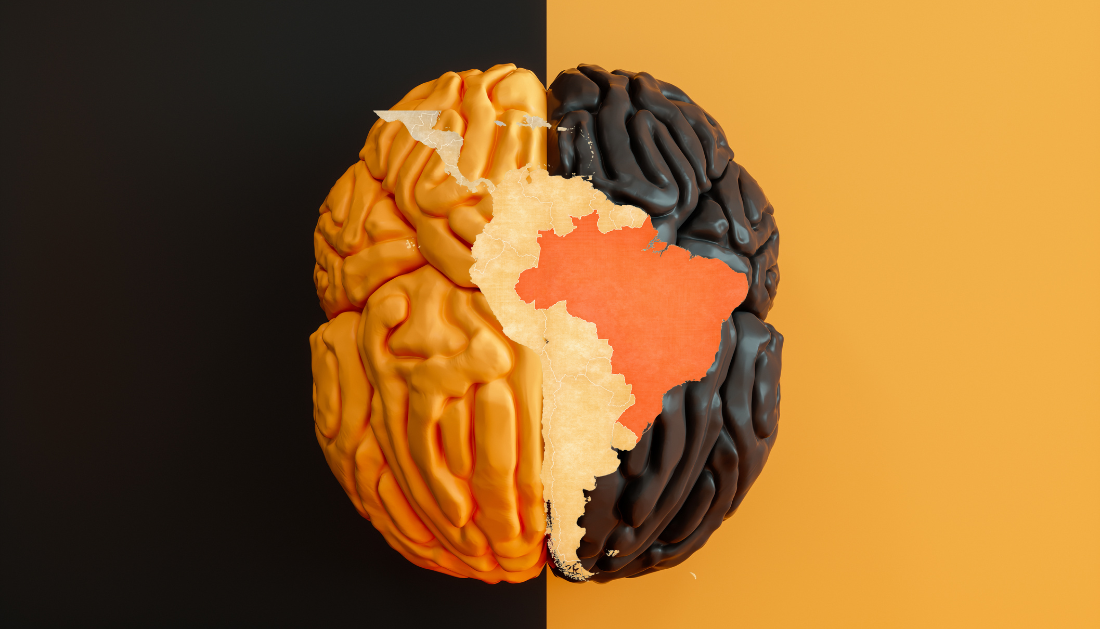
Brain Aging in Latin America Tied to Social, Health Gaps

A new study published in The Lancet Global Health reveals how social and health disparities shape brain aging in Latin America, highlighting education and mental health as key predictors of cognitive decline. The research, which examined 41,092 individuals from Brazil, Colombia, Chile, Uruguay, and Ecuador, found that Brazil exhibits unique risk factors compared to other nations.
Maintaining cognitive and functional abilities is crucial for healthy aging. However, brain aging is not solely influenced by genetics—it is also shaped by social, economic, and health-related factors.
Across Latin America, disparities in education, mental health, physical activity, and access to healthcare contribute to differences in brain health outcomes. While previous research suggested age and gender as primary risk factors, this study found that socioeconomic inequalities play a larger role.
“Our findings suggest that brain aging is deeply connected to social and health disparities rather than just demographic factors,” researchers noted.
Researchers used machine learning models to analyze risk factors for cognitive decline and functional ability.
Targeted interventions must address education gaps, mental health care, and regional inequalities to slow brain aging.
Governments should prioritize:
This study underscores the complex relationship between social factors and brain aging in Latin America. With Brazil facing unique risks, a one-size-fits-all approach won’t work. Instead, country-specific strategies are needed to promote long-term cognitive health across the region.
More Information: Da Ros, L.U., Borelli, W.V., Aguzzoli, C.S., De Bastiani, MA., Schilling, L.P., Santamaria-Garcia, H., Pascoal, T.A., Rosa-Neto, P., O Souza, D., da Costa, J.C., Ibañez, A., Suemoto, C.K., Zimmer, E.R. (2025) Social and health disparities associated with healthy brain ageing in Brazil and in other Latin American countries. The Lancet Global Health. doi: 10.1016/S2214-109X(24)00451-0.

 Epilepsy Drugs May Interact With Hormonal Contraceptives
Key points: Nearly one-third of people.
 Night Shift Work Alters Key Circadian Gene Expression
A recent study published in Frontiers.
 Tirzepatide Weight Loss: Fat Mass and Muscle Findings
Key points Tirzepatide was associated with.
 Dietary Polyphenol Intake Associated With Lower MCI Odds
Key Points Older adults without mild.
 Pink Noise Boosts Brain Waste Clearance During Sleep
Key Points Pink noise delivered during.
 Smoking and Loneliness Linked in Large European Study
Key points: A Europe-wide study of.
 Maternal Illness Linked to Epigenetic Fetal Brain Changes
Maternal illness during pregnancy may influence.
 Rett Syndrome: Carotid Body Linked to Breathing Dysfunction
Key Points Rett syndrome is associated.
 Alzheimer’s Disease Blood Test Receives FDA Clearance
Key Points FDA clears PrecivityAD2, a.
 Childhood Epilepsy Linked to Lower Educational Achievement
Key Takeaways Childhood epilepsy was associated.
Leave a Comment