
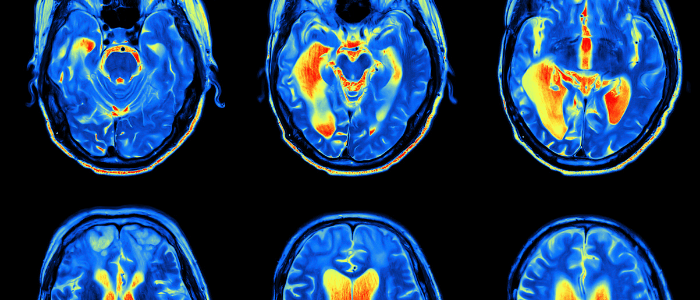
Researchers have observed that patients with consciousness disorders display patterns of heartbeats synchronized with their heartbeats, which vary depending on the patient’s level of consciousness.
This information may help in the diagnosis of consciousness disorders, as well as in understanding the nature of consciousness itself.
It is known that the brain’s response to heartbeats, known as the heart-evoked response (HER), correlates with perceptual, bodily and self-consciousness in healthy people. This study from scientists at the University of Liège (Belgium) and l’École Normale Supérieure – PSL (Paris, France), and published in the Journal of Neuroscience, aimed to test this hypothesis in less responsive individuals.
The researchers took heartbeat and electroencephalography (EEG) measurements from 68 patients with diagnosed consciousness disorders – 55 individuals were in a minimally conscious state and 13 were in an unresponsive, wakefulness state (formerly known as a persistent vegetative state).
EEG measurements were taken in time with heartbeats, as well as at random time points not associated with heartbeats. Consciousness scores derived from these measurements were then correlated to other consciousness metrics such as the Coma Recovery Scale-Revised (CRS-R) – a common test that measures patients’ behavioral responses to external stimuli such as colorful objects and loud noises – and glucose metabolism levels in certain parts of the brain, as measured by positron emission tomography, the gold standard for measuring levels of consciousness.
Consciousness scores derived from HER measurements were found to correlate more strongly with brain glucose metabolism levels than with random EEG measurements, and HER consciousness scores also correlated with glucose metabolism more strongly than CRS-R scores. This suggests that, while the CRS-R can only measure consciousness via overt behavioral responses, HER consciousness scores may correspond to a kind of underlying consciousness that does not necessarily manifest in behaviors.
Although positron emission tomography data are reliable for use in diagnosing consciousness disorders in individuals who cannot communicate, the technology is very expensive and scans can only be conducted at specialist centers. HER measurements, however, can be carried out inexpensively and appear to give a reliable indication of individuals’ levels of consciousness. These findings may therefore improve the diagnosis of consciousness disorders in individuals who cannot communicate.
Contributing study author Steven Laureys, Head of the GIGA Consciousness research unit and Centre du Cerveau2 at the University of Liège, stated:
“The next challenge is to translate our findings to clinical applications so that all patients with disorders of consciousness can benefit from better diagnosis using widely available bedside assessment technologies.”
Studies such as this also give us more information to answer the philosophical question: what is consciousness? These results may help provide evidence for the feeling of bodily self-consciousness that all humans innately feel, but that has so far evaded quantification.

more recommended stories
 Visual Impairment Linked to Higher Dementia Risk
Key findings at a glance A.
 Long-Acting HIV Treatment May Help Drug-Resistant Cases
Key Takeaways A UCSF study found.
 Night Shift Work Alters Key Circadian Gene Expression
A recent study published in Frontiers.
 Tirzepatide Weight Loss: Fat Mass and Muscle Findings
Key points Tirzepatide was associated with.
 Coffee and Gut Microbiome: Brewing and Metabolic Effects
Key Points Coffee contains caffeine, chlorogenic.
 Low-Dose Radiation Therapy Shows Promise in Early Knee OA
Key Points Low-dose radiation therapy was.
 Oral Hormone Replacement Therapy Raises Blood Clot Risk
Key Points Oral hormone replacement therapy.
 GLP-1 Health Information: Quality, Completeness, & Engagement
Key Points A study assessed 128.
 DNA Damage Response May Drive Biological Aging
Key Points Chronic DNA damage response.
 Maternal Diet Fails to Reduce Infant Egg and Peanut Allergy
Key Points A large Australian randomized.
Leave a Comment