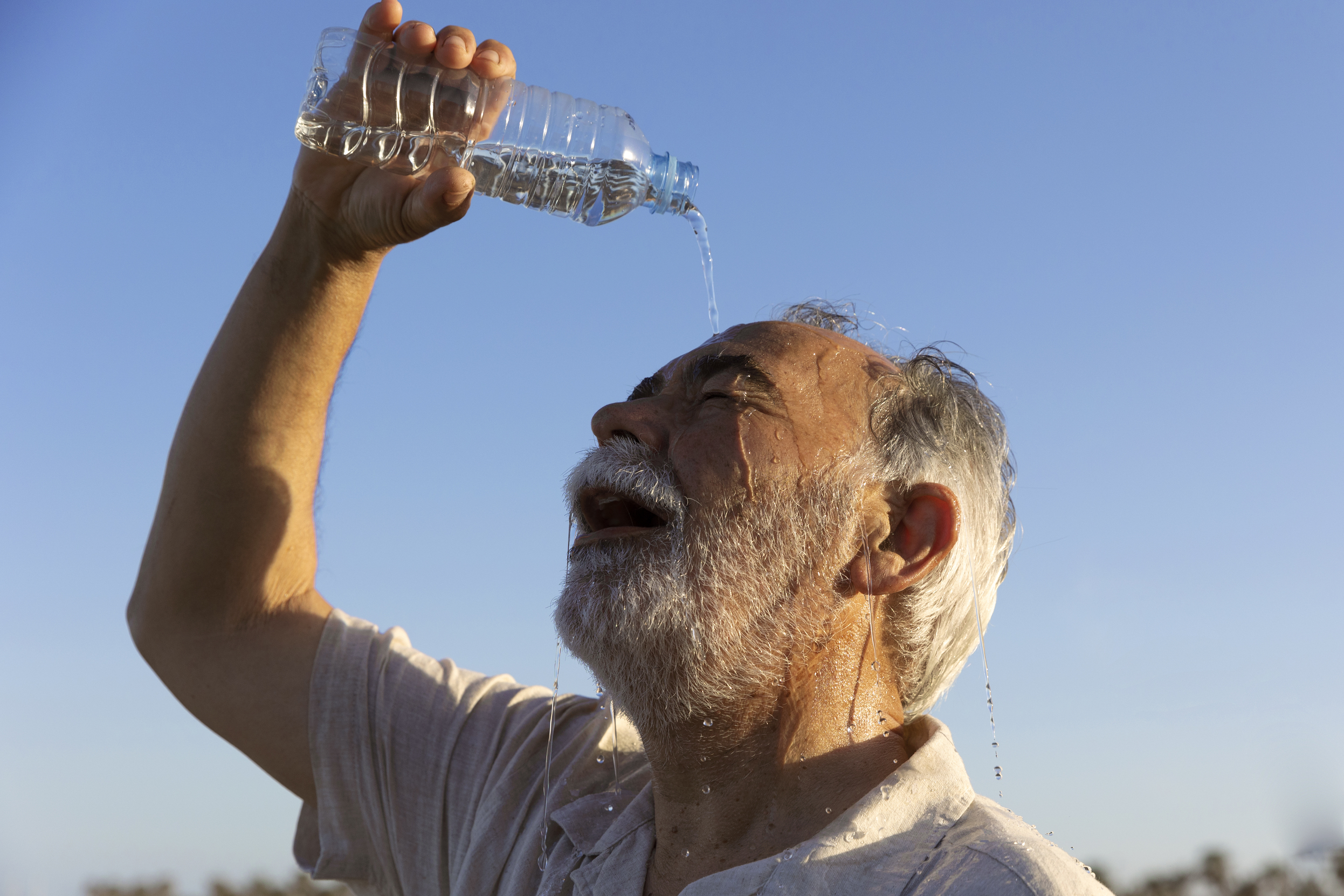
Image by Freepik

The neuronal pathways in the brain that govern thermoregulatory behaviors in rats have been identified by a research group from Nagoya University Graduate School of Medicine in Japan. Thermoregulatory behaviors are the behavioral processes that all animals use to regulate their body temperature in response to environmental changes. These findings, published in the Journal of Neuroscience, provide a deeper knowledge of the brain’s neuronal network and also indicate novel medicinal treatments for heatstroke prevention.
All species, including humans, use thermoregulatory activities to keep their body temperature within specified limits, even when the temperature of their surroundings varies greatly. Finding warmer or colder locations and altering body posture are two strategies. A turtle sunbathing in the sun is a more particular example, as is a person who utilizes air conditioning and dresses in a t-shirt and shorts in the summer.
A recent study from Nagoya University found that thermoregulatory behavior required a brain area known as the lateral parabrachial nucleus (LPB). Takaki Yahiro, a graduate student at Nagoya University, Lecturer Naoya Kataoka, and Professor Kazuhiro Nakamura were among others in the group. The same researchers discovered two distinct groups of neurons in the LPB that transport thermosensory information from skin thermoreceptors to different parts of the forebrain in a second study.
It was discovered that the two sets of neurons formed different thermosensory circuits. The first group sends warm and cold sensations to the median preoptic nucleus (MnPO). Meanwhile, the other group merely sends a cold feeling to the amygdala’s central nucleus (CeA).
The amygdala is located deep within the temporal lobe of the brain and is important for various aspects of emotional processing and behavior, such as anxiety, fear, and threat reaction. However, researchers were unaware that it was also involved in thermoregulatory behavior.
The researchers believe that the brain connections they discovered are responsible for unpleasant emotions that drive thermoregulatory activities. Their findings could help researchers better understand the causes of heatstroke and hypothermia. Some people’s brain pathways may not form negative feelings in response to hot and cold stimuli. As a result, they may not act even when the temperature changes around them.
To test this hypothesis, the researchers disrupted one of the LPB’s thermosensory channels in rats. When the MnPO route was blocked, rats did not avoid heat, causing some to endure abnormally high body temperatures. Blocking the passage to the CeA, on the other hand, eliminated the rat’s need to avoid cold.
A similar process may occur in humans, especially among older adults. According to Nakamura, “As people age, the generation of heat and cold discomfort through the LPB may be weakened due to the reduced temperature sensitivity of the skin’s thermosensors. This may make them prone to heatstroke.”
Therefore, older people should avoid basing their thermoregulatory behavior on subjective factors such as emotions. Instead, they should respond to objective changes in air temperature and humidity. For example, a person should move somewhere cooler based on thermometer and hygrometer readings in the summer, even when not experiencing discomfort.

 Gamma Oscillations Restored in Alzheimer’s Disease Mice
Key takeaways Researchers restored parvalbumin (PV).
 Coffee Consumption Linked to Lower Recurrent VTE Risk
Key points at a glance Study.
 Body Roundness Index Linked to Higher Heart Attack Risk
Key findings at a glance Study.
 Maternal Diet Fails to Reduce Infant Egg and Peanut Allergy
Key Points A large Australian randomized.
 Visual Impairment Linked to Higher Dementia Risk
Key findings at a glance A.
 Long-Acting HIV Treatment May Help Drug-Resistant Cases
Key Takeaways A UCSF study found.
 Night Shift Work Alters Key Circadian Gene Expression
A recent study published in Frontiers.
 Tirzepatide Weight Loss: Fat Mass and Muscle Findings
Key points Tirzepatide was associated with.
 Coffee and Gut Microbiome: Brewing and Metabolic Effects
Key Points Coffee contains caffeine, chlorogenic.
 Low-Dose Radiation Therapy Shows Promise in Early Knee OA
Key Points Low-dose radiation therapy was.
Leave a Comment