
The acute effect of cocoa and red-berries on visual acuity and cone-mediated dark adaptation in healthy eyes
Researchers have found that consuming pure cocoa can help improve vision in daylight.
In a recent study, a group of Spanish researchers found that consuming 2.5 grams of pure natural cocoa powder could improve “visual acuity” in healthy young adults in daylight.
“Visual acuity” usually refers to visual acuity. Visual acuity depends on optical and neurological factors.
The retina is a highly vascularized tissue with a high metabolic and oxygen demand responsible for human vision.
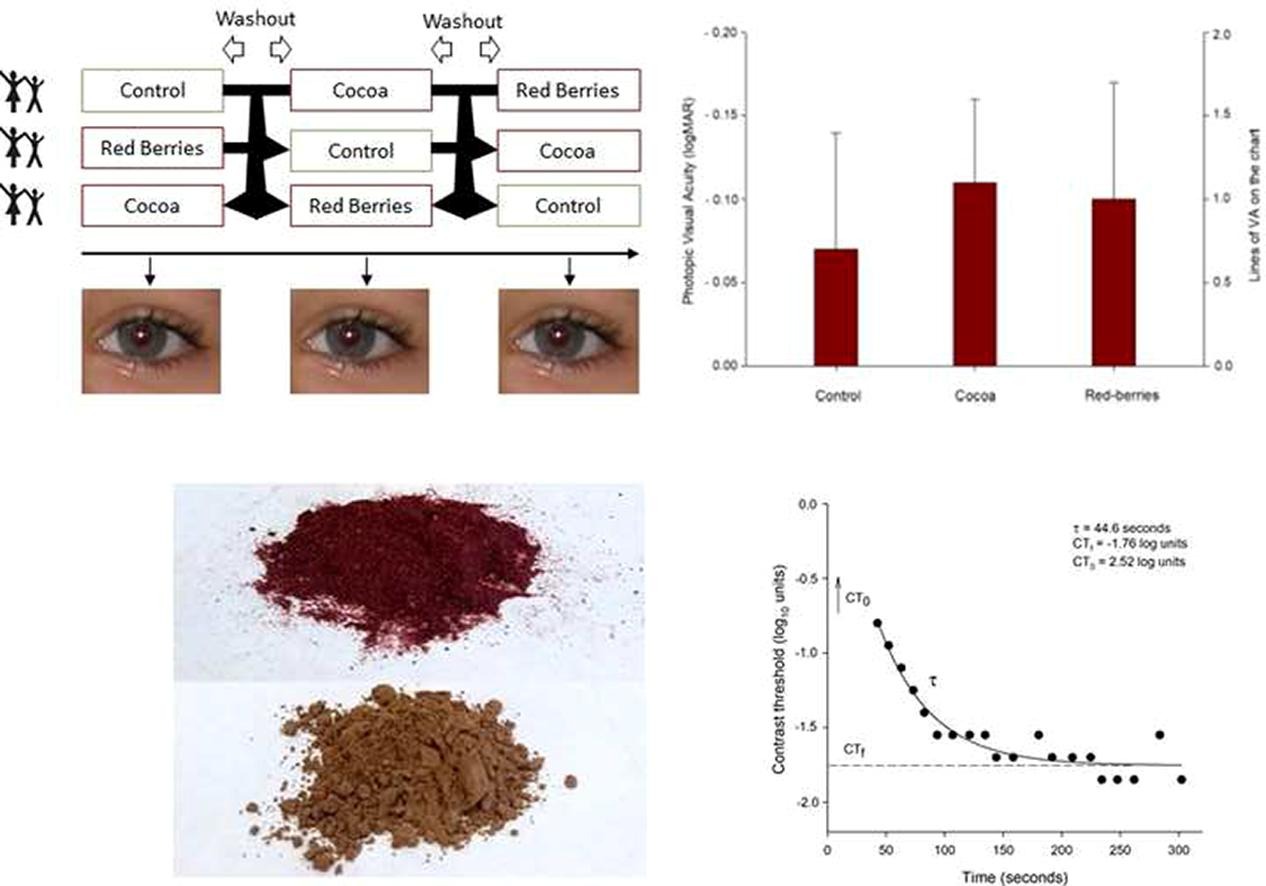
Considering that the polyphenolic flavanols and anthocyanins have been shown to be beneficial for endothelial function and cerebral blood-flow, an acute randomized and controlled crossover trial with two different sources of polyphenols, anthocyanins from its red-berries and flavanols from, was designed to better understand the effect of polyphenols on visual acuity (VA) and cone-mediated dark adaptation (DA).
Thirty-seven healthy subjects (22.1 ± 2.0 years old) participated in the acute intervention for three times with a washout period of two weeks in-between.
VA under photopic and low luminance (mesopic) conditions, DA or dynamic of recovery of contrast threshold (CT) following near-total photopigment bleach for 5 min, urine total polyphenols, theobromine and antioxidant power were measured in the three study-arms after 2-hours ingestion of the study-food.
3-hours postprandial urine showed higher levels of total polyphenols after ingestion of cocoa flavanols or red-berries anthocyanins in comparison with the vehicle-control and higher levels of theobromine only for the cocoa group.
There was an increase in photopic VA with cocoa flavanols that with red-berries anthocyanins did not reach statistical significance. Both, failed to improve mesopic VA and the cone time constant for contrast recovery and final CT of DA.
Conclusion
In healthy eyes, photopic VA improved significantly after cocoa flavanols ingestion and showed a non-significant trend to an improvement with red-berries anthocyanins. In parallel, TPC in 3-hours urine was increased for both cocoa and red-berry diets in relation to the control diet.
Theobromine levels in 3-hours urine were increased only for the cocoa diet. However, mesopic VA was not affected by any of the polyphenolic diets assayed in our conditions.
Contrast recovery time for cone-mediated DA and final CT were unaffected by cocoa flavanols or red-berries anthocyanin.
This work highlights the need for new research that delves deeper into the effect of flavanols, anthocyanins and methylxanthines on visual acuity and attention, both in acute and chronic interventions.

more recommended stories
 Visual Impairment Linked to Higher Dementia Risk
Key findings at a glance A.
 Long-Acting HIV Treatment May Help Drug-Resistant Cases
Key Takeaways A UCSF study found.
 Night Shift Work Alters Key Circadian Gene Expression
A recent study published in Frontiers.
 Tirzepatide Weight Loss: Fat Mass and Muscle Findings
Key points Tirzepatide was associated with.
 Coffee and Gut Microbiome: Brewing and Metabolic Effects
Key Points Coffee contains caffeine, chlorogenic.
 Low-Dose Radiation Therapy Shows Promise in Early Knee OA
Key Points Low-dose radiation therapy was.
 Oral Hormone Replacement Therapy Raises Blood Clot Risk
Key Points Oral hormone replacement therapy.
 GLP-1 Health Information: Quality, Completeness, & Engagement
Key Points A study assessed 128.
 DNA Damage Response May Drive Biological Aging
Key Points Chronic DNA damage response.
 Maternal Diet Fails to Reduce Infant Egg and Peanut Allergy
Key Points A large Australian randomized.
Leave a Comment