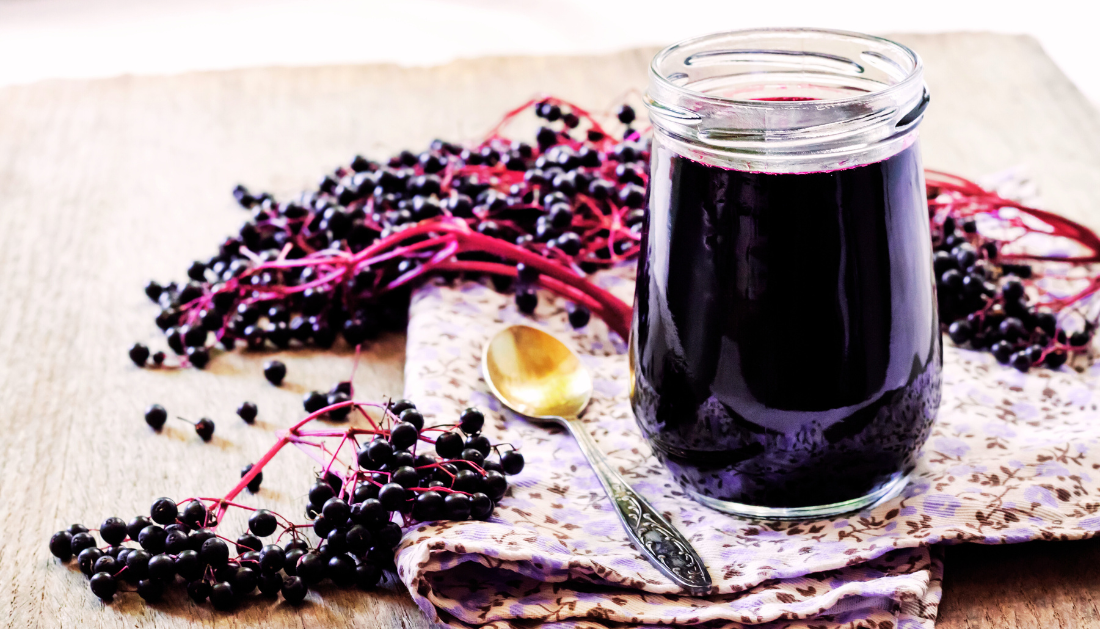
Elderberry Juice: A Boost for Gut Health and Weight Loss

A recent Nutrients study highlights elderberry juice’s (EBJ) potential in managing obesity, improving glucose tolerance, and enhancing gut microbiota. Packed with anthocyanins, EBJ offers a natural strategy for tackling obesity-related health challenges.
The randomized, placebo-controlled crossover study included 18 overweight participants, aged 22–75, consuming 355g/day of EBJ or placebo (PL) for one week. Compliance was monitored, and outcomes like blood glucose, fat oxidation, and microbiota composition were assessed.
EBJ contains cyanidin-3-glucoside anthocyanins, which positively influence gut microbiota and metabolic processes. The juice’s ability to modulate microbiota, enhance fat oxidation, and stabilize blood sugar offers a multi-faceted approach to metabolic health.
Incorporating elderberry juice into diets may provide a natural, effective way to:
However, longer-term studies are needed to validate these promising findings.
More Information: Teets C, Ghanem N, Ma G, et al. (2025) A One-Week Elderberry Juice Intervention Augments the Fecal Microbiota and Suggests Improvement in Glucose Tolerance and Fat Oxidation in a Randomized Controlled Trial. Nutrients. doi:https://doi.org/10.3390/nu16203555

 Long-Acting HIV Treatment May Help Drug-Resistant Cases
Key Takeaways A UCSF study found.
 Night Shift Work Alters Key Circadian Gene Expression
A recent study published in Frontiers.
 Tirzepatide Weight Loss: Fat Mass and Muscle Findings
Key points Tirzepatide was associated with.
 Coffee and Gut Microbiome: Brewing and Metabolic Effects
Key Points Coffee contains caffeine, chlorogenic.
 Low-Dose Radiation Therapy Shows Promise in Early Knee OA
Key Points Low-dose radiation therapy was.
 Oral Hormone Replacement Therapy Raises Blood Clot Risk
Key Points Oral hormone replacement therapy.
 GLP-1 Health Information: Quality, Completeness, & Engagement
Key Points A study assessed 128.
 DNA Damage Response May Drive Biological Aging
Key Points Chronic DNA damage response.
 Maternal Diet Fails to Reduce Infant Egg and Peanut Allergy
Key Points A large Australian randomized.
 Psychedelic-Assisted Psychotherapy: Music in Treatment
Key Takeaways Psychedelic-assisted psychotherapy combines psychedelic.
Leave a Comment