
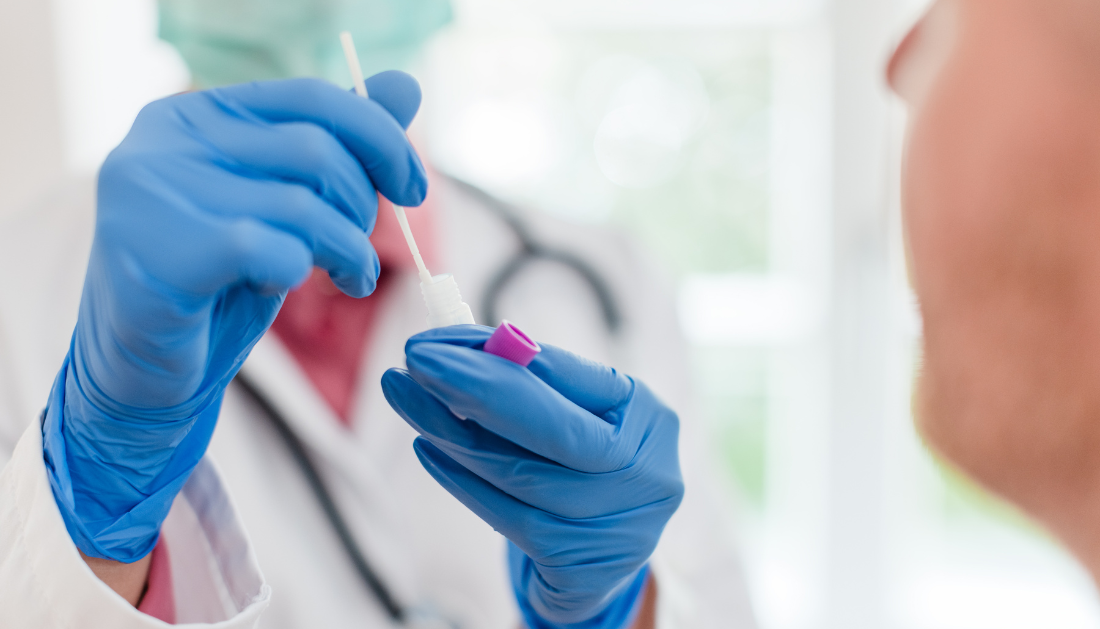
According to the research, inhaled monoclonal antibodies against SARS-CoV-2 greatly reduced COVID-19 disease in nonhuman primates, bringing another at-home therapy option for the flu and other respiratory ailments closer to reality.
The study, which was published in the journal Nature Communications, found that the amount of infectious SARS-CoV-2 in the lungs of rhesus macaques who breathed in aerosolized antibodies was up to 10,000 times lower than in control animals given control antibodies.
“The effect of the inhaled antibodies in our study was striking,” said the study’s senior author, Nancy Haigwood, Ph.D., a professor at Oregon Health & Science University’s Oregon National Primate Research Center. “The aerosolized monoclonal antibodies we evaluated were remarkably effective in protecting against lung damage. This gives me hope that one day we might be able to buy a monoclonal antibody nebulizer at the pharmacy to treat and even prevent respiratory illnesses like the flu.”
Monoclonal antibodies can aid in the elimination of invading pathogens such as viruses before the body’s normal immune responses, such as antibodies, have time to mature. Monoclonal antibodies were a major therapy option for persons infected with COVID-19 during much of the global pandemic. However, this medication has only been provided by intravenous infusion, which must be administered at a hospital or clinic.
Infusion medicines must first travel through the bloodstream before reaching the precise site of an infection – in the case of COVID-19, the lungs. Because of the delay, the medication is unable to combat a virus right away, and the infection may progress. Inhalable therapies can reach the lungs in seconds and begin working immediately.
Previous studies in mice have indicated that aerosolized monoclonal antibodies can protect against SARS-CoV-2, but this is the first time the medication has been evaluated in nonhuman primates with live virus.
The multidisciplinary research team worked with numerous groups to find and get human monoclonal antibodies that target various regions of the spike protein on the delta version of SARS-CoV-2, which was a dominant COVID-19 strain at the time. The monoclonal antibodies were created in collaboration with Aridis Pharmaceuticals and Zalgen Labs. They employed a nebulizer from medical equipment maker PARI to deliver those antibodies, which mixes liquid medication with air to form a tiny mist and is meant to create droplets that can reach the lower lungs.
The amount of SARS-CoV-2 RNA in the lungs and nasal swabs was promptly reduced 1,000-fold in nonhuman primates who received aerosolized SARS-CoV-2 monoclonal antibodies either before or after being exposed to the delta strain of the virus. Infectious virus was much lower in mice given an aerosolized human monoclonal aimed at respiratory syncytial virus, or RSV, than in control animals. The advantage was less obvious when mice just got the aerosol therapy after being exposed.
The study’s first author, Daniel Streblow, Ph.D., of the OHSU Vaccine & Gene Therapy Institute, and co-senior author Donald Forthal, M.D., of the University of California at Irvine, plan to see if they can improve the delivery of aerosolized monoclonal antibodies to nonhuman primates even further.

more recommended stories
 Gamma Oscillations Restored in Alzheimer’s Disease Mice
Key takeaways Researchers restored parvalbumin (PV).
 Coffee Consumption Linked to Lower Recurrent VTE Risk
Key points at a glance Study.
 Body Roundness Index Linked to Higher Heart Attack Risk
Key findings at a glance Study.
 Maternal Diet Fails to Reduce Infant Egg and Peanut Allergy
Key Points A large Australian randomized.
 Visual Impairment Linked to Higher Dementia Risk
Key findings at a glance A.
 Long-Acting HIV Treatment May Help Drug-Resistant Cases
Key Takeaways A UCSF study found.
 Night Shift Work Alters Key Circadian Gene Expression
A recent study published in Frontiers.
 Tirzepatide Weight Loss: Fat Mass and Muscle Findings
Key points Tirzepatide was associated with.
 Coffee and Gut Microbiome: Brewing and Metabolic Effects
Key Points Coffee contains caffeine, chlorogenic.
 Low-Dose Radiation Therapy Shows Promise in Early Knee OA
Key Points Low-dose radiation therapy was.
Leave a Comment