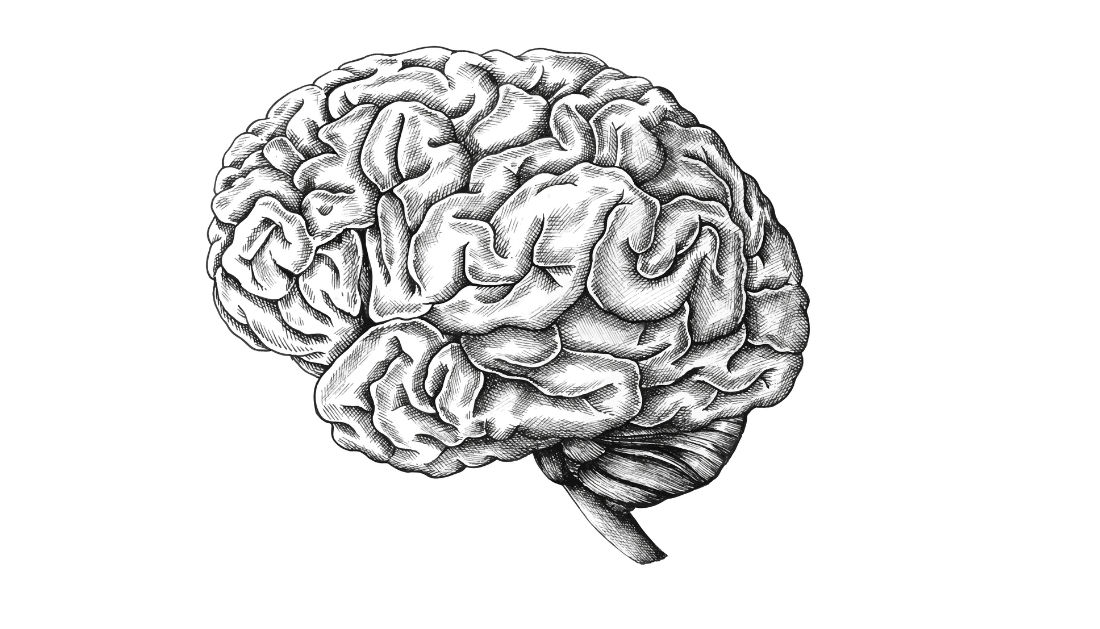
Study: Longitudinal stability of individual brain plasticity patterns in blindness

According to a study conducted by neuroscientists at Georgetown University, individuals who are born blind have a distinct pattern of connectivity in the area of their brain that receives and processes visual information in sighted people. It is said that each person has a distinct pattern in their primary visual cortex, similar to a fingerprint.
The results, which were published in PNAS on July 30, 2024, have significant ramifications for our knowledge of brain development and may facilitate the development of individualized rehabilitation and sight-restoring plans.
Researchers have known for many years that the visual cortex of individuals who are born blind reacts to a wide range of stimuli, such as touch, smell, sound localization, memory recall, and language response. But what has confused researchers is that there isn’t a single task that connects the key parts of the visual cortex activated by these activities. The new study provides a compelling explanation: variations in how each person’s brain organizes itself. It is led by Lenia Amaral, PhD, a postdoctoral researcher, and Ella Striem-Amit, PhD, the Edwin H. Richard and Elisabeth Richard von Matsch Assistant Professor of Neuroscience at Georgetown University’s School of Medicine.
“We don’t see this level of variation in the visual cortex connectivity among individuals who can see -; the connectivity of the visual cortex is usually fairly consistent. The connectivity pattern in people born blind is more different across people, like an individual fingerprint, and is stable over time -; so much so that the individual person can be identified from the connectivity pattern.”- Ella Striem-Amit, PhD, Edwin H. Richard and Elisabeth Richard von Matsch Assistant Professor, Neuroscience, School of Medicine, Georgetown University
A small sample of individuals who were born blind and had many functional MRI scans over a two-year period were included in the study. The researchers examined neuronal connections throughout the brain using a neuroimaging method.
“The visual cortex in people born blind showed remarkable stability in its connectivity patterns over time,” Amaral explained. “Our study found that these patterns did not change significantly based on the task at hand -; whether participants were localizing sounds, identifying shapes, or simply resting. Instead, the connectivity patterns were unique to each individual and remained stable over the two-year study period.”
Striem-Amit said these findings tell us how the brain develops. “Our findings suggest that experiences after birth shape the diverse ways our brains can develop, especially if growing up without sight. Brain plasticity in these cases frees the brain to develop, possibly even for different possible uses for the visual cortex among different people born blind,” Striem-Amit said.
According to the researchers, since each person has a unique brain connectivity pattern, it may be necessary to comprehend each person’s unique connectivity in order to better customize rehabilitation and sight-restoring treatments for blind people.
The study’s authors declare that they have no financial stakes in the outcome.

 Brain-Computer Interface Uses EEG in Unresponsive Patients
Key findings at a glance Mind-controlled.
 Gamma Oscillations Restored in Alzheimer’s Disease Mice
Key takeaways Researchers restored parvalbumin (PV).
 Coffee Consumption Linked to Lower Recurrent VTE Risk
Key points at a glance Study.
 Body Roundness Index Linked to Higher Heart Attack Risk
Key findings at a glance Study.
 Maternal Diet Fails to Reduce Infant Egg and Peanut Allergy
Key Points A large Australian randomized.
 Visual Impairment Linked to Higher Dementia Risk
Key findings at a glance A.
 Long-Acting HIV Treatment May Help Drug-Resistant Cases
Key Takeaways A UCSF study found.
 Night Shift Work Alters Key Circadian Gene Expression
A recent study published in Frontiers.
 Tirzepatide Weight Loss: Fat Mass and Muscle Findings
Key points Tirzepatide was associated with.
 Coffee and Gut Microbiome: Brewing and Metabolic Effects
Key Points Coffee contains caffeine, chlorogenic.
Leave a Comment