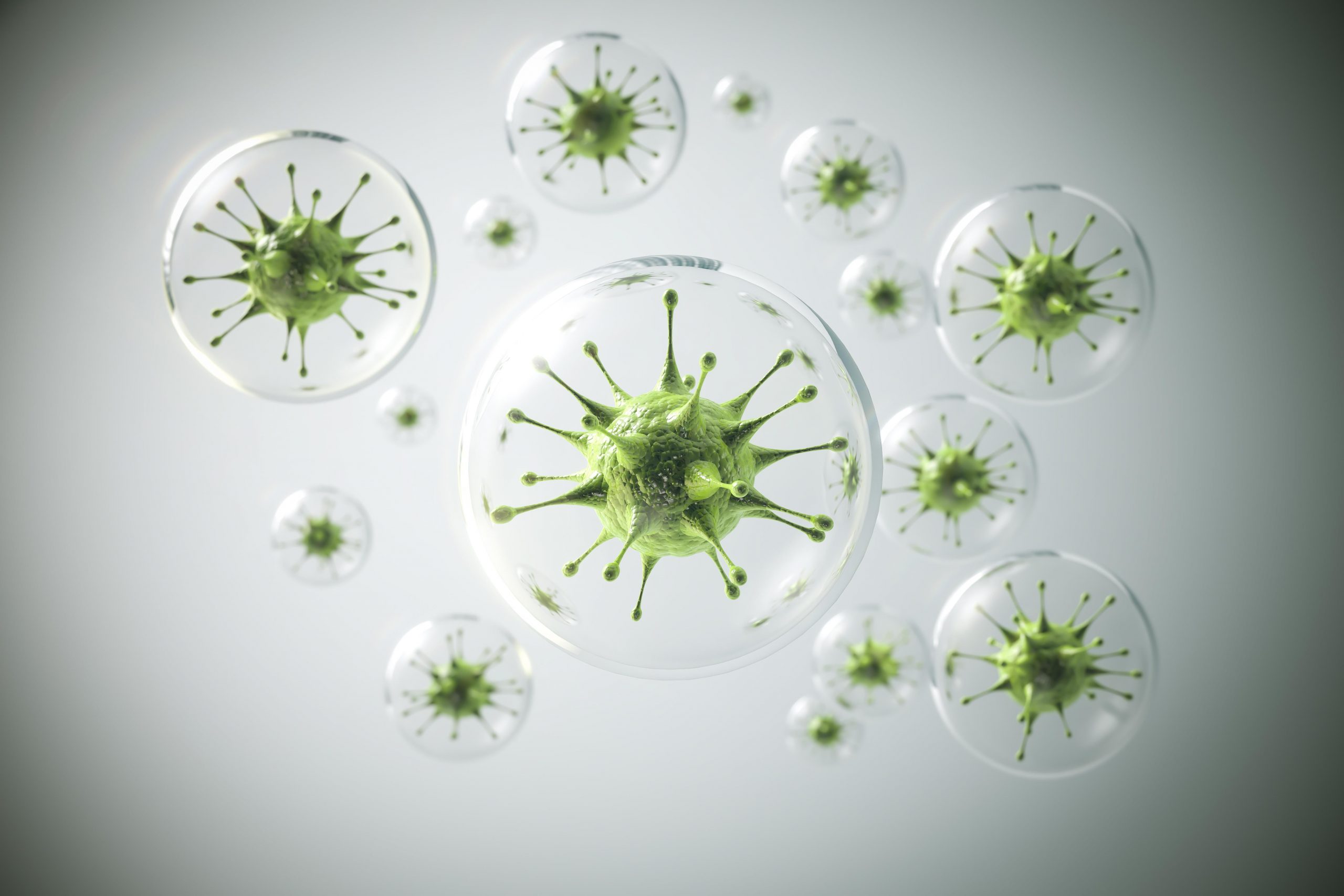
Image by Freepik

According to a new study published in PLOS ONE, the public supports the creation of bacteria-killing viruses as an alternative to antibiotics, and additional education efforts will make people substantially more likely to utilize the treatment.
Because of the antimicrobial resistance (AMR) epidemic, previously treatable diseases can now kill. This has rekindled interest in antibiotic alternatives, such as phage therapy, which was first investigated over a century ago but was eventually abandoned in many nations in favor of antibiotics. UK scientists have stated that the NHS has to quickly scale up the use of experimental therapies based on bacteria-killing viruses in order to address the growing issue of antibiotic resistance.
According to the study, public acceptance of phage therapy is already somewhat strong, and priming individuals to think about innovative medications and antibiotic resistance improves their likelihood of utilizing it significantly. Researchers believe that the tide of antibiotic resistance can be reduced with bacteria-killing viruses.
Phage therapy is more widely accepted when it is portrayed as a “natural bacterial predator” rather than using perceived harsh words like “kill” and “virus.”
Those who took part in the poll were well-versed in antibiotic resistance—92% had heard of it before the survey—but just 13% had heard of phage therapy before the survey. Their treatment preferences were influenced by the success and side effect rate, treatment length, and where the medicine was approved for usage.
Sophie McCammon, Kirils Makarovs, Susan Banducci, and Vicki Gold from the University of Exeter conducted the research.
Dr. Banducci said, “While phage therapy remains poorly understood by the UK public, our research suggests there is extensive acceptance and support for its development. Exposure to only very limited information about antibiotic resistance and alternative treatments to antibiotics greatly increases the public acceptance of phage therapy.”
Dr. Gold explained, “Those involved in the research wanted to know more about phage therapy and were inspired to research this topic after completing our survey. Exposure to only a very limited amount of information about phage therapy significantly increases acceptance.”
A session with experts was organized, as well as a review of phage research. They also conducted a poll to analyze the public’s acceptance, opinions, and preferences regarding phage therapy in the United Kingdom. The survey, which was distributed in December 2021, was completed by 787 persons.
One group was given two scenarios: the first was a small infection, and the second had an infection that did not react well to antibiotics for three months. The group ranked the specified attributes in each scenario depending on their value in selecting whether or not to accept a therapy.
Participants were randomly allocated one of four phage therapy descriptions and subsequently assessed to determine their acceptance of the treatment. Phage treatment was well received across the board. However, employing perceived harsh words, such as “kill” and “virus,” to describe phage therapy resulted in lower acceptance rates than alternate explanations. Furthermore, those who had recently been exposed to information concerning antibiotic resistance and alternative treatments were more likely to accept phage therapy.
213 of the 787 poll respondents left written replies expressing their views on the possibilities of phage therapy. 38% expressed a specific interest in the development of phage therapy, while 17% supported the research of antibiotic alternatives in general.
Sophie McCammon noted, “An advantage of phage therapy is often the minimal side effects. Emphasizing this through education and marketing may increase public acceptance of phage therapy.
“Even though phage therapy may be some years away from routine clinical use in the UK, increasing pressures from the AMR crisis require evaluation of the UK public’s acceptance of alternative treatments.
“The public desire for increased education is apparent. Expanding schemes which are interactively involving children in phage research not only generates excitement for the therapy now, but also promotes awareness in the generation likely to be treated with antibiotic alternatives.”

 Gamma Oscillations Restored in Alzheimer’s Disease Mice
Key takeaways Researchers restored parvalbumin (PV).
 Coffee Consumption Linked to Lower Recurrent VTE Risk
Key points at a glance Study.
 Body Roundness Index Linked to Higher Heart Attack Risk
Key findings at a glance Study.
 Maternal Diet Fails to Reduce Infant Egg and Peanut Allergy
Key Points A large Australian randomized.
 Visual Impairment Linked to Higher Dementia Risk
Key findings at a glance A.
 Long-Acting HIV Treatment May Help Drug-Resistant Cases
Key Takeaways A UCSF study found.
 Night Shift Work Alters Key Circadian Gene Expression
A recent study published in Frontiers.
 Tirzepatide Weight Loss: Fat Mass and Muscle Findings
Key points Tirzepatide was associated with.
 Coffee and Gut Microbiome: Brewing and Metabolic Effects
Key Points Coffee contains caffeine, chlorogenic.
 Low-Dose Radiation Therapy Shows Promise in Early Knee OA
Key Points Low-dose radiation therapy was.
Leave a Comment