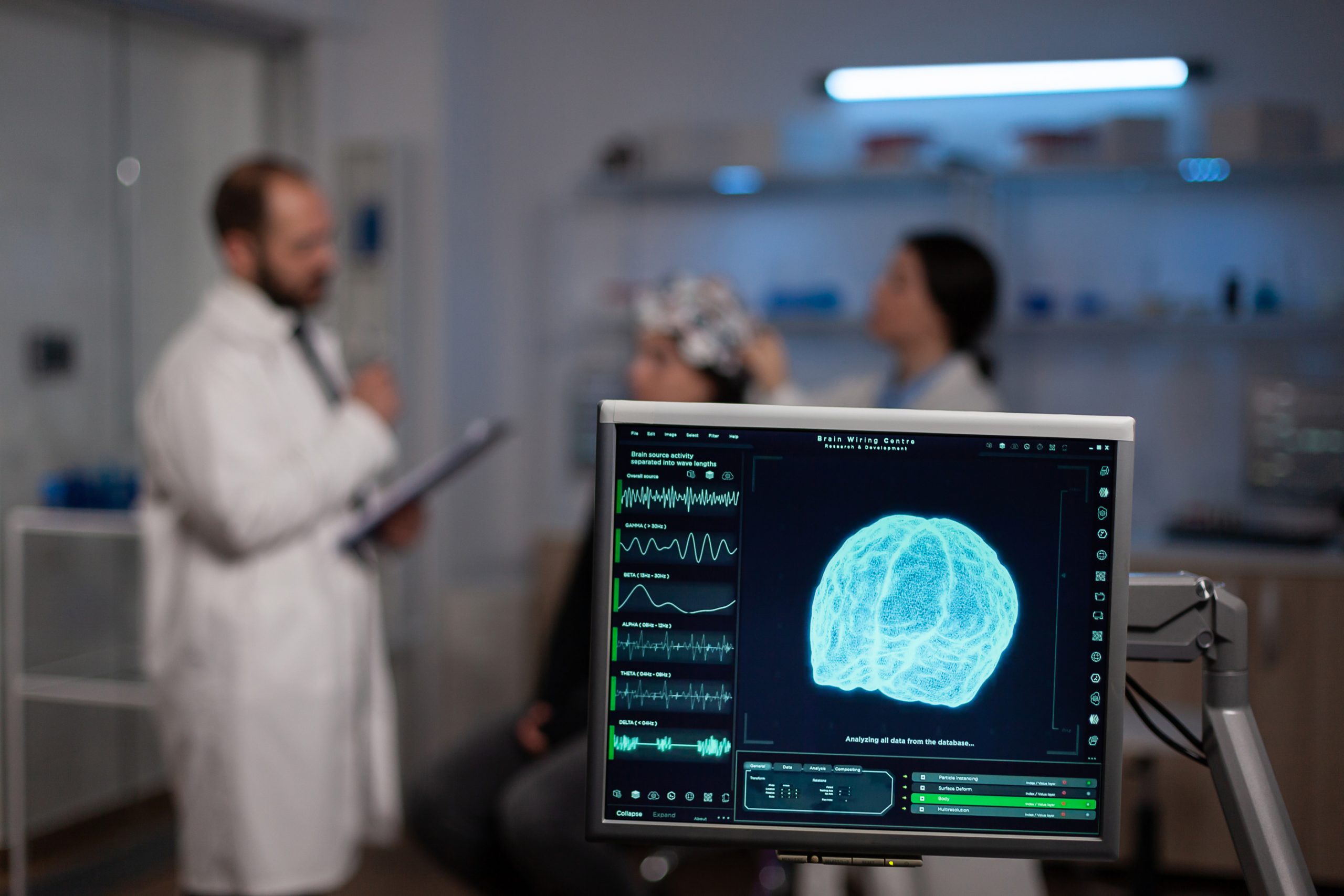
Image by DCStudio on Freepik

Stanford University and Harvard Medical School researchers have developed tiny and ultra-flexible mesh neural probes for brain research that can be inserted into sub-100-micrometer-scale blood arteries in mouse brains.
The researchers demonstrate the potential of their device by measuring field potentials and single-unit spikes in the cortex and olfactory bulb of a rat without open skull surgery or damaging the brain or vasculature in their paper, “Ultraflexible endovascular probes for brain recording through micrometer-scale vasculature,” published in Science. The team’s work is discussed in a Perspective essay in the same journal edition.
The use of ultra-flexible endovascular probes that can be precisely injected into microscopic blood arteries without the need for invasive surgery distinguishes this technology. By modifying the mechanical properties of the probe, the probes can access brain regions that are difficult to reach safely with existing procedures, accomplishing selective implantation in different brain branches.
The researchers developed polymer-based ultra-flexible micro-endovascular (MEV) probes that can be loaded into and injected from flexible microcatheters, which were inspired by minimally invasive catheter-based injection methods.
A saline flow through the microcatheter then permits the probe to be carried farther into the vasculature. After that, the microcatheter is retracted, leaving the MEV probes in place. Traditional intracranial depth electrodes for neuroelectronic interfaces necessitate invasive surgery and have the potential to cause neural network injury after installation.
The probes displayed long-term stability with minimal immune response in histology tests. The probes were unable to deform or pierce the vessel walls, causing minimal disruption to the blood-brain barrier and creating no significant reduction in blood flow or neurologic impairments.
Anesthetized rats’ brain and olfactory bulb were successfully recorded in vivo electrophysiological. The probes were implanted and operated in a branch-selective manner, revealing distinct firing properties in neurological illness models. Single-cell resolution across vessel walls was demonstrated using single-unit activity recording.
The cerebrovasculature includes everything from massive cortical vessels to microvasculature and capillary beds inside the cortex. 5% of arteries in the rat brain have a diameter greater than 100 m, which the study MEV probes may target.
The size bending stiffness of the probes could be reduced further to target smaller diameter vessels. Endovascular probes for people and sheep now available can only target vessels larger than 2.4 mm in diameter.
The study authors conclude that the “…platform technology could be extended to the detection and treatment of many neurological diseases as a research tool and could serve as the foundation for clinical translation of minimally invasive neuroelectronic interfaces.”

 Long-Acting HIV Treatment May Help Drug-Resistant Cases
Key Takeaways A UCSF study found.
 Night Shift Work Alters Key Circadian Gene Expression
A recent study published in Frontiers.
 Tirzepatide Weight Loss: Fat Mass and Muscle Findings
Key points Tirzepatide was associated with.
 Coffee and Gut Microbiome: Brewing and Metabolic Effects
Key Points Coffee contains caffeine, chlorogenic.
 Low-Dose Radiation Therapy Shows Promise in Early Knee OA
Key Points Low-dose radiation therapy was.
 Oral Hormone Replacement Therapy Raises Blood Clot Risk
Key Points Oral hormone replacement therapy.
 GLP-1 Health Information: Quality, Completeness, & Engagement
Key Points A study assessed 128.
 DNA Damage Response May Drive Biological Aging
Key Points Chronic DNA damage response.
 Maternal Diet Fails to Reduce Infant Egg and Peanut Allergy
Key Points A large Australian randomized.
 Psychedelic-Assisted Psychotherapy: Music in Treatment
Key Takeaways Psychedelic-assisted psychotherapy combines psychedelic.
Leave a Comment