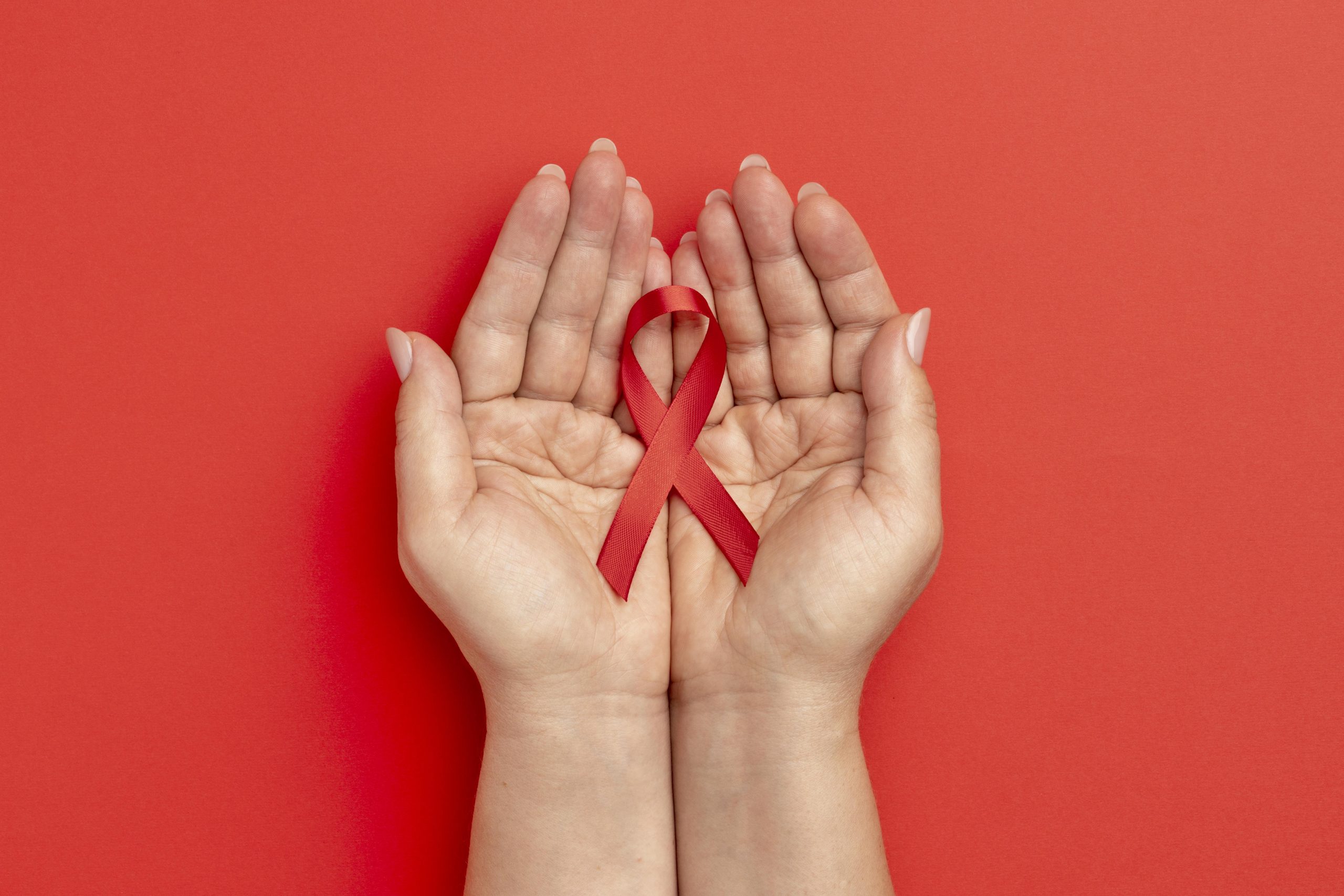
Image by Freepik

A team of infectious diseases experts from Global Health Impact Group, collaborating with a Swiss doctor, discovered evidence indicating patients infected with the HIV virus who have a viral load of less than 1,000 cpy/mL had a minimal risk of transferring the disease to a sexual partner.
Laura N. Broyles, Robert Luo, Debi Boeras, and Lara Vojnov evaluated multiple research aiming to learn more about the chance of transferring HIV to a sexual partner during a 12-year period in their study, which was published in The Lancet. In the same journal issue, Philip Smith, Linda-Gail Bekker, and Ntobeko A B Ntusi published a Comment piece describing the impact of the Swiss National AIDS Commission’s controversial claim in 2008 that HIV patients adhering to standard antiretroviral therapy do not pose a risk of disease transmission—they also discuss the team’s work on this new effort.
Contracting HIV/AIDS was virtually always fatal in the early days of the epidemic. Since then, medical researchers have found a number of medications to treat HIV patients—it is still not curable, but it is treatable. The present treatment is known as antiretroviral therapy (ART), and its purpose is to reduce viral load—those with a low viral load have few or no symptoms.
However, the question of whether they are infectious has remained unanswered. In this new study, the researchers examined the findings of eight previous studies to establish the amount of risk for sexually active couples in which one spouse is infected but the other is not. The studies were conducted from 2010 to 2022 and comprised 7,700 couples from 25 different nations.
The researchers discovered 323 infections in their analyses, with 80% of those involving infected partners with load levels of at least 10,000 cpy/mL. However, only two of those cases involved individuals with load levels less than 1,000 cpy/mL. None happened when the infected partner’s load level was less than 200 cpy/mL.
According to the research team, there is very little danger of transmission for those with loads between 200 and 1,000 cpy/mL and almost no risk for people with loads less than 200 cpy/mL.

 Gamma Oscillations Restored in Alzheimer’s Disease Mice
Key takeaways Researchers restored parvalbumin (PV).
 Coffee Consumption Linked to Lower Recurrent VTE Risk
Key points at a glance Study.
 Body Roundness Index Linked to Higher Heart Attack Risk
Key findings at a glance Study.
 Maternal Diet Fails to Reduce Infant Egg and Peanut Allergy
Key Points A large Australian randomized.
 Visual Impairment Linked to Higher Dementia Risk
Key findings at a glance A.
 Long-Acting HIV Treatment May Help Drug-Resistant Cases
Key Takeaways A UCSF study found.
 Night Shift Work Alters Key Circadian Gene Expression
A recent study published in Frontiers.
 Tirzepatide Weight Loss: Fat Mass and Muscle Findings
Key points Tirzepatide was associated with.
 Coffee and Gut Microbiome: Brewing and Metabolic Effects
Key Points Coffee contains caffeine, chlorogenic.
 Low-Dose Radiation Therapy Shows Promise in Early Knee OA
Key Points Low-dose radiation therapy was.
Leave a Comment