Brain-Computer Interface Offers Hope for ICU Communication

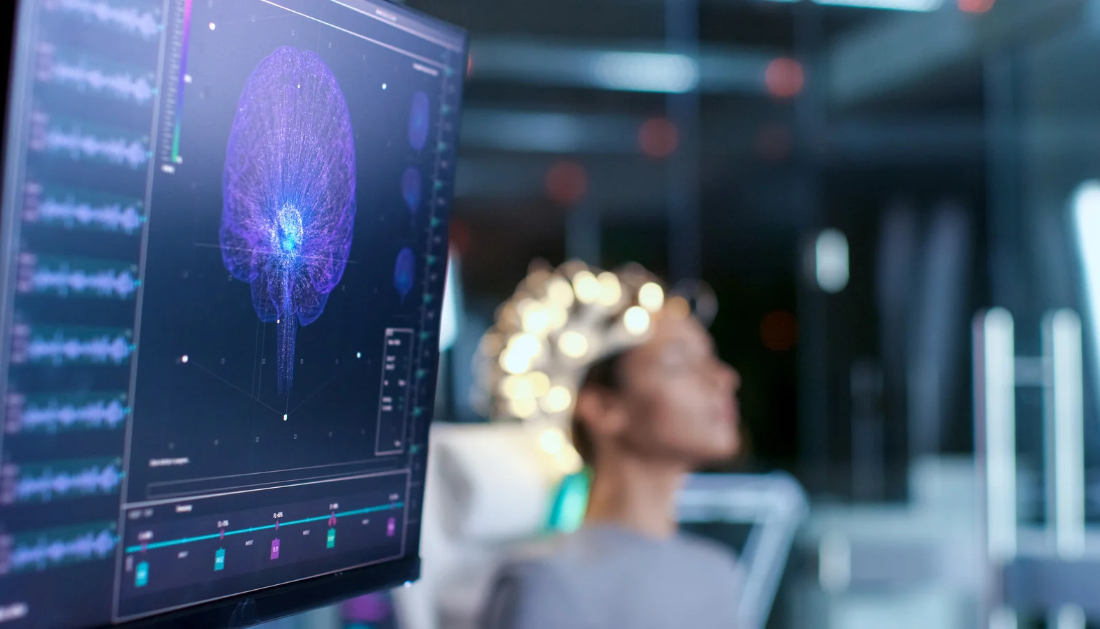
Brain-computer interface technology may offer a new way for clinically unresponsive patients with acute brain injuries to communicate. In a study led by researchers at Columbia University, patients used their brain activity to change the frequency of a beeping tone through a noninvasive electroencephalography (EEG)-based system.
The findings highlight the potential of brain-computer interfaces to detect preserved consciousness and support communication in neurocritical care.
Researchers tested the system in 41 patients with acute brain injuries who showed no clinical responses just days after hospital admission. Instead of implanting a device into the brain, the team used EEG electrodes attached to each patient’s scalp, a technology commonly used to monitor brain activity in intensive care units (ICUs).
During the task, patients heard a beeping tone through headphones and received spoken instructions to change its frequency by attempting to open and close their hands. Although they could not visibly perform the movement, the researchers analyzed their brain signals in real time and used a computer program to adjust the tone.
About one-third of the participants successfully controlled the sound after a brief training period. All patients whose cognitive motor dissociation (CMD) had been identified through a separate assessment also completed the task.
CMD occurs when patients retain some ability to understand or follow commands but cannot express their responses through observable movements. Earlier research led by Jan Claassen, MD, professor of neurology at Columbia University Vagelos College of Physicians and Surgeons, identified signs of hidden consciousness in 15% of unresponsive, brain-injured patients using EEG and artificial intelligence.
The study suggests that an EEG-based brain-computer interface could help clinicians identify patients who retain cognitive abilities despite an inability to communicate through speech or movement. Detecting this capacity may eventually support clinical assessments, care planning, and discussions with families about a patient’s needs and preferences.
Unlike implanted brain-computer interfaces, the EEG-based approach does not require neurosurgery. Its use of familiar ICU monitoring technology could make it more practical to investigate in patients with severe, acute brain injuries.
Researchers now aim to refine the system so patients can communicate needs such as pain or hunger. Potential improvements include personalized audio feedback and features that make communication more meaningful to patients and their families.
However, the findings do not mean that every unresponsive patient retains consciousness or can use this technology. The study involved only 41 patients, and further research must establish how reliably the system works across different types and severities of brain injury.
Emerging brain-computer interfaces highlight how advances in neuroscience are shaping the assessment and care of patients with complex neurological conditions. For neurologists and other healthcare professionals, keeping up with research in brain injury, disorders of consciousness, cognitive function, and neurotechnology remains important to clinical practice.
The American Neurology Summit (ANS 2026) offers healthcare professionals an opportunity to engage with current topics in neurology, including dementia, cognitive disorders, and other neurological conditions.

 Gamma Oscillations Restored in Alzheimer’s Disease Mice
Key takeaways Researchers restored parvalbumin (PV).
 Coffee Consumption Linked to Lower Recurrent VTE Risk
Key points at a glance Study.
 Body Roundness Index Linked to Higher Heart Attack Risk
Key findings at a glance Study.
 Maternal Diet Fails to Reduce Infant Egg and Peanut Allergy
Key Points A large Australian randomized.
 Visual Impairment Linked to Higher Dementia Risk
Key findings at a glance A.
 Long-Acting HIV Treatment May Help Drug-Resistant Cases
Key Takeaways A UCSF study found.
 Epilepsy Drugs May Interact With Hormonal Contraceptives
Key points: Nearly one-third of people.
 Night Shift Work Alters Key Circadian Gene Expression
A recent study published in Frontiers.
 Tirzepatide Weight Loss: Fat Mass and Muscle Findings
Key points Tirzepatide was associated with.
 Coffee and Gut Microbiome: Brewing and Metabolic Effects
Key Points Coffee contains caffeine, chlorogenic.
Leave a Comment