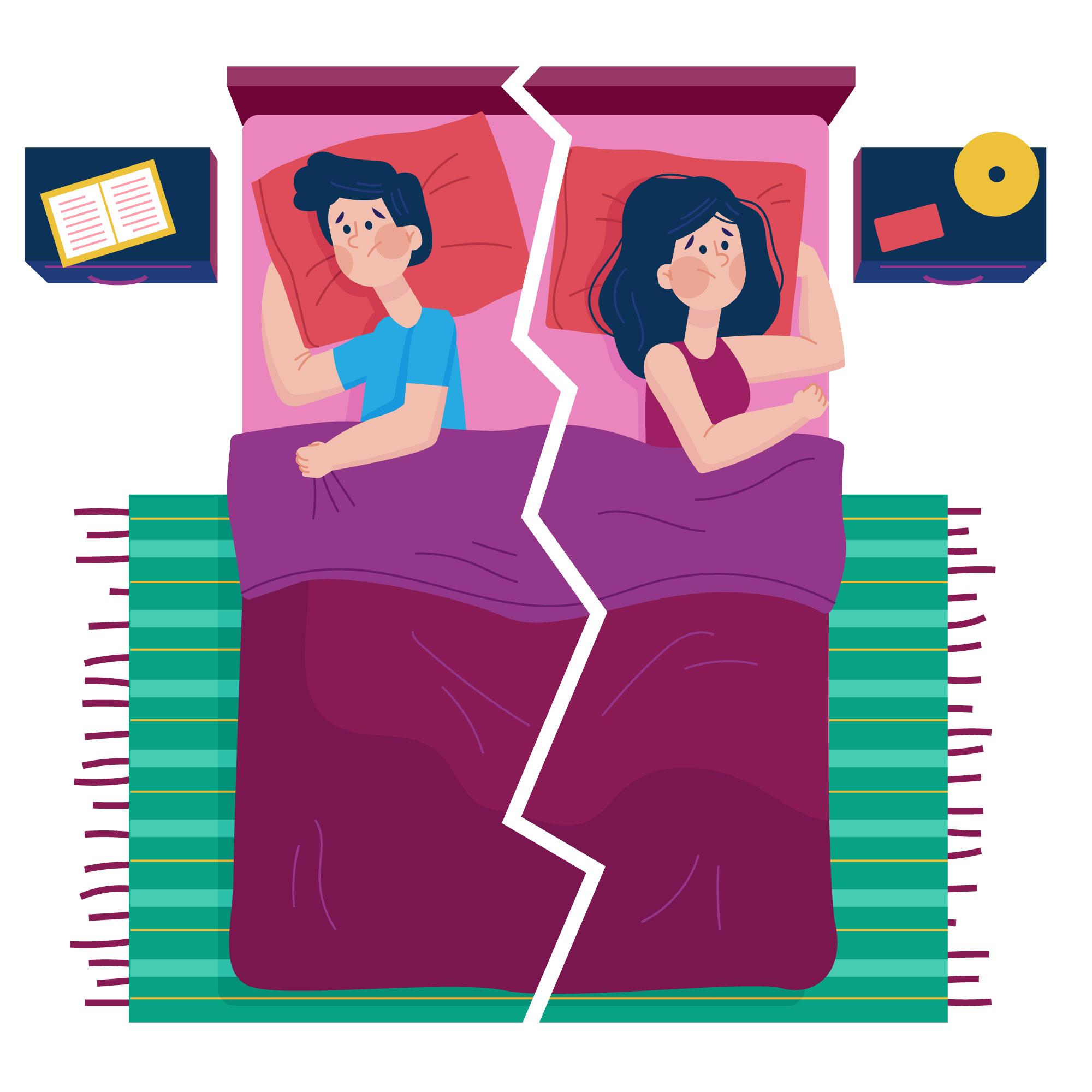
Image by Freepik

Many Americans are opting for a “sleep divorce” to assist improve their nightly sleep, whether it’s to avoid partners who steal the covers and toss and turn all night or those that routinely rattle the room with loud snoring. According to a recent American Academy of Sleep Medicine (AASM) poll, more than one-third of adults sleep in another room on occasion or on a regular basis to accommodate a sleeping companion. Men are more likely to sleep on the sofa or in a guest room, with almost half (45%) indicating that they occasionally or frequently sleep in another room, compared to only one-fourth (25%) of women.
“We know that poor sleep can worsen your mood, and those who are sleep deprived are more likely to argue with their partners. There may be some resentment toward the person causing the sleep disruption which can negatively impact relationships,” said Dr. Seema Khosla, pulmonologist and spokesperson for the AASM. “Getting a good night’s sleep is important for both health and happiness, so it’s no surprise that some couples choose to sleep apart for their overall well-being.”
Getting enough healthy sleep is essential for relationships. According to studies, those in relationships who consistently experience poor sleep are more likely to engage in conflict with their partners, and sleep loss lowers levels of empathetic accuracy, which means those who do not get enough sleep may be less able to understand or interpret their partners’ feelings.
Almost half (43%) of millennials sleep in another room on a regular or irregular basis to accommodate a bed companion, followed by one-third (33%) of Generation X, 28% of Generation Z, and 22% of baby boomers.
“Although the term ‘sleep divorce’ seems harsh, it really just means that people are prioritizing sleep and moving into a separate room at night when needed,” said Khosla. “However, if it is one partner’s loud snoring that is leading to separate sleep spaces, then you should encourage that partner to talk to a doctor about obstructive sleep apnea. This applies to both men and women who may snore.”
Loud and frequent snoring is not just a nuisance; it is a common symptom of sleep apnea. While not everyone who snores has this sleep illness, snoring is a warning sign that should be taken seriously. When snoring is paired with choking, gasping or silent breathing pauses during sleep, it’s a strong indicator of sleep apnea.
Other common symptoms of sleep apnea include fatigue or daytime sleepiness, unrefreshing sleep, insomnia, morning headaches, nocturia (waking during the night to go to the bathroom), difficulty concentrating, memory loss, decreased sexual desire, irritability, and difficulty staying awake while watching TV or driving. Excess body weight is a key risk factor for sleep apnea.

 Coffee and Gut Microbiome: Brewing and Metabolic Effects
Key Points Coffee contains caffeine, chlorogenic.
 Low-Dose Radiation Therapy Shows Promise in Early Knee OA
Key Points Low-dose radiation therapy was.
 Oral Hormone Replacement Therapy Raises Blood Clot Risk
Key Points Oral hormone replacement therapy.
 GLP-1 Health Information: Quality, Completeness, & Engagement
Key Points A study assessed 128.
 DNA Damage Response May Drive Biological Aging
Key Points Chronic DNA damage response.
 Maternal Diet Fails to Reduce Infant Egg and Peanut Allergy
Key Points A large Australian randomized.
 Psychedelic-Assisted Psychotherapy: Music in Treatment
Key Takeaways Psychedelic-assisted psychotherapy combines psychedelic.
 Cardiovascular Frailty Links Heart Health and Aging
Key Points Cardiovascular frailty may connect.
 Laser Blended Vision: Simple Test Predicts Success
Key Points A simple phoropter-based test.
 Pink Noise Boosts Brain Waste Clearance During Sleep
Key Points Pink noise delivered during.
Leave a Comment