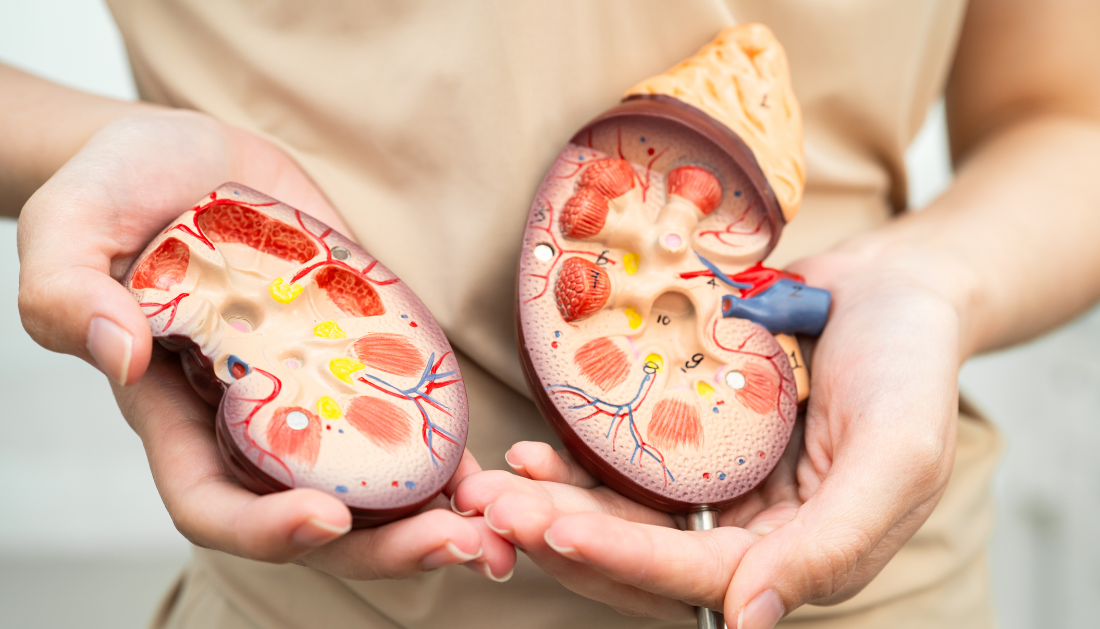
CAR T-Cell Therapy Enables Kidney Transplants in Difficult Cases

For thousands of patients with end-stage kidney disease, finding a compatible donor kidney remains one of the greatest challenges in transplantation medicine. A groundbreaking clinical trial led by researchers at the University of Pennsylvania has now demonstrated that CAR T-cell therapy may help overcome this barrier by reducing the harmful antibodies that prevent successful kidney transplantation.
Kidney transplantation remains the preferred treatment for many patients with kidney failure. However, highly sensitized patients develop immune antibodies that can attack donor organs, making compatible matches extremely rare. These patients often have a Calculated Panel Reactive Antibody (cPRA) score of 99.9% or higher, leaving them compatible with fewer than one in 1,000 donor kidneys.
In a pioneering Phase I clinical trial, researchers adapted CAR T-cell therapy, originally developed for blood cancer treatment, to target the immune cells responsible for producing these harmful antibodies. The investigational approach combined CD19-targeted CAR T cells, which eliminate memory B cells, with BCMA-targeted CAR T cells that remove antibody-producing plasma cells.
This dual-cell therapy strategy significantly reduced circulating antibodies and effectively reset key components of the immune system. As a result, two highly sensitized patients who had spent years on transplant waiting lists became eligible for donor kidneys and successfully underwent kidney transplantation.
The study involved two patients whose cPRA scores were close to 100%, making donor compatibility nearly impossible. Following CAR T-cell treatment, both experienced substantial reductions in donor-reactive antibodies.
The lowered antibody burden expanded their donor options and ultimately led to successful kidney transplants. Importantly, researchers reported no evidence of donor-specific antibody rebound or organ rejection after transplantation.
Safety findings were equally encouraging. Neither patient developed severe cytokine release syndrome nor neurotoxicity, complications sometimes associated with CAR T-cell therapies in oncology settings. Researchers also observed a gradual recovery of healthy B-cell populations, indicating that immune depletion was temporary.
One of the study participants, Andrew Boyd, had lived with kidney disease for more than four decades and had previously received two kidney transplants. After years of unsuccessful waiting for a third compatible donor, CAR T-cell therapy lowered his antibody levels sufficiently to allow transplantation in 2025.
The findings suggest that cellular immunotherapy may offer a new treatment pathway for highly sensitized transplant candidates who have exhausted conventional desensitization options such as plasma exchange and antibody-blocking medications.
Researchers from Penn Medicine, NYU Langone, and Massachusetts General Hospital will continue evaluating higher CAR T-cell doses and larger patient populations in future trial phases. If confirmed in broader studies, this strategy could expand transplant access for thousands of patients who currently face limited opportunities for kidney transplantation.
For nephrologists, transplant surgeons, immunologists, and transplant nurses, these early results highlight the growing role of cellular therapies beyond oncology and their potential to address longstanding barriers in organ transplantation.

 Brain-Computer Interface Uses EEG in Unresponsive Patients
Key findings at a glance Mind-controlled.
 Gamma Oscillations Restored in Alzheimer’s Disease Mice
Key takeaways Researchers restored parvalbumin (PV).
 Coffee Consumption Linked to Lower Recurrent VTE Risk
Key points at a glance Study.
 Body Roundness Index Linked to Higher Heart Attack Risk
Key findings at a glance Study.
 Maternal Diet Fails to Reduce Infant Egg and Peanut Allergy
Key Points A large Australian randomized.
 Visual Impairment Linked to Higher Dementia Risk
Key findings at a glance A.
 Long-Acting HIV Treatment May Help Drug-Resistant Cases
Key Takeaways A UCSF study found.
 Night Shift Work Alters Key Circadian Gene Expression
A recent study published in Frontiers.
 Tirzepatide Weight Loss: Fat Mass and Muscle Findings
Key points Tirzepatide was associated with.
 Coffee and Gut Microbiome: Brewing and Metabolic Effects
Key Points Coffee contains caffeine, chlorogenic.
Leave a Comment