
Study: The efficacy of cognitive behavioral therapy for mental health and quality of life among individuals diagnosed with cancer: A systematic review and meta-analysis

Researchers assessed the effects of cognitive-behavioral therapy (CBT) on cancer patients’ mental health (MH) and quality of life (QoL) in a new meta-analysis that was published in Cancer Medicine.
Context
Millions of people worldwide are impacted by cancer, and while therapies increase life expectancy and survival rates, they also have an impact on the social, mental, and physical health of cancer patients.
Those who are affected frequently have diminished wellbeing, anxiety, and depression, which can last even after treatment. For cancer patients’ long-term wellbeing, these issues must be addressed.
CBT is a popular mental health treatment that lowers the risk of illness relapse and improves quality of life for patients with mental health conditions like anxiety and depression. Its efficacy with cancer survivors is still restricted, though. Although CBT is useful in treating cancer-related discomfort, pain, sleeplessness, exhaustion, fear, anxiety, and depression, it is unclear how well it works in conjunction with other therapies to address mental health and overall wellness.
About the meta-analysis
Researchers looked at how CBT affected cancer patients’ mental health and quality of life in the current meta-analysis.
From the beginning of the study until July 2023, researchers manually searched the reference lists of pertinent published studies, four professional websites, eleven digital databases, and non-randomized trials.
Records lacking a focus on mental health and quality of life outcomes, missing statistical data, duplicate results, and those deemed unsuitable by means of automated techniques were eliminated, as were records with no CBT intervention or control conditions.
The National Cancer Institute (NCI) definition of cancer survivor was used to identify the study population. Those on waitlists, undergoing active/alternate treatment, or receiving regular therapy were examples of control individuals. Mental health and quality of life were the outcomes, and interventions included CBT and its variants.
Using the Covidence platform, two researchers independently carried out title-abstract and full-text screening. Disputes were settled by consensus or by speaking with an expert in the field. The bias risk of RCTs was assessed using the second iteration of the Cochrane Risk of Bias (RoB 2) tool, and for non-RCTs, the Risk of Bias in Non-randomized Studies-of Interventions (ROBINS-I) tool.
For their meta-analysis, researchers employed robust variance estimation (RVE) in conjunction with intercept-only meta-regressions. In addition, they conducted univariate meta-regression moderator analyses and subgroup assessments while taking CBT delivery and age into account.
Age was divided into three categories: under 40, 40–64, and over 65. Pre-programmed only, technology-only pre-programmed and interpersonal, mixed technology and in-person, and in-person were among the delivery methods.
The study used a funnel plot to plot each effect size estimate against standard errors using a priori weighted functions to perform sensitivity analyses in order to assess publication bias.
In conclusion
According to the study, CBT dramatically enhances cancer patients’ mental health and quality of life both during and after treatment. The advantages imply that cancer patients should have access to CBT even in the absence of a mental health diagnosis.
Whilst assessing CBT as a psychotherapy intervention, oncologists need to take age and the mode of CBT delivery into account.
The results are important for clinical practice and for figuring out the most effective way to treat cancer.
Future studies on CBT for cancer patients should concentrate on the therapy’s faithfulness, maturity, and big sample size, as well as how it affects older patients’ need for interpersonally supportive care. More research is necessary to determine whether CBT has any non-significant therapeutic effects on older people.
For more information: The efficacy of cognitive behavioral therapy for mental health and quality of life among individuals diagnosed with cancer: A systematic review and meta-analysis, Cancer Medicine, doi: 10.1002/cam4.70063

 Brain-Computer Interface Uses EEG in Unresponsive Patients
Key findings at a glance Mind-controlled.
 Gamma Oscillations Restored in Alzheimer’s Disease Mice
Key takeaways Researchers restored parvalbumin (PV).
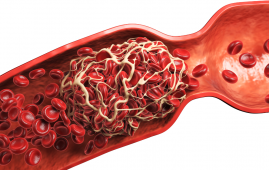 Coffee Consumption Linked to Lower Recurrent VTE Risk
Key points at a glance Study.
 Body Roundness Index Linked to Higher Heart Attack Risk
Key findings at a glance Study.
 Maternal Diet Fails to Reduce Infant Egg and Peanut Allergy
Key Points A large Australian randomized.
 Visual Impairment Linked to Higher Dementia Risk
Key findings at a glance A.
 Long-Acting HIV Treatment May Help Drug-Resistant Cases
Key Takeaways A UCSF study found.
 Night Shift Work Alters Key Circadian Gene Expression
A recent study published in Frontiers.
 Tirzepatide Weight Loss: Fat Mass and Muscle Findings
Key points Tirzepatide was associated with.
 Coffee and Gut Microbiome: Brewing and Metabolic Effects
Key Points Coffee contains caffeine, chlorogenic.
Leave a Comment