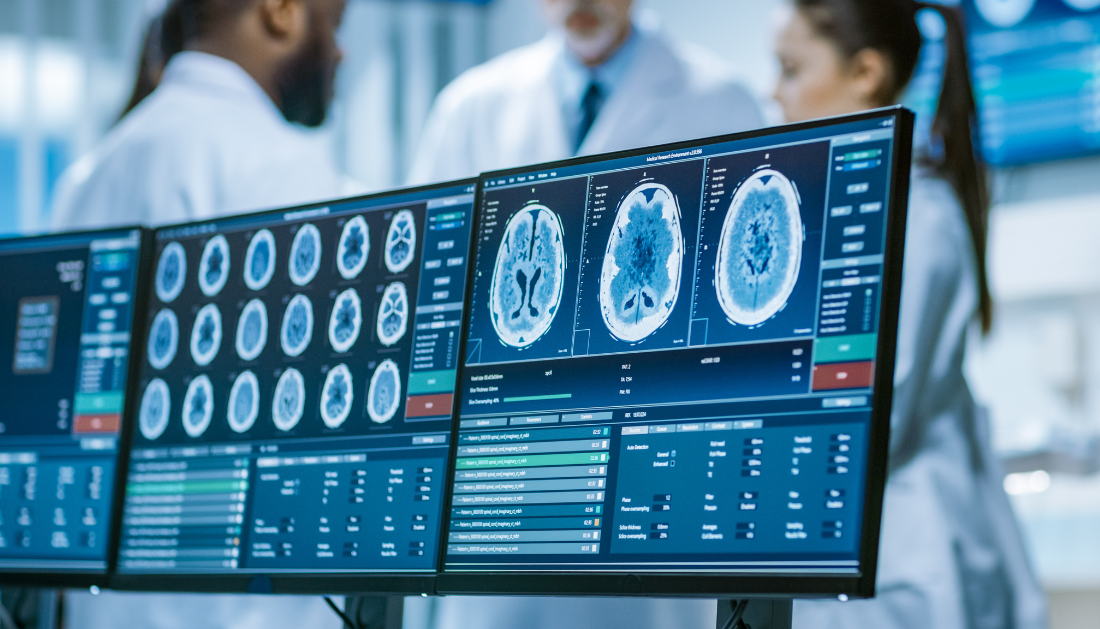
Conversational Brain Encoding Tracked Using AI and fMRI

A groundbreaking neurocomputational study from Osaka University and NICT reveals how our brains structure conversational content in real time through brain encoding. Using advanced AI models and fMRI, researchers show that language processing differs notably between speaking and listening.
Researchers recorded fMRI data from eight participants while they engaged in spontaneous dialogue with an experimenter. To interpret the brain’s response to conversational content, spoken language was converted into numerical embeddings using a GPT-based AI model. This allowed the team to map brain activity across multiple linguistic timescales, from single words to full discourse.
The study demonstrates that overlapping brain areas encode linguistic meaning during both speaking and listening. However, neural integration of words into sentences and discourse varies significantly depending on task, revealing differentiated cortical mechanisms for content generation and comprehension.
Using GPT-derived vectors, neural activity in multiple regions was predicted based on conversational content. Researchers noted that fast timescales captured word-level processing in primary language areas, while slower timescales associated with sentence and discourse integration involved higher-order cortical networks
These findings advance our understanding of real-time dialogue processing. For clinicians working with language disorders, this research underscores distinct neural pathways engaged during speech production versus comprehension. Additionally, applying AI-based embeddings alongside neuroimaging paves the way for brain-inspired computational models and improved diagnostics
Lead researchers, including Masahiro Yamashita and Shinji Nishimoto, aim to investigate how the brain selects among potential responses in live dialogue settings. Understanding this rapid, adaptive process could inform therapies for language impairments and enrich conversational AI
More information: Masahiro Yamashita et al, Conversational content is organized across multiple timescales in the brain, Nature Human Behaviour (2025). DOI: 10.1038/s41562-025-02231-4.

 Visual Impairment Linked to Higher Dementia Risk
Key findings at a glance A.
 Epilepsy Drugs May Interact With Hormonal Contraceptives
Key points: Nearly one-third of people.
 Night Shift Work Alters Key Circadian Gene Expression
A recent study published in Frontiers.
 Dietary Polyphenol Intake Associated With Lower MCI Odds
Key Points Older adults without mild.
 Pink Noise Boosts Brain Waste Clearance During Sleep
Key Points Pink noise delivered during.
 Maternal Illness Linked to Epigenetic Fetal Brain Changes
Maternal illness during pregnancy may influence.
 Rett Syndrome: Carotid Body Linked to Breathing Dysfunction
Key Points Rett syndrome is associated.
 Alzheimer’s Disease Blood Test Receives FDA Clearance
Key Points FDA clears PrecivityAD2, a.
 Childhood Epilepsy Linked to Lower Educational Achievement
Key Takeaways Childhood epilepsy was associated.
 Laser Treatment for Glioblastoma Shows Survival Benefit
Key Points A multicenter analysis of.
Leave a Comment