
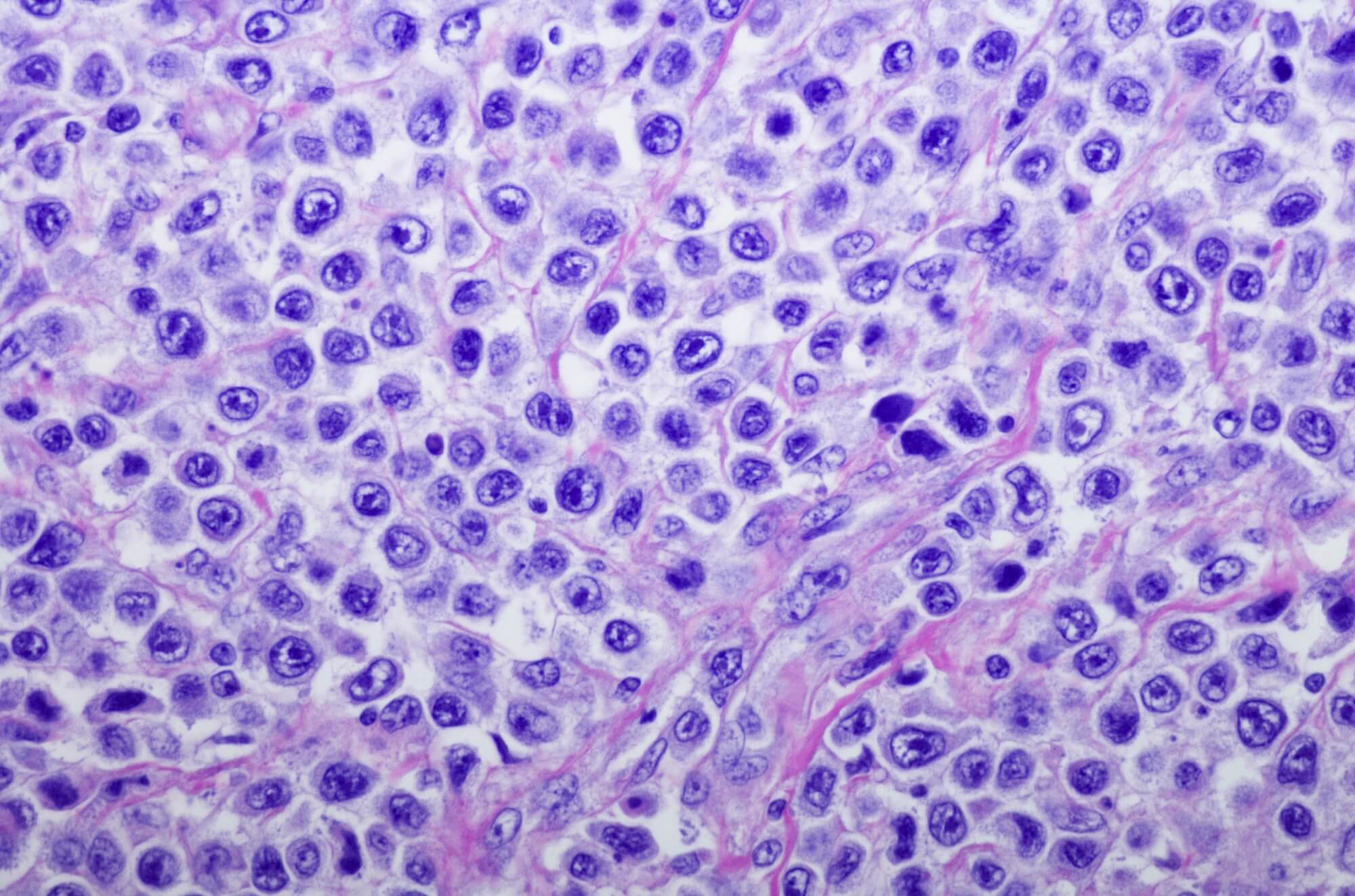
Among patients with diffuse large B cell lymphoma (DLBCL) and other non-Hodgkin B cell lymphomas (B-NHLs), naratuximab emtansine appears to be a both safe and effective treatment, according to research presented at the European Hematology Association (EHA) 2021 Virtual Congress.
Naratuximab (Debio 1562), a CD37-targeting antibody, showed activity in B-NHL in preclinical models when combined with rituximab. CD37 is a lymphocyte surface marker that is highly expressed on DLBCL and other B-NHLs. Targeting CD37 is therefore a promising therapeutic option in the B-NHL disease setting, and previous phase 1 study suggested naratuximab may be both efficacious and safe in DLBCL.
For the present phase 2 study (ClinicalTrials.gov Identifier: NCT02564744), researchers evaluated the safety and efficacy of naratuximab with rituximab among patients with relapsed/refractory DLBCL and other B-NHL subtypes. Patients were assigned to either cohort A (50 patients), which involved treatment once every 3 weeks, or to cohort B (30 patients), which was a weekly regimen. All included patients were transplant-ineligible and had received 1 to 6 prior lines of therapy.
Overall, 100 patients (80 DLBCL, 20 other B-NHL subtypes) were enrolled and received naratuximab with rituximab. Of the 80 patients with DLBCL, 10 (12.5%) had primary refractory disease, 24 (30%) were refractory to their last therapy line, and 35 (44%) had received at least 2 prior systemic therapies.
Seventy-six of the 80 patients with DLBCL were evaluable for efficacy. The overall response rate was 44.7% after a median follow-up of 15 months, and 24 (31.6%) patients had a complete response. Thirty-three (43.4%) patients had progressive disease. Naratuximab treatment was, furthermore, linked with full peripheral target engagement and B cell depletion.
The overall response rate was 50% in cohorts A and B, though more patients in cohort A (43.3%) had a complete response than in cohort B (33.3%).
Of the overall population, 81% of patients had a grade 3 or worse treatment-related adverse event, including neutropenia 54 (54%), leukopenia 19 (19%), lymphopenia 17 (17%), and thrombocytopenia 12 (12%); 8 (8%) patients discontinued treatment because of an adverse event.
Disclosure: Some [or one] study author(s) declared affiliations with biotech, pharmaceutical, and/or device companies. Please see the original reference for a full list of authors’ disclosures.
Reference
Levy MY, Grudeva-Popova Z, Trneny M, et al. Safety and efficacy of CD37-targeting naratuximab emtansine plus rituximab in diffuse large B-cell lymphoma and other non-Hodgkin’s B-cell lymphomas – a phase 2 study. Paper presented at: European Hematology Association 2021 Virtual Congress. Abstract LB1903.
The post DLBCL: Naratuximab Shows Promise Among Patients With Relapsed/Refractory Disease appeared first on Cancer Therapy Advisor.

more recommended stories
 Visual Impairment Linked to Higher Dementia Risk
Key findings at a glance A.
 Long-Acting HIV Treatment May Help Drug-Resistant Cases
Key Takeaways A UCSF study found.
 Night Shift Work Alters Key Circadian Gene Expression
A recent study published in Frontiers.
 Tirzepatide Weight Loss: Fat Mass and Muscle Findings
Key points Tirzepatide was associated with.
 Coffee and Gut Microbiome: Brewing and Metabolic Effects
Key Points Coffee contains caffeine, chlorogenic.
 Low-Dose Radiation Therapy Shows Promise in Early Knee OA
Key Points Low-dose radiation therapy was.
 Oral Hormone Replacement Therapy Raises Blood Clot Risk
Key Points Oral hormone replacement therapy.
 GLP-1 Health Information: Quality, Completeness, & Engagement
Key Points A study assessed 128.
 DNA Damage Response May Drive Biological Aging
Key Points Chronic DNA damage response.
 Maternal Diet Fails to Reduce Infant Egg and Peanut Allergy
Key Points A large Australian randomized.
Leave a Comment