
Image by DCStudio on Freepik

Running, walking, and cycling have all been shown to increase cardiorespiratory fitness, which lowers the risk of cardiovascular disease and death. However, the majority of research focuses on midlife cardiorespiratory fitness, mainly in individuals between the ages of 45 and 64.
The relationship between cardiorespiratory fitness levels in early adulthood, between the ages of 18 and 30, and later long-term health concerns were examined by researchers at the University of Alabama in Birmingham. A decreased risk of fatal or nonfatal cardiovascular events was associated with early-adult cardiorespiratory fitness and retention fitness through midlife, according to research results published on February 28 in JAMA Network Open.
“The importance of cardiorespiratory exercise in early adulthood is often discounted with many studies focusing on the midlife period,” said Kelley Pettee Gabriel, Ph.D., professor of epidemiology in the UAB School of Public Health and lead author. Our findings show that the level of cardiorespiratory fitness in early adulthood is related to long-term health.
Researchers analyzed information from the CARDIA project, which involved more than 5,000 boys and girls between the ages of 18 and 30 who self-identified as either Black or white. Participants in the 1985–1986 study got in-person exams every two to five years. Participants underwent three cardiorespiratory fitness assessments for this study, including ones when they were middle-aged and young adults. Every year, data on fatalities and cardiovascular events, such as heart attacks, were gathered. Results revealed a 27% lower risk of all-cause mortality in women and a 13% lower risk in men for every minute of increased early-adult cardiorespiratory fitness, as well as an 11% lower risk of cardiovascular events.
Researchers found that one’s maximum cardiorespiratory fitness falls 4.6% from ages 20 to 25, and another 10% decline occurs every five years from ages 30 to 50, according to a prior CARDIA study headed by Gabriel. A participant’s midlife retention rate as well as early adulthood levels were taken into consideration when evaluating them. According to the new research, there is an 11% decreased risk of death for every 5% of young adults with cardiorespiratory fitness that is maintained until midlife.
“Ultimately, our findings show where you start and what you retain throughout adulthood have a significant impact on long-term health,” Gabriel said. “We now know that not only is it important to build cardiorespiratory fitness in early adulthood but also that we need to minimize the decline in those levels as much as possible as we age.”

 Gamma Oscillations Restored in Alzheimer’s Disease Mice
Key takeaways Researchers restored parvalbumin (PV).
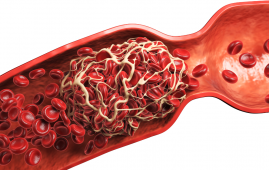 Coffee Consumption Linked to Lower Recurrent VTE Risk
Key points at a glance Study.
 Body Roundness Index Linked to Higher Heart Attack Risk
Key findings at a glance Study.
 Maternal Diet Fails to Reduce Infant Egg and Peanut Allergy
Key Points A large Australian randomized.
 Visual Impairment Linked to Higher Dementia Risk
Key findings at a glance A.
 Long-Acting HIV Treatment May Help Drug-Resistant Cases
Key Takeaways A UCSF study found.
 Night Shift Work Alters Key Circadian Gene Expression
A recent study published in Frontiers.
 Tirzepatide Weight Loss: Fat Mass and Muscle Findings
Key points Tirzepatide was associated with.
 Coffee and Gut Microbiome: Brewing and Metabolic Effects
Key Points Coffee contains caffeine, chlorogenic.
 Low-Dose Radiation Therapy Shows Promise in Early Knee OA
Key Points Low-dose radiation therapy was.
Leave a Comment