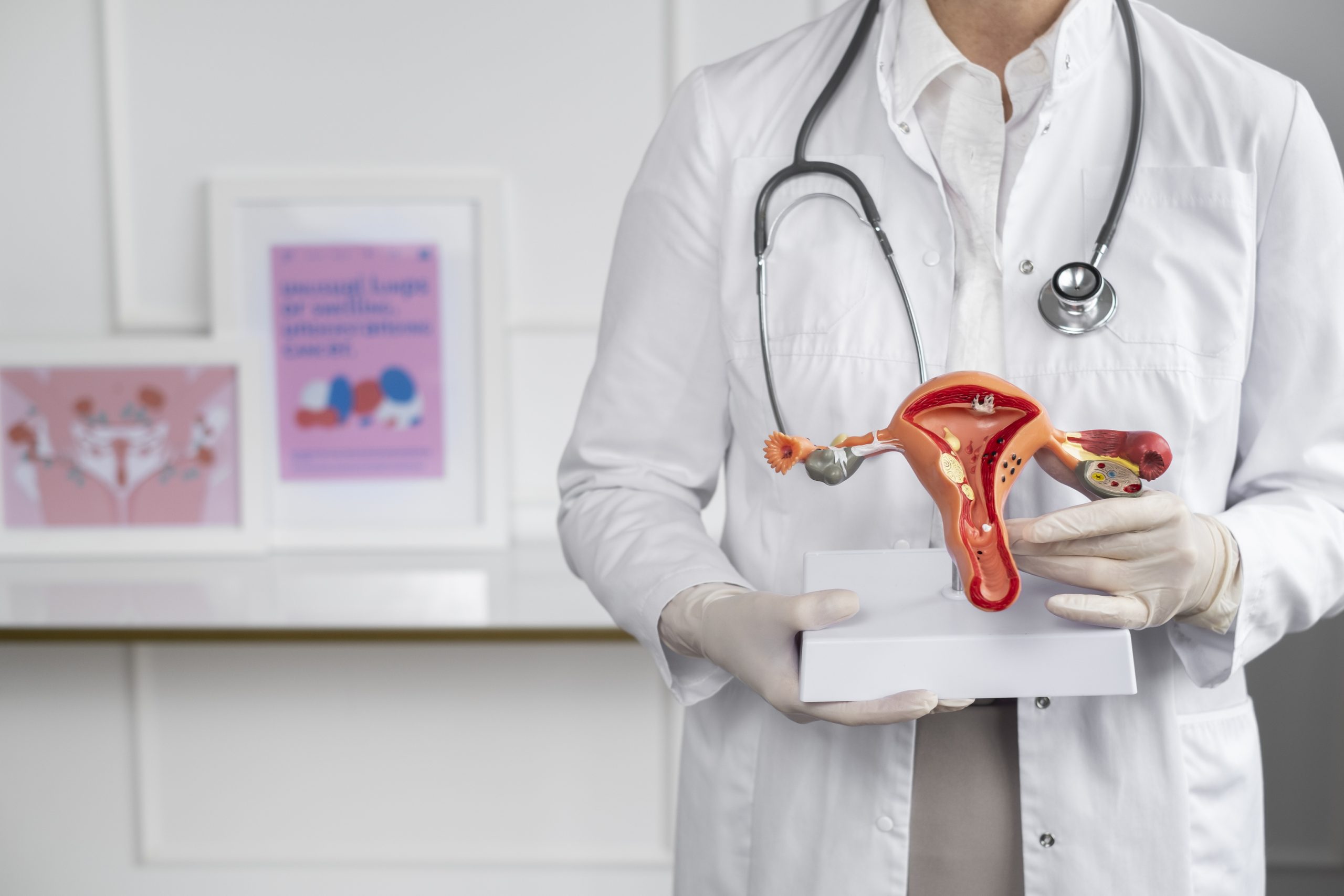
Image by Freepik

The UNC Gillings School of Global Public Health and UNC Lineberger Comprehensive Cancer Center found that mailing HPV self-collection tests and helping under-screened, low-income women schedule in-clinic screening appointments increased cervical cancer screening by nearly two-fold. Scheduling assistance mostly involved booking a clinic appointment for in-person screening, regardless of whether an at-home test was offered or returned or the HPV test was positive or negative.
Lancet Public Health published the randomized study results May 11.
“My hope going into this study was that mailing kits for home-based collection might increase cervical cancer screening, but we were thrilled to find a nearly two-fold increase in screening uptake,” said Jennifer S. Smith, PhD, MPH, professor of epidemiology at UNC Lineberger and the Gillings School and corresponding author of this study. “Many hadn’t engaged in the screening system for a while and getting the kit to their homes helped break down a fundamental barrier.”
According to the National Cancer Institute, 14,000 American women will be diagnosed with cervical cancer this year, and over 4,300 will die. Black and Hispanic women have the highest incidence and fatality rates for cervical cancer in North Carolina in the U.S. Underscreened women get most cervical malignancies. The CDC estimates 22% of eligible U.S. adults are overdue for screening.
665 uninsured or Medicaid/Medicare-enrolled women aged 25–64 from 22 North Carolina counties participated in the My Body, My Test-3 project. Most urban women had poor wages. None had a pap or high-risk HPV test in four or six years, making them overdue for screening.
Two-thirds of women received mailed HPV self-collection kits and help scheduling a clinic screening session. Another third received screening scheduling assistance alone. Attending an in-clinic screening session or testing HPV-negative with self-collected samples within six months of trial enrollment was the primary outcome.
Mail-delivered HPV kits increased screening rates to 72% from 37%. Self-collection outreach did not affect screening uptake by age, race/ethnicity, time since last screening, Medicaid or Medicare coverage, or education.
“Home screening for cervical cancer puts women in control. Most can avoid having to go to a doctor’s appointment. These at-home kits can better reach people without access to screening, who are embarrassed by a cervical exam or whose religious beliefs include modesty,” said study co-author Noel T. Brewer, PhD, Gillings Distinguished Professor in Public Health and UNC Lineberger member.
“We believe our results are applicable to low-income, under-screened women across the U.S.,” Smith said. “We’re now working with clinical partners to identify women who might be overdue for screening through electronic medical records. We hope to provide the option of either mailing them a self-collection kit to use at home to mail back to us or handing a kit directly to them when they come into clinics for other services with the vision to eventually make self-collection a regular clinical provision.”
The UNC researchers believe their findings and earlier studies will convince the FDA to approve HPV self-collection as a primary cervical cancer screening test in the U.S.

 Brain-Computer Interface Uses EEG in Unresponsive Patients
Key findings at a glance Mind-controlled.
 Gamma Oscillations Restored in Alzheimer’s Disease Mice
Key takeaways Researchers restored parvalbumin (PV).
 Coffee Consumption Linked to Lower Recurrent VTE Risk
Key points at a glance Study.
 Body Roundness Index Linked to Higher Heart Attack Risk
Key findings at a glance Study.
 Maternal Diet Fails to Reduce Infant Egg and Peanut Allergy
Key Points A large Australian randomized.
 Visual Impairment Linked to Higher Dementia Risk
Key findings at a glance A.
 Long-Acting HIV Treatment May Help Drug-Resistant Cases
Key Takeaways A UCSF study found.
 Night Shift Work Alters Key Circadian Gene Expression
A recent study published in Frontiers.
 Tirzepatide Weight Loss: Fat Mass and Muscle Findings
Key points Tirzepatide was associated with.
 Coffee and Gut Microbiome: Brewing and Metabolic Effects
Key Points Coffee contains caffeine, chlorogenic.
Leave a Comment