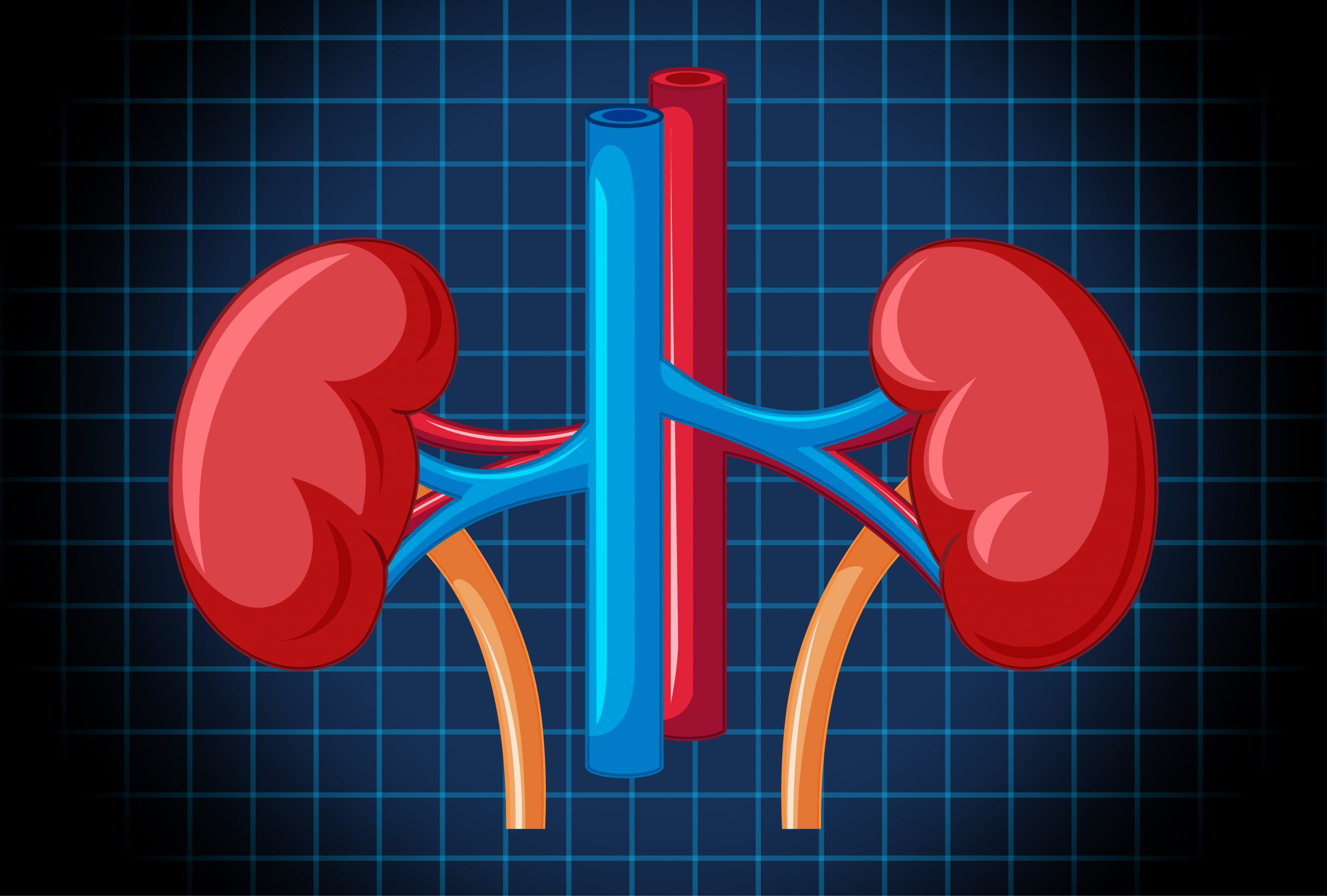
Image by brgfx on Freepik

According to new research from the CONVINCE consortium led by University Medical Center Utrecht, mortality in patients with kidney failure treated with high dose hemodiafiltration is 23% lower than mortality in patients treated with high flux hemodialysis.
The study, which was published today in the New England Journal of Medicine, is the first multinational, randomized trial to evaluate the two treatments. The data suggest that increasing the use of high-dose hemodiafiltration would clearly benefit patients.
Chronic kidney disease is a major global health issue that affects an estimated 830 million people worldwide. When the kidneys are unable to function properly, dialysis is used to clean the blood by eliminating waste products, a function ordinarily performed by the kidneys themselves. Around four million individuals globally are on dialysis.
The most prevalent type of dialysis used in the treatment of renal failure is hemodialysis. Though it has improved over time, it is still ineffective at removing bigger molecules from the blood. Hemodiafiltration is a newer method that can remove bigger molecules, however it is not appropriate for all patients due to the increased blood flow rate required to be effective. Previous research have failed to demonstrate definitively that one strategy is superior than the other.
Researchers at UMC Utrecht led the CONVINCE trial, which included collaborators from University College London (UCL), Charité Universitätsmedizin Berlin, University of Bari, The George Institute for Global Health, and Imperial College London, as well as dialysis providers Fresenius Medical Care, Diaverum, and B. Braun Avitum. It is the first worldwide, randomized experiment comparing high-flux hemodialysis versus high-dose hemodiafiltration to determine whether treatment is superior.
A total of 1,360 patients were randomized among 61 facilities in eight European nations, with 683 receiving high-dose hemodiafiltration and 677 receiving high-flux hemodialysis three times a week.
During a 30-month median follow-up, the all-cause death rate for individuals receiving high-flux hemodialysis was 21.9%, compared to 17.3% for those receiving high-volume hemodiafiltration. This 4.6% difference equates to a 23% decrease in the chance of mortality.
Lead investigator, Professor Peter Blankestijn (UMC Utrecht), said, “Our results show clear survival benefits for using hemodiafiltration over hemodialysis to treat kidney failure, akin to a 23% reduction in all-cause mortality. My hope is that hemodiafiltration can become the new standard.”
Professor Matthias Rose (Charité University, Berlin), a senior author of the study and expert in patient-reported outcomes, said, “In addition to clinical events, patient perception and thus reported outcomes are very important. We are currently performing in-depth analyses of the extensive data on patient-reported outcomes that have been collected in the CONVINCE study, with results expected later this year.”
While hemodialysis is conventional treatment in most nations, hemodiafiltration is less common in some locations and not used at all in others, such as the United States. Most modern dialysis machines can perform either modality, making the transition to hemodiafiltration quite simple.
Professor Andrew Davenport (UCL Medicine and the Royal Free Hospital), a senior author of the study, said, “During my career I’ve watched new treatments emerge for many diseases, from diabetes to cancer, but we haven’t seen the same advances in the treatment of chronic kidney disease. This study proves that targeting different molecules through hemodiafiltration has clear benefits for patients. I would say that this is the first major step forward in many years and is good news for kidney disease patients and their families.”

 Brain-Computer Interface Uses EEG in Unresponsive Patients
Key findings at a glance Mind-controlled.
 Gamma Oscillations Restored in Alzheimer’s Disease Mice
Key takeaways Researchers restored parvalbumin (PV).
 Coffee Consumption Linked to Lower Recurrent VTE Risk
Key points at a glance Study.
 Body Roundness Index Linked to Higher Heart Attack Risk
Key findings at a glance Study.
 Maternal Diet Fails to Reduce Infant Egg and Peanut Allergy
Key Points A large Australian randomized.
 Visual Impairment Linked to Higher Dementia Risk
Key findings at a glance A.
 Long-Acting HIV Treatment May Help Drug-Resistant Cases
Key Takeaways A UCSF study found.
 Night Shift Work Alters Key Circadian Gene Expression
A recent study published in Frontiers.
 Tirzepatide Weight Loss: Fat Mass and Muscle Findings
Key points Tirzepatide was associated with.
 Coffee and Gut Microbiome: Brewing and Metabolic Effects
Key Points Coffee contains caffeine, chlorogenic.
Leave a Comment