
Alzheimer's Disease: New Findings on Gamma Oscillations

Quick Summary: Researchers restored parvalbumin (PV) interneuron function and improved gamma oscillations in a mouse model of Alzheimer’s disease by targeting sodium channel function. The findings offer a potential direction for investigating neuronal dysfunction and cognitive decline, although clinical studies must establish whether the approach can benefit humans.
Drug targeting to restore gamma oscillations may offer a new avenue for Alzheimer’s disease research. In a study published in Neuron, researchers restored the function of memory-linked neurons in mice that model key features of the disease. The findings highlight the role of parvalbumin interneurons in coordinating brain activity associated with learning, memory, and information processing.
The research offers a potential starting point for targeted therapies, but it does not establish an effective treatment for people with Alzheimer’s disease.
Gamma oscillations are rapid patterns of electrical activity in the brain that support cognitive processes, including learning, memory formation, and information processing. Parvalbumin interneurons, commonly called PV cells, help generate these rhythms by coordinating the activity of neural circuits.
Researchers have observed disruptions in gamma oscillations in people with Alzheimer’s disease. These changes may appear during early stages, including mild cognitive impairment, alongside progressive dysfunction in PV interneurons.
Keran Ma, PhD, the study’s first author and an assistant professor in the Department of Neurobiology and Anatomy at UTHealth Houston’s McGovern Medical School, and her colleagues investigated how PV cells contribute to these changes.
Their findings challenge the idea that PV interneurons activate uniformly during gamma oscillations. Instead, the cells follow a sequence of recruitment, with precise timing helping initiate and sustain these electrical rhythms. Disruption of this coordinated activity may contribute to impaired brain function in Alzheimer’s disease.
The research team used mice engineered to develop amyloid plaque accumulation, a key feature associated with Alzheimer’s disease in humans. This model allowed the researchers to investigate how amyloid-related pathology affects neuronal function.
The team enhanced PV interneuron function by introducing a sodium channel subunit. After this intervention, the researchers observed restored PV cell recruitment patterns and improved gamma oscillations.
These results suggest that targeting PV interneuron electrical properties may help restore coordinated neural activity. The findings also identify the timing and sequence of neuronal recruitment as important factors in maintaining gamma rhythms.
However, the mouse model reproduces selected features of Alzheimer’s disease rather than the full human condition. Researchers must therefore determine whether similar interventions can restore neuronal function safely and effectively in people.
The study provides proof of principle that researchers can manipulate PV interneuron function to improve gamma oscillations in an Alzheimer’s disease model. This may help guide investigations into neuronal circuit dysfunction and potential strategies to support cognitive function.
The research involved scientists from UTHealth Houston, the Gladstone Institute of Neurological Disease, and the Allen Institute for Brain Science.
For neurologists, neuroscientists, and clinicians involved in dementia care, the findings offer a mechanistic insight into how altered neuronal activity may contribute to cognitive impairment. Further studies must clarify the intervention’s safety, durability, and effects on memory and other cognitive outcomes before researchers can assess its therapeutic potential in humans.

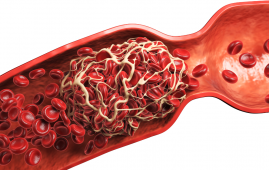 Coffee Consumption Linked to Lower Recurrent VTE Risk
Key points at a glance Study.
 Body Roundness Index Linked to Higher Heart Attack Risk
Key findings at a glance Study.
 Maternal Diet Fails to Reduce Infant Egg and Peanut Allergy
Key Points A large Australian randomized.
 Visual Impairment Linked to Higher Dementia Risk
Key findings at a glance A.
 Long-Acting HIV Treatment May Help Drug-Resistant Cases
Key Takeaways A UCSF study found.
 Epilepsy Drugs May Interact With Hormonal Contraceptives
Key points: Nearly one-third of people.
 Night Shift Work Alters Key Circadian Gene Expression
A recent study published in Frontiers.
 Tirzepatide Weight Loss: Fat Mass and Muscle Findings
Key points Tirzepatide was associated with.
 Coffee and Gut Microbiome: Brewing and Metabolic Effects
Key Points Coffee contains caffeine, chlorogenic.
 Low-Dose Radiation Therapy Shows Promise in Early Knee OA
Key Points Low-dose radiation therapy was.
Leave a Comment