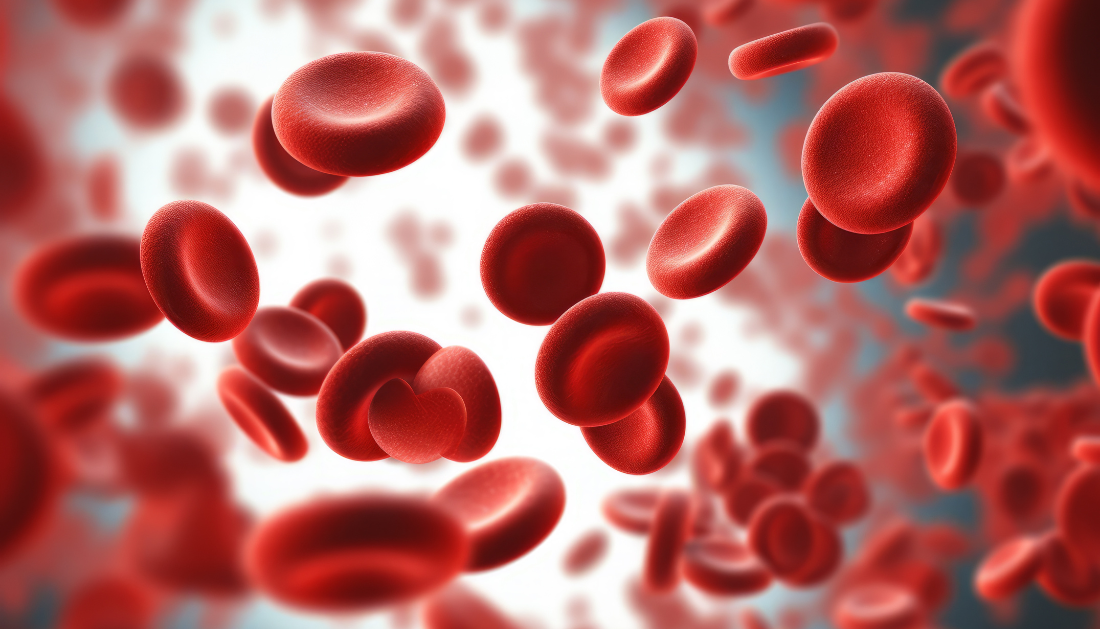
Study: A Platelet Reactivity ExpreSsion Score derived from patients with peripheral artery disease predicts cardiovascular risk

Even though this has a significant impact on cardiovascular risk, it has not been possible to routinely measure how much each patient’s platelets clump or aggregate. This is due to the fact that platelet aggregometry, the standard method for determining platelet activity, yields results that differ too greatly between laboratories.
In response to this challenge, a team of researchers at NYU Grossman School of Medicine conducted a new study in which they accurately identified a group of patients with hyperreactive platelets. After surveying the patients, the researchers discovered 451 genes, the activity of which varied significantly between the patients with and without hyperreactive platelets. After publishing their findings in Nature Communications, the research team employed bioinformatics to create a Platelet Reactivity ExpresSion Score (PRESS) for each patient by giving a weight to each genetic variance.
“Our results demonstrate that our new platelet-centric scoring system can, for the first time and across populations, circumvent aggregometry to reliably predict platelet hyperreactivity and the related risk of cardiovascular events,” said corresponding study author Jeffrey Berger, MD, director of the Center for the Prevention of Cardiovascular Disease at NYU Grossman School of Medicine.
The researchers discovered that their novel score can identify platelet hyperreactivity in both healthy individuals whose future risk may otherwise be unknown and in patients who are at immediate danger of having a heart attack.
“Physicians currently prescribe aspirin, a medication that counters platelet activity, to patients based on available risk factors, including high cholesterol or high blood pressure, which are not directly related to platelet function,” added Berger. “PRESS promises to help physicians confine anti-platelet treatment to the people most likely to benefit: those with platelet hyperreactivity.”
Aspirin is known to prevent irregular clotting by acting on platelets, although doing so raises the risk of bleeding, according to the study’s authors. The medical community requires a trustworthy method to determine whether people are more at danger of bleeding from a heart attack.
Platelet count
The development of the PRESS started with a departure from aggregometry techniques, which subject each patient’s platelets to high concentrations of proteins that are known to dramatically promote aggregation. Although these tests were not intended to measure hyperreactivity directly, platelets that do not aggregate under these harsh circumstances are classified as dysfunctional.
A transition to an aggregometry method, which exposes platelets to a very modest dose (4 μM or microMolar) of epinephrine known to weakly induce aggregation, was made due to experience dealing with platelets on Berger’s team and in other labs. The field decided that a platelet sample would be considered hyperreactive if there was 60% aggregation at 0.4 μM of adrenaline. Although this approach is not novel, the current study offers fresh proof that individuals who fit the hyperreactivity criteria have a much higher risk of cardiovascular events.
The researchers specifically tracked the effect of platelet activity status on MACLE (major adverse cardiovascular and limb events), a composite measure of death, heart attack, stroke, and lower extremity amputations in patients enrolled in the Platelet Activity and Cardiovascular Events in PAD (PACE-PAD) clinical study, using the more recent but still labor-intensive aggregometry method. After lower extremity revascularization (LER), a series of treatments that unblock blocked arteries, this group of high-risk patients had their MACLE evaluated.
For more information: A Platelet Reactivity ExpreSsion Score derived from patients with peripheral artery disease predicts cardiovascular risk, Nature Communications, DOI: 10.1038/s41467-024-50994-7

 Brain-Computer Interface Uses EEG in Unresponsive Patients
Key findings at a glance Mind-controlled.
 Gamma Oscillations Restored in Alzheimer’s Disease Mice
Key takeaways Researchers restored parvalbumin (PV).
 Coffee Consumption Linked to Lower Recurrent VTE Risk
Key points at a glance Study.
 Body Roundness Index Linked to Higher Heart Attack Risk
Key findings at a glance Study.
 Maternal Diet Fails to Reduce Infant Egg and Peanut Allergy
Key Points A large Australian randomized.
 Visual Impairment Linked to Higher Dementia Risk
Key findings at a glance A.
 Long-Acting HIV Treatment May Help Drug-Resistant Cases
Key Takeaways A UCSF study found.
 Night Shift Work Alters Key Circadian Gene Expression
A recent study published in Frontiers.
 Tirzepatide Weight Loss: Fat Mass and Muscle Findings
Key points Tirzepatide was associated with.
 Coffee and Gut Microbiome: Brewing and Metabolic Effects
Key Points Coffee contains caffeine, chlorogenic.
Leave a Comment