
How Conversation While Driving Impairs Gaze Control

New research from Fujita Health University shows that Conversation While Driving can quietly impair the visual foundations needed for safe driving. In controlled experiments, talking caused measurable delays in eye-movement reaction, movement, and fixation times, effects not seen during listening or no-task conditions. These findings suggest that the cognitive load of speaking interferes with gaze control, a core requirement for rapid hazard detection on the road.
Published in PLOS ONE (October 6, 2025), the study addresses a critical gap: whether talking affects the earliest visuomotor processes that precede braking, steering, and other physical responses.
Because nearly 90% of driving-related information is visual, efficient gaze shifts are essential. The research team, led by Associate Professor Shintaro Uehara, evaluated gaze behavior in 30 healthy adults using rapid center-out eye-movement tasks. Participants completed the tasks under three conditions: talking, listening, and control, across randomized sessions.
Only the talking condition produced consistent delays across three temporal measures:
Listening to spoken content did not produce these effects, underscoring that speech production and cognitive retrieval, rather than auditory input alone, drive the interference.
While each delay may seem minor, during real-world driving, they can accumulate, slowing hazard recognition and physical responses. This is particularly relevant when drivers must scan downward or across complex visual scenes. The study indicates that hands-free conversation is not risk-free, as cognitive distraction alone can disrupt eye-movement control.
For healthcare professionals and nurses involved in trauma care, neurology, occupational health, or public safety education, these findings clarify how cognitive load affects visuomotor processing at its earliest stage.
Understanding that Conversation While Driving can degrade gaze timing may guide driver education, inform vehicle interface design, and shape policies addressing cognitive distraction. The research highlights a subtle but meaningful mechanism by which talking can impair driving, often without the driver’s awareness.

 Tirzepatide Weight Loss: Fat Mass and Muscle Findings
Key points Tirzepatide was associated with.
 Coffee and Gut Microbiome: Brewing and Metabolic Effects
Key Points Coffee contains caffeine, chlorogenic.
 Low-Dose Radiation Therapy Shows Promise in Early Knee OA
Key Points Low-dose radiation therapy was.
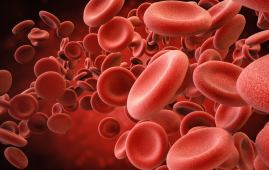 Oral Hormone Replacement Therapy Raises Blood Clot Risk
Key Points Oral hormone replacement therapy.
 GLP-1 Health Information: Quality, Completeness, & Engagement
Key Points A study assessed 128.
 DNA Damage Response May Drive Biological Aging
Key Points Chronic DNA damage response.
 Dietary Polyphenol Intake Associated With Lower MCI Odds
Key Points Older adults without mild.
 Maternal Diet Fails to Reduce Infant Egg and Peanut Allergy
Key Points A large Australian randomized.
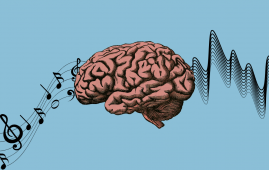 Psychedelic-Assisted Psychotherapy: Music in Treatment
Key Takeaways Psychedelic-assisted psychotherapy combines psychedelic.
 Cardiovascular Frailty Links Heart Health and Aging
Key Points Cardiovascular frailty may connect.
Leave a Comment