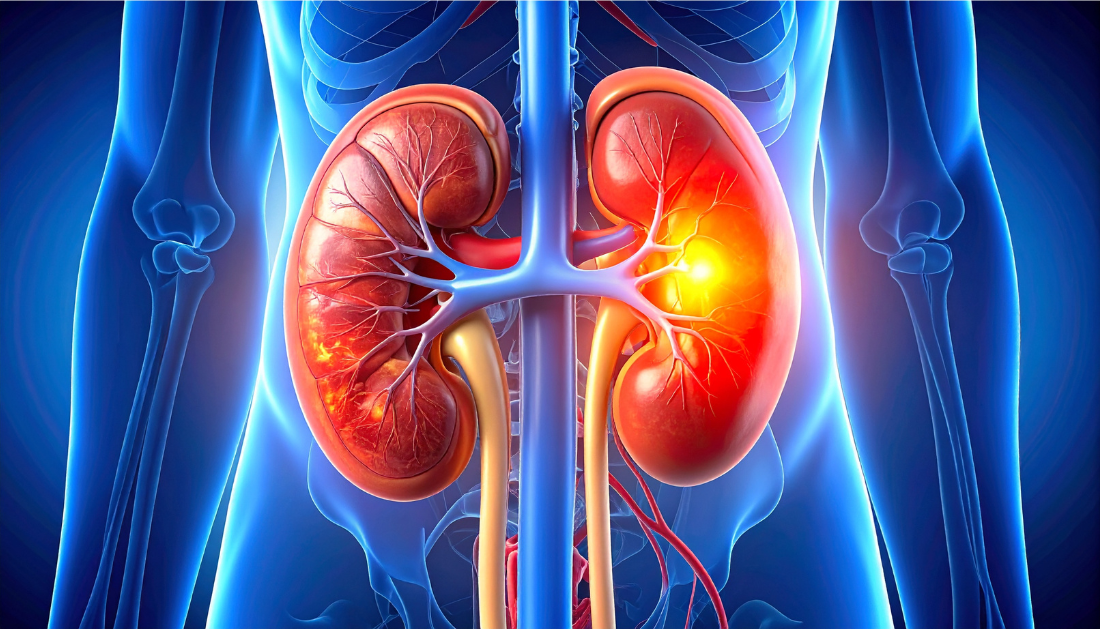
Diabetic Kidney Disease Study Highlights Senolytic Therapy

Diabetic kidney disease remains the leading cause of kidney failure, affecting more than 12 million individuals in the United States alone. While several therapies can slow kidney damage, clinicians still face a major challenge: there is no definitive cure.
A research team from Mayo Clinic has reported promising results from a combination therapy designed to eliminate senescent cells, often referred to as “zombie cells.” These cells accumulate in tissues and contribute to inflammation, aging processes, and organ damage.
Published in eBioMedicine, the study indicates that combining Dasatinib, a cancer drug, with Quercetin, a naturally occurring flavonoid, may reduce cellular senescence and improve kidney health in diabetic conditions.
In diabetic kidney disease, long-term metabolic stress contributes to tissue injury and the accumulation of senescent cells. Unlike normal cells, these cells fail to undergo programmed cell death and instead remain active in tissues, releasing inflammatory signals that worsen organ damage.
Researchers have increasingly explored senolytics, a class of therapies designed to selectively remove these dysfunctional cells.
The team, led by LaTonya Hickson, evaluated the impact of the Dasatinib–Quercetin combination in a preclinical model of diabetic kidney disease. The therapy was administered over a short treatment course.
Results showed:
Laboratory experiments using cultured human kidney cells also confirmed that the therapy decreased senescent cells and the inflammatory pathways they trigger.
Interest in targeting senescence has been growing as researchers seek new ways to slow organ deterioration in chronic diseases. In an earlier pilot clinical trial, investigators from Mayo Clinic reported that the same combination therapy reduced senescent cells in the skin and fat tissue of patients with diabetic kidney disease.
However, its direct impact on kidney tissue had not been previously demonstrated.
Lead author Xiaohui Bian emphasized that the study aimed to confirm kidney effects using noninvasive approaches rather than invasive procedures.
The findings showed that the therapy not only reduced senescence but also improved markers associated with kidney protection and tissue repair.
For nephrologists and clinicians managing diabetic complications, the results suggest that senolytic therapies may provide a new strategy to slow kidney damage. Researchers note that larger clinical studies will be required to confirm safety, dosing, and long-term benefits.
If validated in future trials, this approach could help reduce inflammation, limit tissue injury, and potentially slow the progression of diabetic kidney disease.

 Night Shift Work Alters Key Circadian Gene Expression
A recent study published in Frontiers.
 Tirzepatide Weight Loss: Fat Mass and Muscle Findings
Key points Tirzepatide was associated with.
 Coffee and Gut Microbiome: Brewing and Metabolic Effects
Key Points Coffee contains caffeine, chlorogenic.
 Low-Dose Radiation Therapy Shows Promise in Early Knee OA
Key Points Low-dose radiation therapy was.
 Oral Hormone Replacement Therapy Raises Blood Clot Risk
Key Points Oral hormone replacement therapy.
 GLP-1 Health Information: Quality, Completeness, & Engagement
Key Points A study assessed 128.
 DNA Damage Response May Drive Biological Aging
Key Points Chronic DNA damage response.
 Maternal Diet Fails to Reduce Infant Egg and Peanut Allergy
Key Points A large Australian randomized.
 Psychedelic-Assisted Psychotherapy: Music in Treatment
Key Takeaways Psychedelic-assisted psychotherapy combines psychedelic.
 Cardiovascular Frailty Links Heart Health and Aging
Key Points Cardiovascular frailty may connect.
Leave a Comment