Laser Treatment for Glioblastoma May Extend Patient Survival

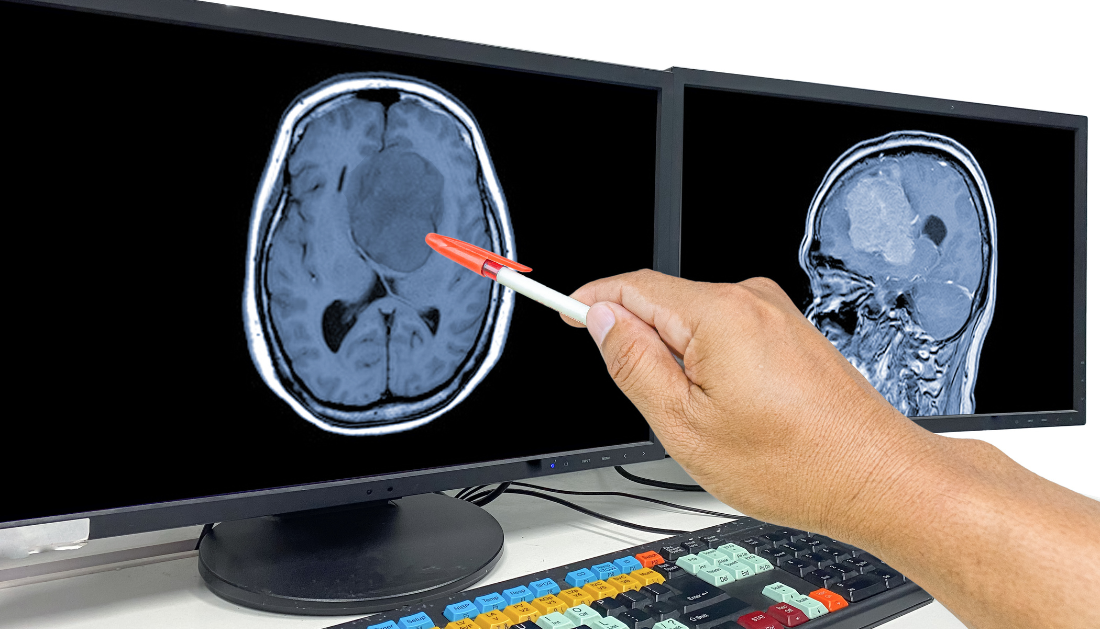
Laser treatment for glioblastoma is gaining attention as a minimally invasive option for selected patients with recurrent, difficult-to-access, or otherwise inoperable brain tumors. The approach, known as laser interstitial thermal therapy (LITT), uses a small opening in the skull to insert a laser probe into the tumor.
Using real-time MRI guidance, neurosurgeons can direct the probe through the brain while limiting injury to surrounding healthy tissue. The laser then generates controlled heat to destroy tumor cells. Unlike conventional open brain surgery, LITT requires only a small incision and can allow patients to return home sooner.
A new analysis led by Washington University School of Medicine in St. Louis evaluated 787 patients treated across 25 U.S. centers. Published in the Journal of Clinical Oncology, the study examined factors associated with improved outcomes following laser therapy.
The researchers found that the extent of tumor destruction played an important role in survival, particularly among patients with newly diagnosed glioblastoma. Patients who achieved at least 91% tumor clearance had a survival of 2.1 years from diagnosis.
This finding is clinically relevant because conventional open surgical resection for glioblastoma is associated with a median survival of approximately 1.5 years. The results suggest that LITT may warrant consideration earlier in treatment for carefully selected patients, although further clinical evaluation is needed to define its appropriate role.
The study also identified a potential timing factor in brain metastasis treatment. Patients whose metastatic tumors were still small when treated with LITT experienced better survival outcomes than those treated after further tumor growth. These findings may prompt clinicians to reconsider prolonged imaging-based observation in selected patients after prior radiation therapy.
Beyond survival, the analysis reinforced the tolerability of laser interstitial thermal therapy for brain tumors. Patients typically required a hospital stay of about 32 hours, with many avoiding intensive care and readmission. The minimally invasive approach also supported faster recovery and reduced reliance on anti-seizure medication compared with pretreatment levels.
For neurosurgeons, neuro-oncologists, radiation oncologists, and oncology nurses, these findings highlight tumor volume, treatment timing, and extent of ablation as important considerations when evaluating LITT candidates. The results support continued investigation of this technology as part of multidisciplinary brain tumor care.

 Gamma Oscillations Restored in Alzheimer’s Disease Mice
Key takeaways Researchers restored parvalbumin (PV).
 Coffee Consumption Linked to Lower Recurrent VTE Risk
Key points at a glance Study.
 Body Roundness Index Linked to Higher Heart Attack Risk
Key findings at a glance Study.
 Maternal Diet Fails to Reduce Infant Egg and Peanut Allergy
Key Points A large Australian randomized.
 Visual Impairment Linked to Higher Dementia Risk
Key findings at a glance A.
 Long-Acting HIV Treatment May Help Drug-Resistant Cases
Key Takeaways A UCSF study found.
 Epilepsy Drugs May Interact With Hormonal Contraceptives
Key points: Nearly one-third of people.
 Night Shift Work Alters Key Circadian Gene Expression
A recent study published in Frontiers.
 Tirzepatide Weight Loss: Fat Mass and Muscle Findings
Key points Tirzepatide was associated with.
 Coffee and Gut Microbiome: Brewing and Metabolic Effects
Key Points Coffee contains caffeine, chlorogenic.
Leave a Comment