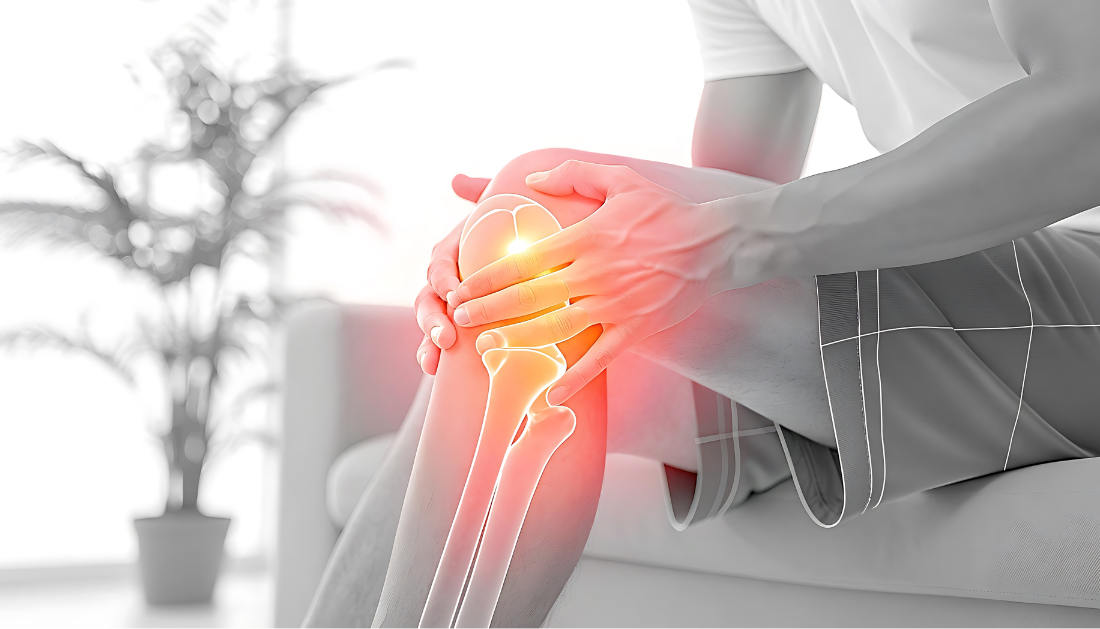
Meniscal Tear Study Supports Home Exercise Therapy

A new study published in the New England Journal of Medicine offers encouraging evidence that home exercise programs can significantly reduce knee pain among individuals with meniscal tear and osteoarthritis, even without in-person physical therapy.
The multicenter Treatment of Meniscal Problems in Osteoarthritis (TeMPO) trial, conducted by Mass General Brigham researchers, enrolled 879 adults aged around 59 years across four major U.S. hospitals, Brigham and Women’s Hospital, University at Buffalo, Cleveland Clinic, and University of Pittsburgh. Participants were assigned to one of three treatment groups:
Each participant received a 25-minute lower extremity stretching and strengthening routine to perform four times per week, guided by educational videos and pamphlets. Those in PT groups met therapists for 30-minute sessions, starting twice weekly and tapering over three months.
At the three-month mark, the researchers found no statistically significant difference in pain relief between the three groups. However, patients receiving either standard or sham PT experienced slightly greater pain improvement at six and twelve months. The additional benefit, according to investigators, may stem from the interpersonal aspects of therapist interactions rather than the physical therapy techniques themselves.
This finding highlights a subtle but important insight: therapeutic relationships and patient engagement may contribute meaningfully to symptom improvement in chronic musculoskeletal conditions. Importantly, even without these sessions, home exercise alone produced marked pain reduction, providing a low-cost, scalable, and accessible strategy for managing knee osteoarthritis and meniscal injuries.
For clinicians and rehabilitation experts, this study underscores the growing potential of home-based physical rehabilitation in routine orthopedic care. As telehealth and digital monitoring tools expand, these findings validate that guided home exercises can achieve meaningful outcomes without intensive clinic visits.
“On average, participants in all groups reported moderately severe pain at the start of the study and much milder pain three, six, and 12 months later. We observed similar improvement in the standard PT and sham PT groups, suggesting that personal interactions with a physical therapist may have been more influential than the physical therapy itself.”
– Dr. Jeffrey Katz, MD, MSc, Clinical Director, Orthopaedic and Arthritis Center for Outcomes Research, Brigham and Women’s Hospital
Such an approach not only reduces healthcare costs but also enhances patient autonomy, offering practical advantages for those with limited access to physical therapy services. The results support integrating structured exercise education into early arthritis management plans to sustain mobility and delay surgical interventions.

 One Health Summit: WHO Leads Global Health Response
Key Highlights Global leaders convened in.
 Prenatal Smoking Raises Risk of Child Mental Disorders
Key Summary Prenatal smoking is associated.
 Stroke Risk Linked to Low Birthweight, Not Adult BMI
Key Points Low birthweight is associated.
 Physical Activity Guidelines Gap: Walking is Insufficient
Quick Summary Walking remains the most.
 Breast Cancer Risk Rises with Aging Tissue Changes
Key Highlights A 3-million-cell atlas reveals.
 Type 2 Diabetes Risk Rising in Genetically Susceptible
Quick Summary Rising type 2 diabetes.
 Female Microbiome Shaped by Diet, Stress, Unhealthy Lifestyle
Quick Summary Lifestyle factors significantly influence.
 Transcatheter Valve-in-Valve Improves Mitral Outcomes
Key Highlights Transcatheter mitral valve-in-valve (mVIV).
 Stroke Rehabilitation: Early High-Intensity Therapy Findings
Key Highlights High-intensity therapy within 2.
 TRPM8 Cold Sensation Mechanism Explained for Pain Care
Quick Summary TRPM8 ion channel converts.
Leave a Comment