Image by studiogstock on Freepik

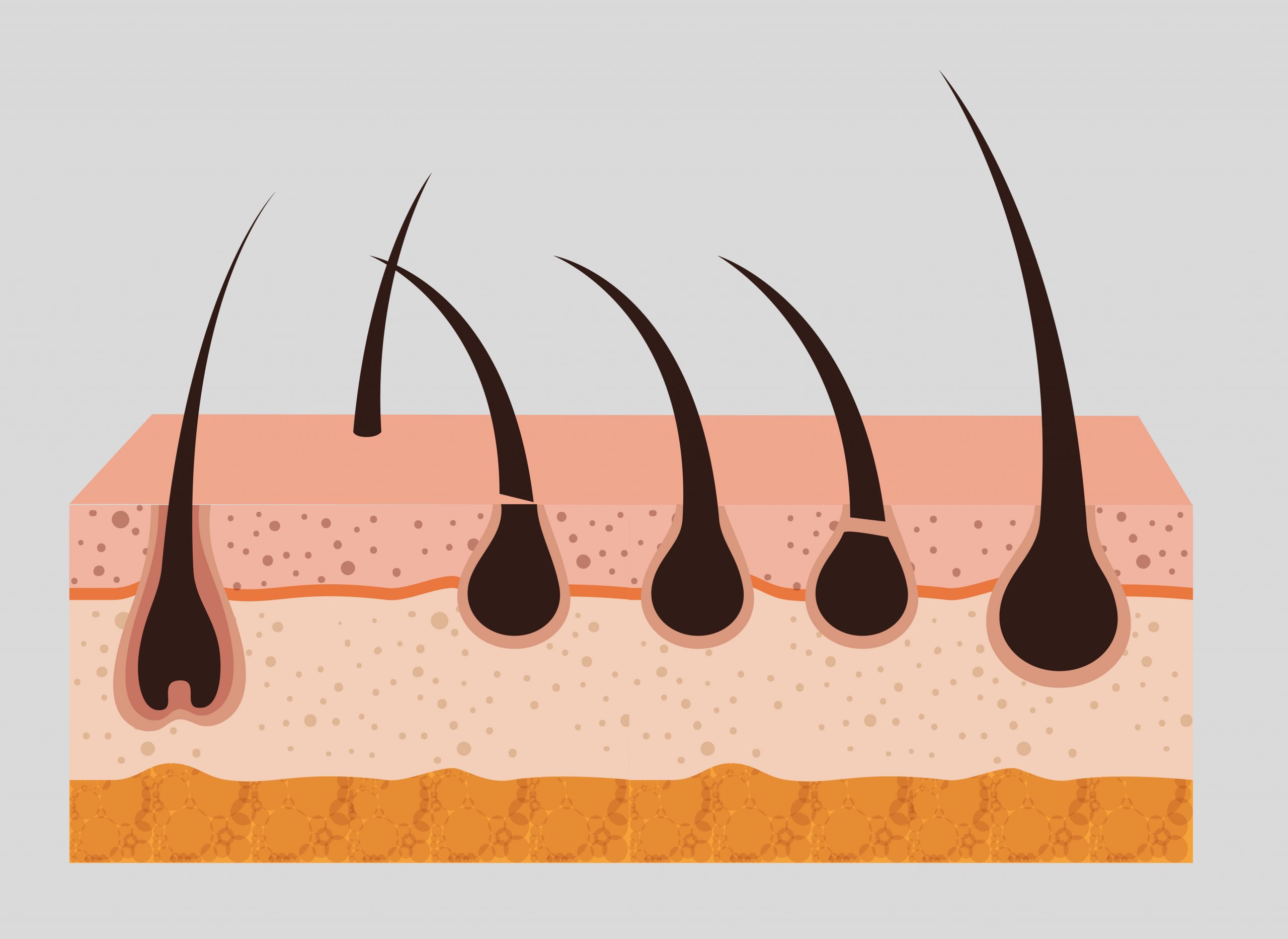
Just as people’s joints stiffen with age, making it difficult to move about, hair follicle stem cells stiffen, making it difficult to develop hair, according to a new Northwestern Medicine study. The scientists discovered that softening MicroRNA cells of the hair follicle increases their likelihood of producing hair.
Northwestern researchers discovered how to soften those stem cells, allowing them to regrow hair. The researchers describe in a mouse study published this week in PNAS that they can soften the stem cells by increasing the synthesis of a little RNA called miR-205, which relaxes the hardness of the cells. Researchers genetically modified stem cells to create more miR-205, which stimulated hair growth in both young and old mice.
“They started to grow hair in 10 days,” said corresponding author Rui Yi, the Paul E. Steiner Research Professor of Pathology and professor of dermatology at Northwestern University Feinberg School of Medicine. “These are not new stem cells being generated. We are stimulating the existing stem cells to grow hair. A lot of times we still have stem cells, but they may not be able to generate the hair.
“Our study demonstrates the possibility of stimulating hair growth by regulating cell mechanics. Because of the potential to deliver microRNA by nanoparticles directly into the skin, next we will test whether topically delivered miR-205 can stimulate hair growth first in mice. If successful, we will design experiments to test whether this microRNA can promote hair growth potentially in humans.”
This research was carried out in genetically modified mice models. The scientists used advanced microscopy technologies, such as atomic force microscopy and two-photon microscopy, to detect stiffness and track cell activities in live animals.
Jingjing Wang, Yuheng Fu, and Kathleen Green are among the other Northwestern authors.
The article is titled “MicroRNA-205 promotes hair regeneration by modulating mechanical properties of hair follicle stem cells.”

 Night Shift Work Alters Key Circadian Gene Expression
A recent study published in Frontiers.
 Tirzepatide Weight Loss: Fat Mass and Muscle Findings
Key points Tirzepatide was associated with.
 Coffee and Gut Microbiome: Brewing and Metabolic Effects
Key Points Coffee contains caffeine, chlorogenic.
 Low-Dose Radiation Therapy Shows Promise in Early Knee OA
Key Points Low-dose radiation therapy was.
 Oral Hormone Replacement Therapy Raises Blood Clot Risk
Key Points Oral hormone replacement therapy.
 GLP-1 Health Information: Quality, Completeness, & Engagement
Key Points A study assessed 128.
 DNA Damage Response May Drive Biological Aging
Key Points Chronic DNA damage response.
 Maternal Diet Fails to Reduce Infant Egg and Peanut Allergy
Key Points A large Australian randomized.
 Psychedelic-Assisted Psychotherapy: Music in Treatment
Key Takeaways Psychedelic-assisted psychotherapy combines psychedelic.
 Cardiovascular Frailty Links Heart Health and Aging
Key Points Cardiovascular frailty may connect.
Leave a Comment