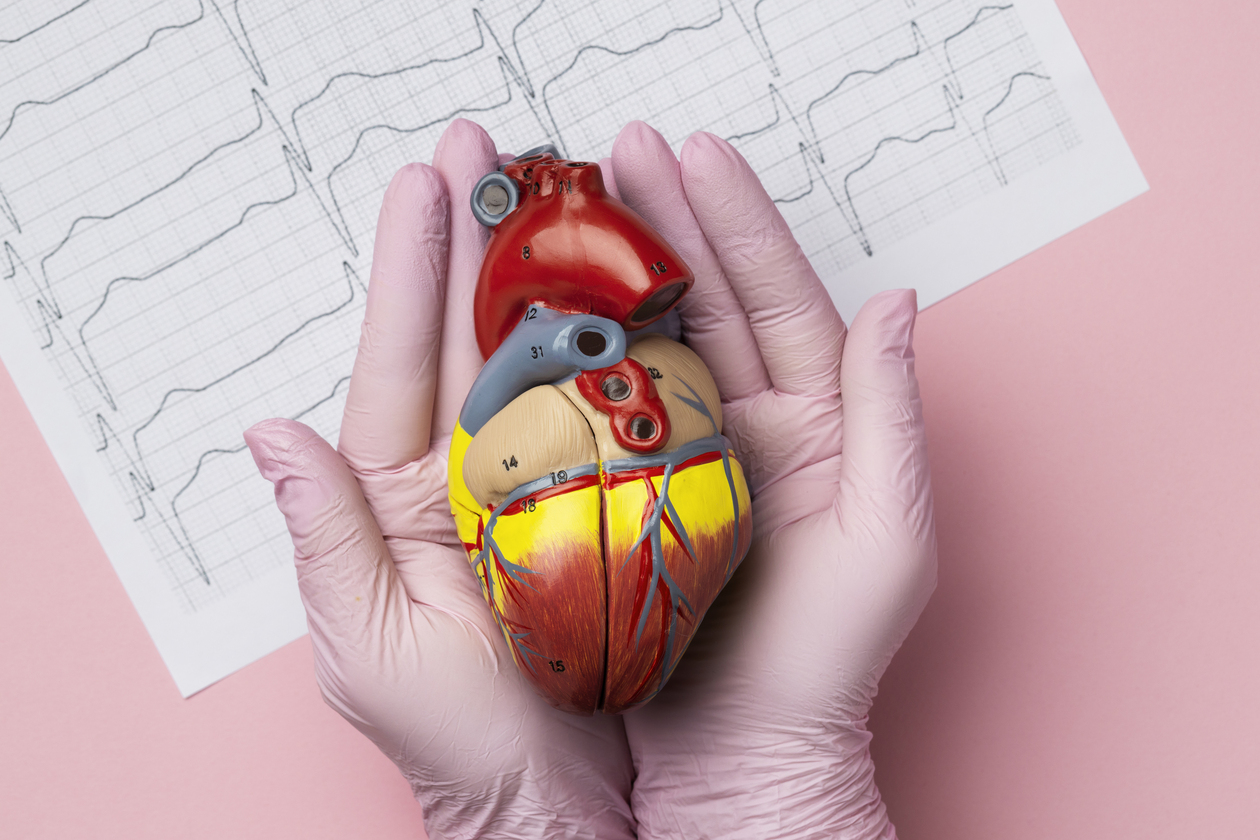
Image by Freepik

A groundbreaking technique has been developed by scientists from the University of East Anglia to detect individuals susceptible to an irregular heartbeat, medically termed atrial fibrillation.
While non-lethal, this condition significantly amplifies the likelihood of individuals experiencing a transient ischemic attack (TIA) or stroke by a factor of up to five.
Unveiled on August 27 through a publication in the European Journal of Preventive Cardiology, a recent research study revealed four distinct elements that can anticipate the onset of atrial fibrillation in patients. These factors encompass advancing age, elevated diastolic blood pressure, and complications pertaining to both coordination and operation of the upper left heart chamber.
Subsequently, the group proceeded to develop a user-friendly instrument tailored for medical practitioners. This tool proves effective in pinpointing individuals with heightened vulnerability. The team holds optimistic aspirations that this innovation will enhance diagnostic capabilities and bolster therapeutic interventions, thereby mitigating the likelihood of prospective strokes.
Heading the research endeavor is Prof. Vassilios Vassiliou, a distinguished figure affiliated with UEA’s Norwich Medical School and an esteemed Cardiologist serving as an Honorary Consultant at the Norfolk and Norwich University Hospital, who said, “Identifying who is at high risk and more likely to develop atrial fibrillation is very important.”
“This is because it requires specific treatment with anticoagulants, commonly known as blood thinners, to reduce the risk of future strokes.
“Patients who have had a stroke usually undergo multiple investigations to determine the cause of the stroke, as this can influence the treatment they receive long-term.”
“These investigations include prolonged monitoring of the heart rhythm with a small implantable device called a loop recorder, and an ultrasound of the heart, called an echocardiogram.”
Gathering information from 323 patients spanning the East of England, individuals attended to at Cambridge University Hospital following a stroke lacking an identifiable cause, referred to as Embolic Stroke of Undetermined Source, constituted the study’s focal point. A meticulous examination of medical documents was carried out, along with extensive scrutiny of prolonged heart rhythm surveillance and a thorough analysis of echocardiograms.
Prof. Vassiliou said, “We determined how many of these patients were found to have atrial fibrillation up to three years following their stroke, and went on to perform a thorough assessment to identify if there are specific parameters that are connected with atrial fibrillation identification.
“We identified four parameters that were linked with the development of atrial fibrillation, which were consistently present in patients that had this arrhythmia. We then developed a model that can be used to predict who will show atrial fibrillation in the next three years, and is therefore at increased risk of another stroke in the future.”
“This is a very easy tool that any doctor can use in clinical practice,” he added.
“And it can potentially help doctors provide more targeted and effective treatment to these patients, ultimately aiming to highlight the people at higher risk of this arrhythmia that can benefit from prolonged heart rhythm monitoring and earlier anticoagulation to prevent a future stroke.”
At the helm of this research venture stood the University of East Anglia, in conjunction with collaborators including Cambridge University Hospitals NHS Foundation Trust, West Suffolk Hospital NHS Foundation Trust, the University of Cambridge, the Norfolk and Norwich University Hospital, and the University of Newcastle.

 Gamma Oscillations Restored in Alzheimer’s Disease Mice
Key takeaways Researchers restored parvalbumin (PV).
 Coffee Consumption Linked to Lower Recurrent VTE Risk
Key points at a glance Study.
 Body Roundness Index Linked to Higher Heart Attack Risk
Key findings at a glance Study.
 Maternal Diet Fails to Reduce Infant Egg and Peanut Allergy
Key Points A large Australian randomized.
 Visual Impairment Linked to Higher Dementia Risk
Key findings at a glance A.
 Long-Acting HIV Treatment May Help Drug-Resistant Cases
Key Takeaways A UCSF study found.
 Night Shift Work Alters Key Circadian Gene Expression
A recent study published in Frontiers.
 Tirzepatide Weight Loss: Fat Mass and Muscle Findings
Key points Tirzepatide was associated with.
 Coffee and Gut Microbiome: Brewing and Metabolic Effects
Key Points Coffee contains caffeine, chlorogenic.
 Low-Dose Radiation Therapy Shows Promise in Early Knee OA
Key Points Low-dose radiation therapy was.
Leave a Comment