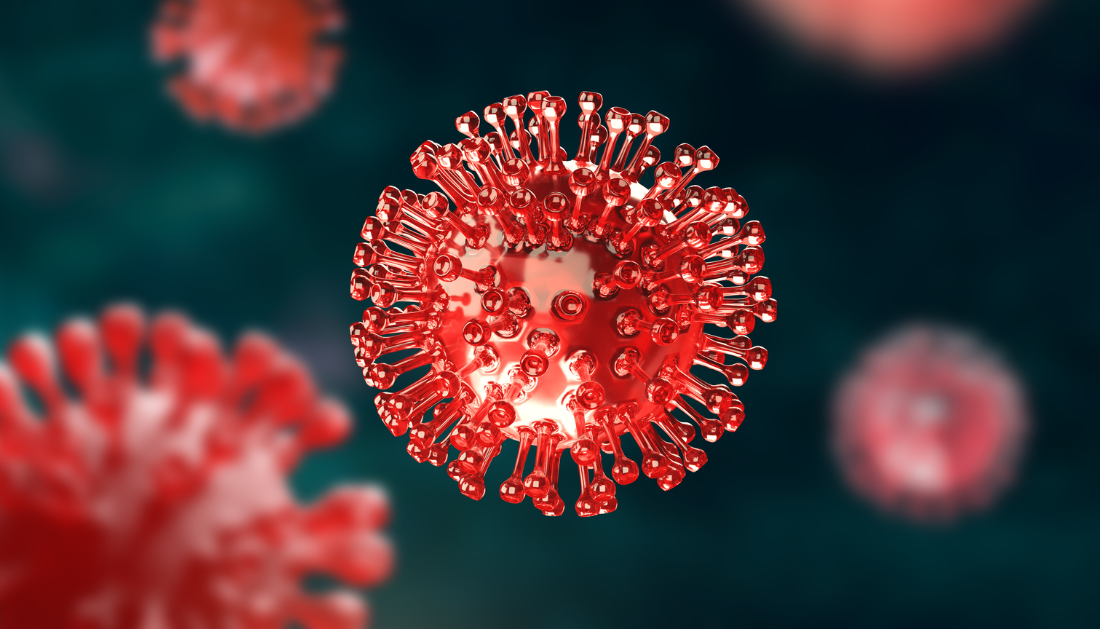
Andes Virus Shows Limited Spread Compared With COVID-19

The recent identification of Andes hantavirus cases linked to the MV Hondius cruise ship has sparked public concern and renewed memories of the early days of the COVID-19 pandemic. Several affected travelers developed severe respiratory illness, prompting questions about whether the virus could trigger a global health emergency.
However, a new analysis published in Eurosurveillance highlights critical biological and epidemiological differences between Andes hantavirus and SARS-CoV-2, reassuring healthcare professionals that the risk of a COVID-19-style pandemic remains low.
Unlike SARS-CoV-2, which spreads efficiently through respiratory droplets and aerosols, Andes hantavirus is primarily a rodent-borne virus found in Argentina and Chile. Human infection most often occurs after inhaling dust contaminated with excreta from infected rodents, particularly the long-tailed pygmy rice rat.
Researchers report that the Andes virus primarily uses the protocadherin-1 (PCDH1) receptor on pulmonary endothelial cells to enter the body. This mechanism contributes to vascular leakage and severe pulmonary complications. In contrast, SARS-CoV-2 targets ACE2 receptors throughout the respiratory tract, enabling rapid replication and efficient human-to-human transmission.
Another important distinction involves viral shedding. The Andes virus is mainly detected in blood samples, with only limited presence in saliva or respiratory secretions. SARS-CoV-2, however, is abundantly shed through the upper respiratory tract, facilitating widespread transmission.
The incubation period further separates the two pathogens. Andes hantavirus can remain dormant for up to six weeks, with a median incubation period of approximately 20 days. SARS-CoV-2 variants typically produce symptoms within three to five days.
Although rare cases of person-to-person transmission have been documented, scientists emphasize that Andes hantavirus transmission remains limited and inefficient.
The frequently cited Epuyén outbreak in Argentina provided the strongest evidence of human-to-human spread. Even then, transmission chains remained short and were usually restricted to close household or sexual contacts. Researchers found no evidence of widespread asymptomatic transmission, a factor that significantly contributed to the rapid global spread of COVID-19.
Most introductions of the Andes virus fail to generate secondary cases. This contrasts sharply with SARS-CoV-2 outbreaks, where pre-symptomatic and asymptomatic transmission fueled rapid community spread and high reproduction rates.
Diagnostic approaches also differ substantially. Clinicians diagnose Andes hantavirus primarily through RT-PCR testing of blood samples, supported by serological testing for IgM and IgG antibodies. COVID-19 testing relies largely on respiratory specimens collected from the upper airway.
Genomic studies offer additional reassurance. While SARS-CoV-2 continually acquired mutations that improved transmissibility and immune escape, Andes virus demonstrates relatively stable genetic characteristics. Investigators have not identified mutations associated with enhanced adaptation to humans or increased transmission potential.
WHO and the European Centre for Disease Prevention and Control (ECDC) continue to classify the public health risk as low. Current guidance recommends environmental investigations, case isolation, and targeted contact tracing rather than large-scale pandemic response measures.
For healthcare professionals, the message is clear: despite recent attention, Andes hantavirus remains fundamentally different from SARS-CoV-2 and does not currently present a comparable pandemic threat.

 Gamma Oscillations Restored in Alzheimer’s Disease Mice
Key takeaways Researchers restored parvalbumin (PV).
 Coffee Consumption Linked to Lower Recurrent VTE Risk
Key points at a glance Study.
 Body Roundness Index Linked to Higher Heart Attack Risk
Key findings at a glance Study.
 Maternal Diet Fails to Reduce Infant Egg and Peanut Allergy
Key Points A large Australian randomized.
 Visual Impairment Linked to Higher Dementia Risk
Key findings at a glance A.
 Long-Acting HIV Treatment May Help Drug-Resistant Cases
Key Takeaways A UCSF study found.
 Night Shift Work Alters Key Circadian Gene Expression
A recent study published in Frontiers.
 Tirzepatide Weight Loss: Fat Mass and Muscle Findings
Key points Tirzepatide was associated with.
 Coffee and Gut Microbiome: Brewing and Metabolic Effects
Key Points Coffee contains caffeine, chlorogenic.
 Low-Dose Radiation Therapy Shows Promise in Early Knee OA
Key Points Low-dose radiation therapy was.
Leave a Comment