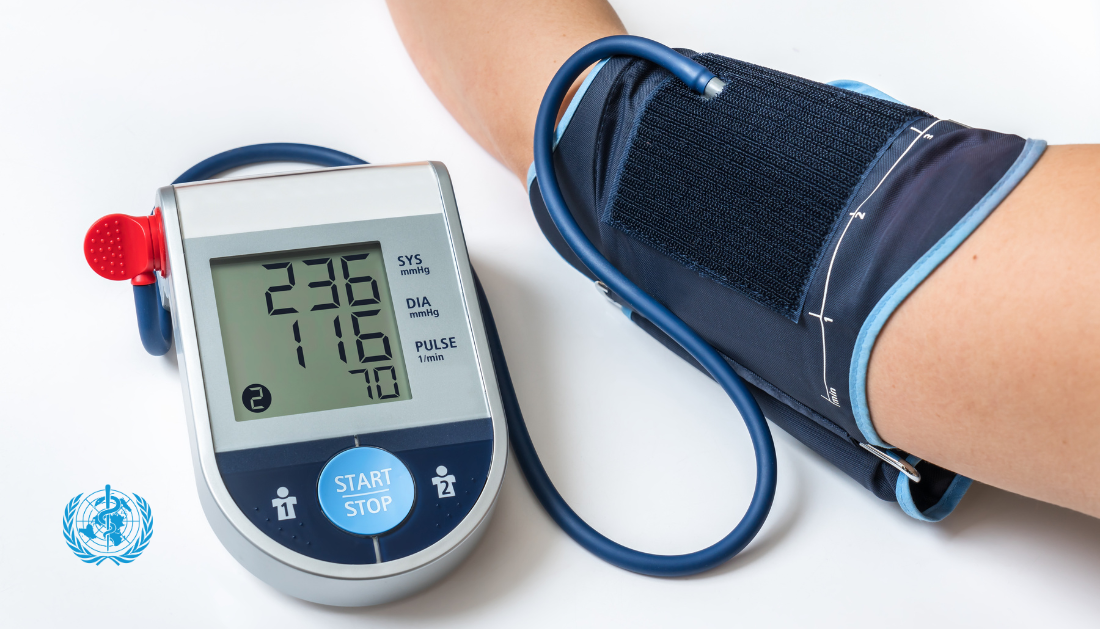
Hypertension Control Key to Preventing 10M Deaths

The World Health Organization (WHO) has released its Global Hypertension Report 2025, highlighting that 1.4 billion people worldwide live with hypertension. Alarmingly, only one in five individuals has their blood pressure under control. The report warns that uncontrolled hypertension is responsible for over 10 million preventable deaths annually, primarily due to heart attacks, strokes, kidney disease, and dementia.
Experts stress that it is both preventable and treatable, but poor access to essential medicines and inadequate healthcare systems continue to fuel the crisis. If left unaddressed, low- and middle-income countries could face an estimated $3.7 trillion economic loss from cardiovascular diseases between 2011 and 2025.
The report, presented during the 80th United Nations General Assembly, analyzed data from 195 countries and found critical disparities in hypertension care:
– Dr. Tom Frieden, President & CEO, Resolve to Save Lives.
WHO emphasizes the need for integrated care within universal health coverage (UHC), improved medicine supply chains, and stronger regulatory systems to close these gaps.
Several countries have successfully improved control through strategic interventions:
-Dr. Tedros Adhanom Ghebreyesus, WHO Director-General.
WHO urges governments to embed hypertension services into primary care systems, improve public awareness, and prioritize lifestyle changes such as reduced salt intake, increased physical activity, and regular blood pressure screenings.
Source:

 Smoking and Loneliness Linked in Large European Study
Key points: A Europe-wide study of.
 Women’s Healthcare Advances Through FemTech
Key Summary FemTech has grown from.
 Mazdutide Shows Significant Weight Loss in Phase 3 Trial
Key Summary Mazdutide, a dual GLP-1.
 Ozone Pollution Reduces Exercise Benefits in Children
Key Summary Vigorous physical activity supports.
 Walking 8,500 Steps May Prevent Weight Regain
Key Points A new meta-analysis presented.
 Hantavirus Cruise Ship Outbreak: WHO Issues Update
Key Points WHO confirmed a cluster.
 Autoimmune Diseases in Women Linked to Gene Regulation
Key Points Researchers identified more than.
 Nutrition Research: Why Context Matters for Healthy Foods
Quick Summary Foods do not have.
 Hyperemesis Gravidarum Genes: Largest GWAS Study
Quick Summary Largest GWAS identifies 10.
 GLP-1 Drug Effectiveness Reduced by Genetic Variants
Key Points Summary Genetic variants in.
Leave a Comment