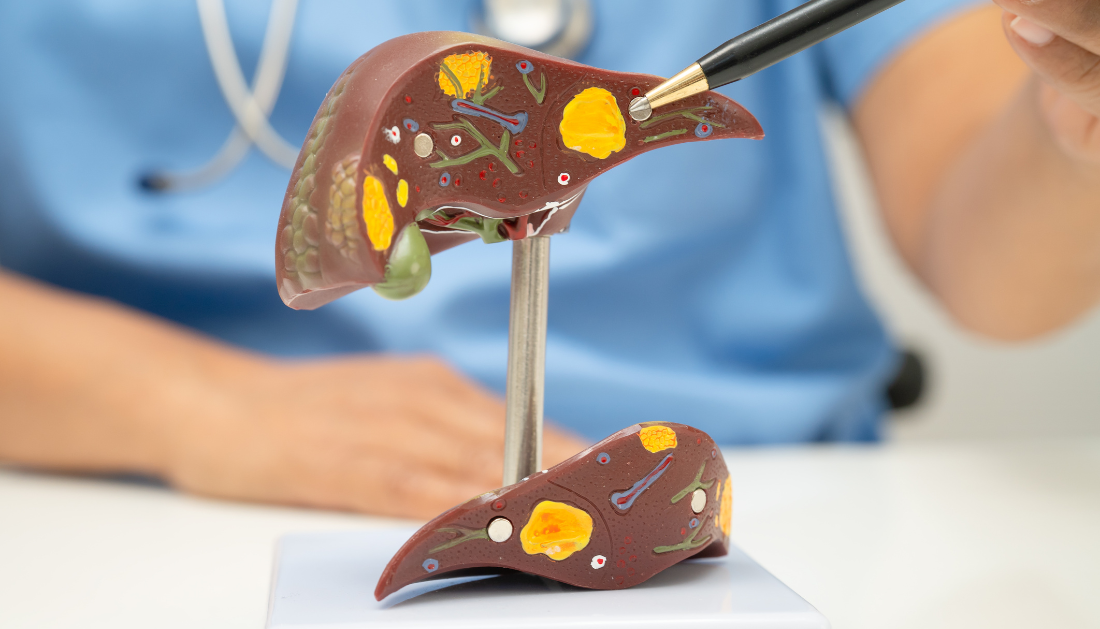
Fragmentome Technology for Early Liver Fibrosis

Researchers at the Johns Hopkins Kimmel Cancer Center have applied fragmentome technology, previously studied in oncology, to chronic liver disease detection. Published in the Science Translational Medicine, the study describes an artificial intelligence–driven liquid biopsy platform that analyzes genome-wide cell-free DNA (cfDNA) fragmentation patterns rather than gene mutations.
Unlike traditional liquid biopsies that search for cancer-related mutations, this approach evaluates how DNA fragments are cut, sized, and distributed across the entire genome, including repetitive regions. Investigators performed whole-genome sequencing on cfDNA from 1,576 individuals with liver disease and comorbidities, assessing nearly 40 million fragments per sample.
Machine-learning algorithms identified disease-specific fragmentation signatures, enabling classification of early-stage fibrosis, advanced fibrosis, and cirrhosis with high sensitivity. According to senior author Victor Velculescu, early detection is critical because fibrosis is potentially reversible before progression to cirrhosis or hepatocellular carcinoma.
For HCPs, this represents a shift toward AI-based liquid biopsy for liver disease, particularly in populations where conventional biomarkers lack sensitivity.
An estimated 100 million people in the United States have liver conditions that increase the risk of cirrhosis and cancer. Current blood-based fibrosis markers often fail to identify early disease, and imaging modalities such as specialized ultrasound or MRI may not be universally accessible.
This study introduces a fragmentation comorbidity index, developed in a subset of 570 individuals with suspected serious illness. The index distinguished high versus low Charlson Comorbidity Index scores and independently predicted overall survival. In some analyses, it demonstrated greater specificity than conventional inflammatory markers.
Importantly, the fragmentome platform generates disease-specific classifiers that do not cross-react. A fibrosis classifier is distinct from a cancer classifier, yet both are derived from the same genome-wide fragmentation framework.
Researchers also observed fragmentomic signals linked to cardiovascular, inflammatory, and neurodegenerative conditions, suggesting broader chronic disease applications. However, these findings remain exploratory and require further validation.
The liver fibrosis assay remains a prototype and is not yet available for routine clinical use. Future work will focus on validation, regulatory development, and expansion into additional chronic diseases.
For hepatologists, oncologists, primary care physicians, and nurses managing at-risk populations, fragmentome technology offers a promising, noninvasive strategy for earlier risk stratification. If validated, this approach could improve surveillance, guide timely interventions, and potentially reduce progression to cirrhosis and liver cancer.
As genome-wide cfDNA fragmentation profiling matures, AI-driven liquid biopsy may become a practical adjunct in chronic disease management and preventive oncology.

 Gamma Oscillations Restored in Alzheimer’s Disease Mice
Key takeaways Researchers restored parvalbumin (PV).
 Coffee Consumption Linked to Lower Recurrent VTE Risk
Key points at a glance Study.
 Body Roundness Index Linked to Higher Heart Attack Risk
Key findings at a glance Study.
 Maternal Diet Fails to Reduce Infant Egg and Peanut Allergy
Key Points A large Australian randomized.
 Visual Impairment Linked to Higher Dementia Risk
Key findings at a glance A.
 Long-Acting HIV Treatment May Help Drug-Resistant Cases
Key Takeaways A UCSF study found.
 Night Shift Work Alters Key Circadian Gene Expression
A recent study published in Frontiers.
 Tirzepatide Weight Loss: Fat Mass and Muscle Findings
Key points Tirzepatide was associated with.
 Coffee and Gut Microbiome: Brewing and Metabolic Effects
Key Points Coffee contains caffeine, chlorogenic.
 Low-Dose Radiation Therapy Shows Promise in Early Knee OA
Key Points Low-dose radiation therapy was.
Leave a Comment