Image by Freepik

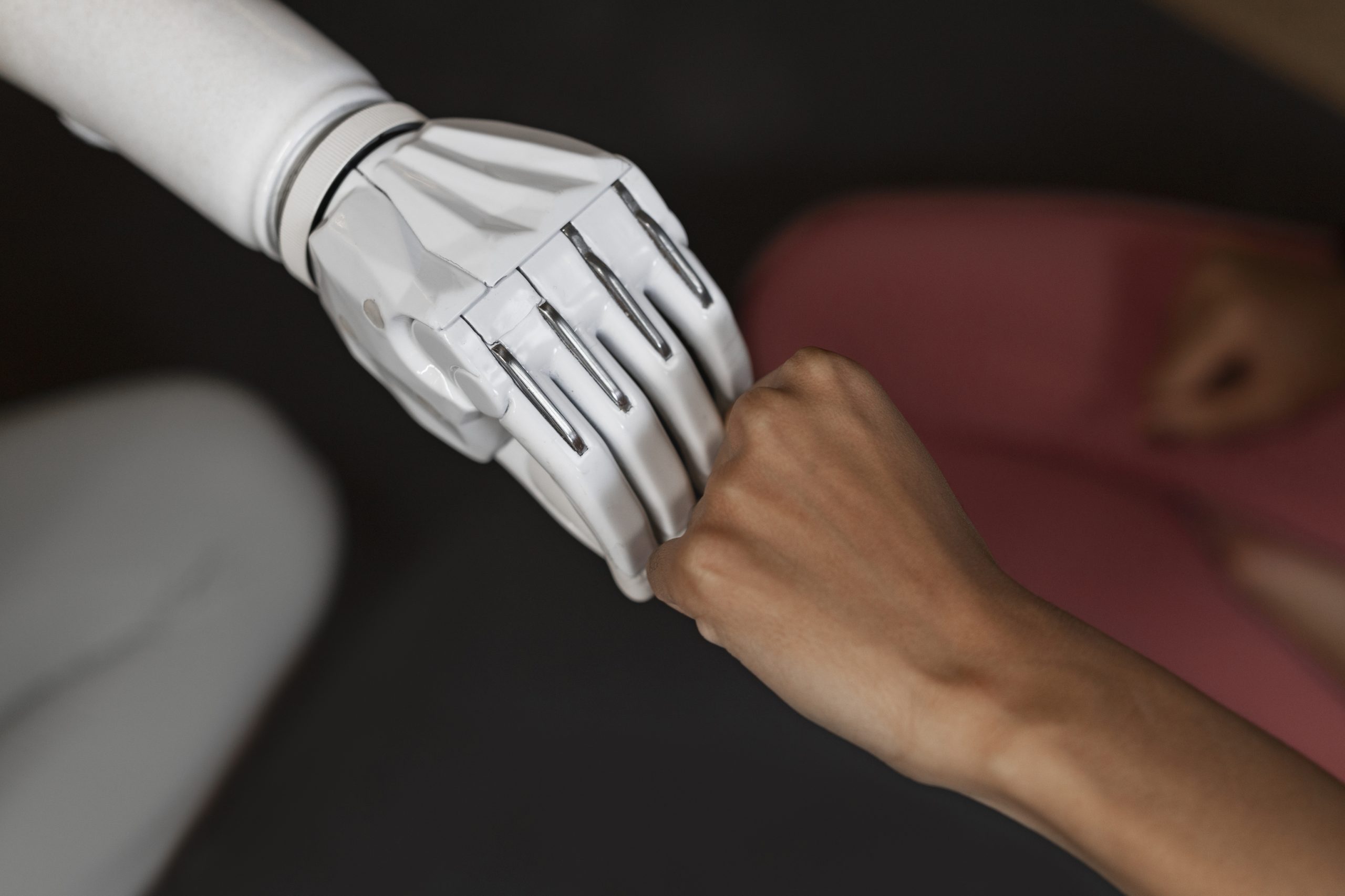
A new analysis from academics at Auckland, Duke, and Cornell Universities predicts that companion robots improved with artificial intelligence could one day help relieve the loneliness epidemic.
Their article, published in the most recent issue of Science Robotics, outlines some of the ethical implications for governments, policymakers, technologists, and physicians, and encourages stakeholders to collaborate to set principles for trust, agency, involvement, and real-world efficacy as soon as possible. It also suggests a new metric for determining if a companion robot is assisting someone.
Loneliness and social isolation affect up to one-third of the world’s population and have major health repercussions, including an increased risk of mental illness, obesity, dementia, and premature mortality. According to the Survey Center on American Life, the number of Americans who have no close friends has doubled since 1990.
According to US Surgeon General Vivek H. Murthy, M.D., loneliness may be as harmful to one’s health as smoking cigarettes. In contrast to anti-tobacco programs, matching people with friends necessitates more than a public service statement. Instead, equipping houses with companion robots to assist elderly people could be a viable answer to loneliness.
“AI presents exciting opportunities to give companion robots greater skills to build social connection,” said Professor Elizabeth Broadbent, of the Faculty of Medical and Health Sciences at Waipapa Taumata Rau, University of Auckland. “But we need to be careful to build in rules to ensure they are moral and trustworthy.”
Social robots such as the ElliQ have had thousands of encounters with humans, over half of which have been for ordinary companionship, such as company over a cup of tea or coffee. A growing corpus of research on companion robots suggests that they can help elderly people stay healthy and active in their homes by reducing stress and loneliness.
Newer robots with powerful AI programming may form stronger social bonds with humans than previous generations of robots. Generative AI, such as ChatGPT, which is built on huge language models, enables robots to engage in more spontaneous conversations and even replicate the voices of deceased friends and loved ones.
“Right now, all the evidence points to having a real friend as the best solution,” said Murali Doraiswamy, M.D., Professor of Psychiatry and Geriatrics at Duke University and a member of the Duke Institute for Brain Sciences. “But until society prioritises social connectedness and elder care, robots are a solution for the millions of isolated people who have no other solutions.”
According to the authors, doctors are mainly on board as well. In a Sermo study of 307 care providers from Europe and the United States, 70% agreed that social robots could give companionship, alleviate isolation, and improve patients’ mental health. The same majority of doctors believed that insurance companies should cover the cost of companion robots if they proved to be a useful friendship supplement. However, determining the influence of a robot remains difficult.
This lack of measurability emphasizes the importance of developing patient-rated outcome measures, such as the authors’. The “Companion Robot Impact Scale” (CoBot-I) intends to assess the influence of companion robots on physical health and loneliness, and it demonstrates that companion machines may already be useful.
Early results from Broadbent’s lab finds that amiable androids help reduce stress and even promote skin healing after a minor wound. “With the right ethical guidelines,” the authors conclude in their report, “we may be able to build on current work to use robots to create a healthier society.”

 Gamma Oscillations Restored in Alzheimer’s Disease Mice
Key takeaways Researchers restored parvalbumin (PV).
 Coffee Consumption Linked to Lower Recurrent VTE Risk
Key points at a glance Study.
 Body Roundness Index Linked to Higher Heart Attack Risk
Key findings at a glance Study.
 Maternal Diet Fails to Reduce Infant Egg and Peanut Allergy
Key Points A large Australian randomized.
 Visual Impairment Linked to Higher Dementia Risk
Key findings at a glance A.
 Long-Acting HIV Treatment May Help Drug-Resistant Cases
Key Takeaways A UCSF study found.
 Night Shift Work Alters Key Circadian Gene Expression
A recent study published in Frontiers.
 Tirzepatide Weight Loss: Fat Mass and Muscle Findings
Key points Tirzepatide was associated with.
 Coffee and Gut Microbiome: Brewing and Metabolic Effects
Key Points Coffee contains caffeine, chlorogenic.
 Low-Dose Radiation Therapy Shows Promise in Early Knee OA
Key Points Low-dose radiation therapy was.
Leave a Comment