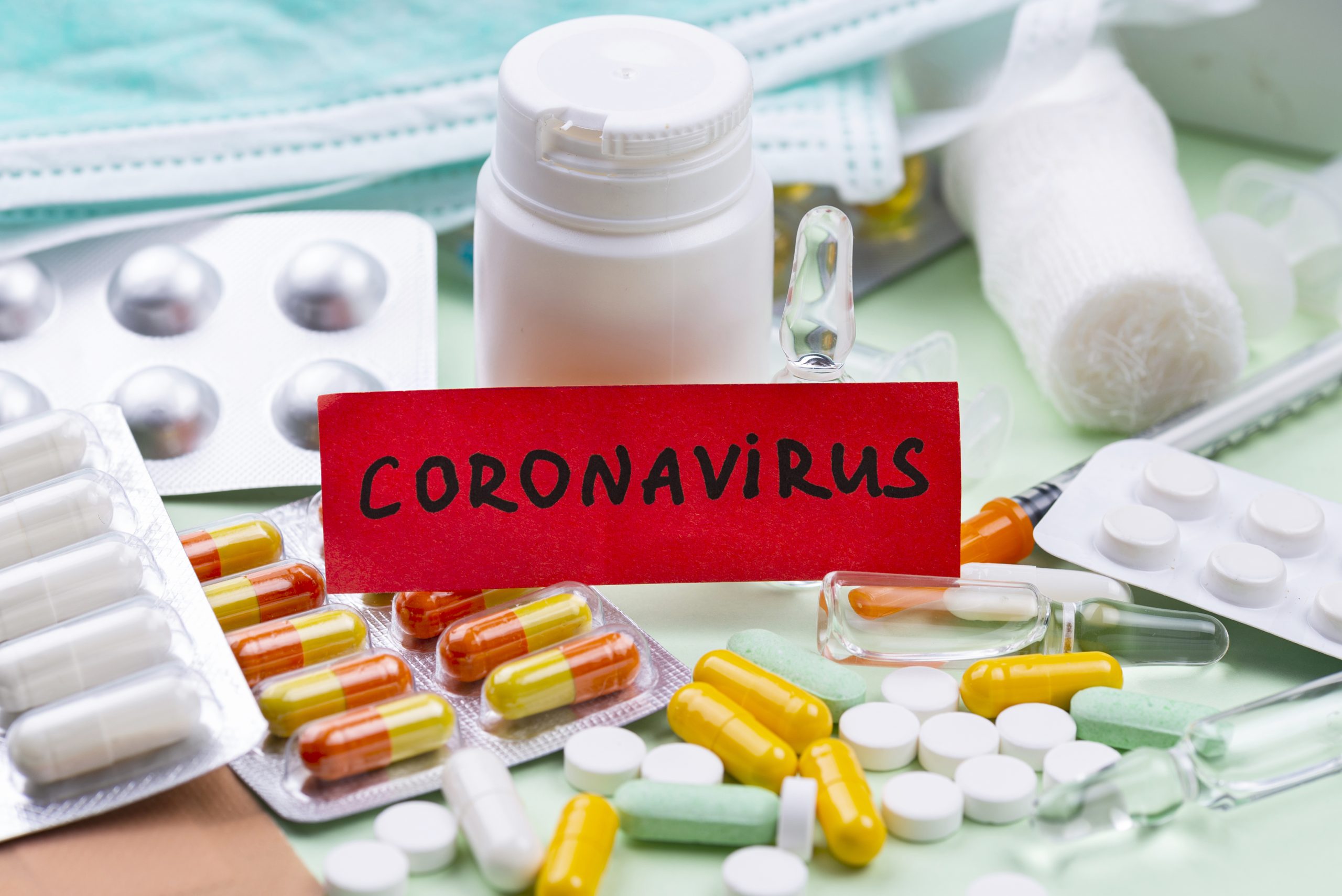
Image by Freepik

According to a national study led by Washington University School of Medicine in St. Louis, two anti-inflammatory drugs used to treat diseases such as rheumatoid arthritis and psoriasis did not shorten recovery time for patients hospitalized with severe COVID-19 but did reduce the likelihood of death when compared to standard care alone. The National Center for Advancing Translational Sciences (NCATS) of the National Institutes of Health (NIH), which is also part of HHS, coordinated the study.
The National Institutes of Health (NIH) established Accelerating COVID-19 Therapeutic Interventions and vaccinations (ACTIV) in April 2020, with the ultimate goal of accelerating the development of the most promising COVID-19 therapies and vaccinations.
As part of this collaboration, the ACTIV-1 Immune Modulator (IM) clinical study was created to test various medications at the same time. In subjects hospitalized with COVID-19, the researchers compared three anti-inflammatory drugs —infliximab, abatacept, or cenicriviroc—added to standard care with standard care alone. Remdesivir, an antiviral medication, and dexamethasone, a corticosteroid, are standard treatments for such patients. The study comprised 1,971 patients from 95 institutions in the United States and Latin America.
Even in the early days of the COVID-19 pandemic, it was clear that the body’s abnormal and dysregulated immune response to SARS-CoV-2, the virus that causes COVID-19, is frequently responsible for pneumonia, respiratory failure, and other serious illness outcomes.
“One of the fundamental questions of early COVID-19 research was whether we could dampen the inflammatory process using existing anti-inflammatory drugs,” said William G. Powderly, MD, the J. William Campbell Professor of Medicine & co-director of the Division of Infectious Diseases at Washington University School of Medicine in St. Louis. Powderly served as the national principal investigator leading the ACTIV-1 trial. “Our data suggest that two of the drugs we studied can be given to reduce mortality in severely ill patients. We hope this study will be helpful in revising guidelines for best practices in treating patients hospitalized with COVID-19.”
When combined with standard of care, these immune modulators did not result in a statistically significant difference in recovery time when compared to no usage of such drugs. However, Powderly stated that two of the three medication treatments are still clinically relevant, particularly in terms of one of the study’s primary secondary endpoints: death. Patients who got standard therapy plus either infliximab or abatacept died less than those who received normal care plus a placebo. The third medicine, cenicriviroc, was discontinued early since the evidence indicated no effect.
Abatacept, marketed under the brand name Orencia, is intended to treat joint swelling, discomfort, and exhaustion associated with rheumatoid arthritis. It is given through infusion and works by suppressing T cell responses. Infliximab, marketed as Remicade, is used to treat individuals with rheumatoid arthritis in combination with methotrexate, as well as those with chronic severe plaque psoriasis. The ACTIV-1 trial used a single infusion of abatacept and infliximab.
By day 28, 56 of 509 COVID-19 patients receiving abatacept had died (11% mortality). Over the same time period, 77 out of 510 patients in the placebo group died (15.1% mortality). This 4.1% difference equates to 21 fewer deaths among individuals given abatacept.
By day 28, 52 out of 517 patients receiving infliximab had died (10.1% mortality). By day 28, 75 of the 516 patients in the placebo group had died (14.5% mortality). This 4.4% difference equates to 23 fewer deaths among infliximab recipients.
Although the immune modulators utilized in this trial did not result in a statistically significant difference in recovery time when combined with standard of care, Powderly believes the mortality numbers revealed by this study are still clinically significant. Powderly believes that this type of research is critical for COVID-19 patients in the hospital because it means that treatment choices are always expanding.
We’ve now shown that there are multiple potential options available for COVID treatment,” Powderly added. “But ideally, we as doctors don’t want to have to treat COVID pneumonia. We much prefer to prevent it, and vaccines are still the best way to prevent severe COVID-19.”

 Gamma Oscillations Restored in Alzheimer’s Disease Mice
Key takeaways Researchers restored parvalbumin (PV).
 Coffee Consumption Linked to Lower Recurrent VTE Risk
Key points at a glance Study.
 Body Roundness Index Linked to Higher Heart Attack Risk
Key findings at a glance Study.
 Maternal Diet Fails to Reduce Infant Egg and Peanut Allergy
Key Points A large Australian randomized.
 Visual Impairment Linked to Higher Dementia Risk
Key findings at a glance A.
 Long-Acting HIV Treatment May Help Drug-Resistant Cases
Key Takeaways A UCSF study found.
 Night Shift Work Alters Key Circadian Gene Expression
A recent study published in Frontiers.
 Tirzepatide Weight Loss: Fat Mass and Muscle Findings
Key points Tirzepatide was associated with.
 Coffee and Gut Microbiome: Brewing and Metabolic Effects
Key Points Coffee contains caffeine, chlorogenic.
 Low-Dose Radiation Therapy Shows Promise in Early Knee OA
Key Points Low-dose radiation therapy was.
Leave a Comment