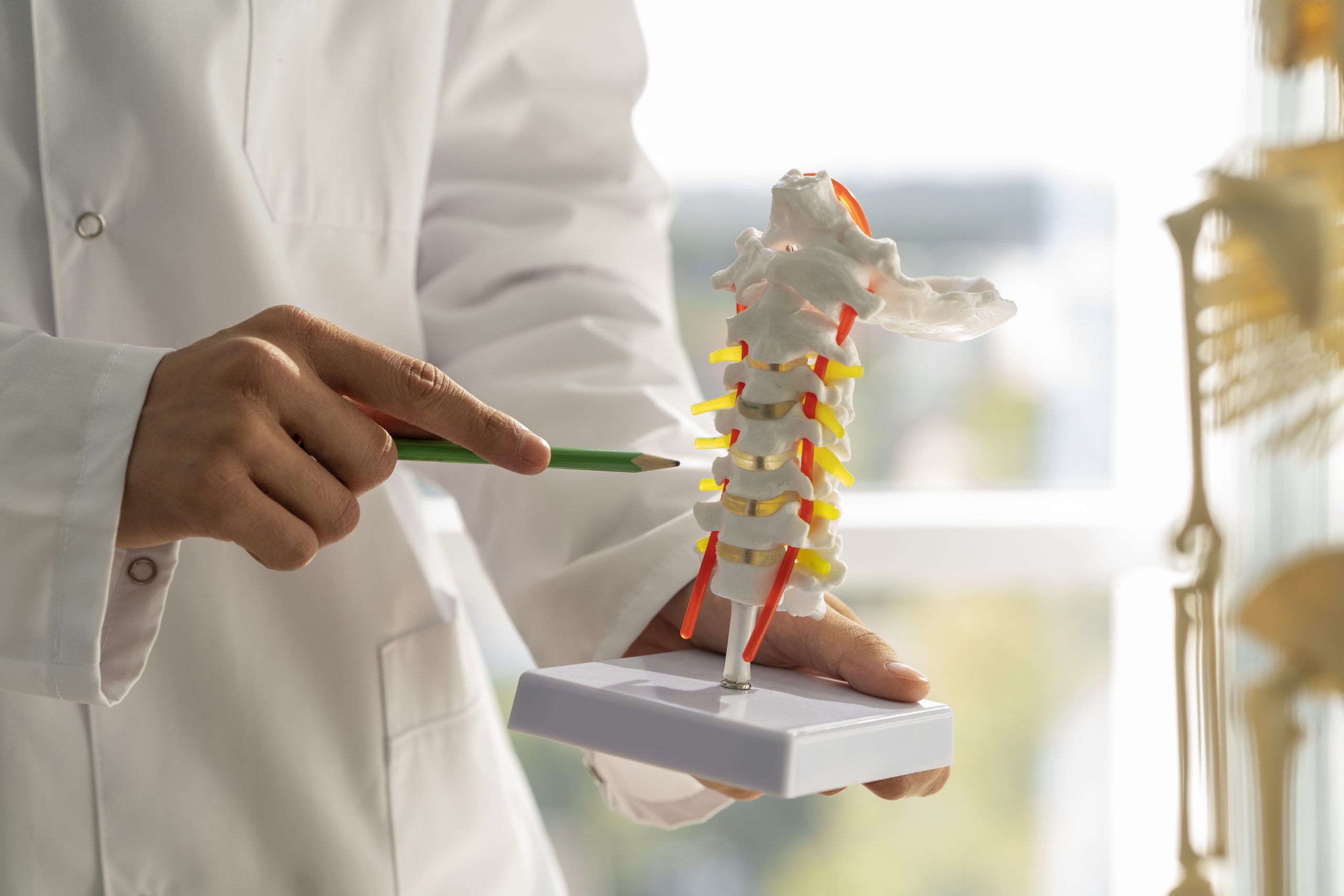
Image by Freepik

It is the leading cause of disability in the world and the third most expensive health issue, but there is still no treatment for lower back pain that goes beyond alleviating symptoms, with all of the drawbacks that pain medication and surgical treatments imply.
Degeneration of the intervertebral disc—the cushion of cartilage between the vertebrae—is a common cause of lower back discomfort and is caused by aging, structural flaws, and injury.
There has been no significant progress in efforts to reverse intervertebral disc degeneration or engineer replacement tissue, but biomedical engineers at the University of Technology Sydney (UTS) have unveiled an intervertebral disc-on-a-chip, a “precision engineered toolbox for low back pain studies.”
“In a situation where no solution to root causes has been forthcoming and 60 percent of surgery for back issues has to be revised, researchers have long needed a platform to accurately simulate both healthy and diseased intervertebral discs,” said Chancellor’s Research Fellow Dr. Javad Tavakoli.
We are the first in the world to develop a physiologically and clinically relevant in vitro model to provide an accurate, controlled environment for lower back pain research,” said Dr. Tavakoli, who with UTS Professor of Biomedical Engineering Joanne Tipper has developed the disc-on-a-chip, in collaboration with clinicians and cell specialists.
“The composition and structure of the human intervertebral disc is remarkably complex,” Professor Tipper said. “At its core is a gel-like nucleus surrounded by concentric layers of collagen fibers forming three regions that together support both the spine’s flexibility and its load-bearing strength.”
“This complexity has been a barrier to developing an in vitro intervertebral disc model that can replicate the complex mechanobiology of native tissue and effectively evaluate experimental methods for treatment or regeneration.”
“By the same token the use of animal models has not been able to provide physiologically and clinically relevant results owing to the different size, mechanics and biology of the human intervertebral disc.”
The disc-on-a-chip is a high-resolution 3D-printed microfluidic device with three channels that allows for exact modeling of distinct regions inside a natural disc and even customisation of the model.
“The disc-on-a-chip can be used to replicate the degeneration of a healthy disc or alternatively be set up as a degenerated disc to test the efficacy of new pharmaceuticals or cell therapy,” Dr. Tavakoli said.
“Our chip enables performing cost-and time-effective lab experiments with the potential to enhance the physiological relevance of experimental data leading to successful clinical outcomes. It also offers the opportunity to reduce the need for animal use in the lab.”
The discovery has already garnered attention, earning two awards: the AO Spine 2022 Discovery and Innovation Award and the Australian and New Zealand Orthopaedic Research Society’s 2022 David Findlay Early Career Research Award.
The construction of the intervertebral disc-on-a-chip is detailed in a recent publication published in the journal Trends in Biotechnology titled “Intervertebral disc-on-a-chip: a precision engineered toolbox for low back pain studies.

 Gamma Oscillations Restored in Alzheimer’s Disease Mice
Key takeaways Researchers restored parvalbumin (PV).
 Coffee Consumption Linked to Lower Recurrent VTE Risk
Key points at a glance Study.
 Body Roundness Index Linked to Higher Heart Attack Risk
Key findings at a glance Study.
 Maternal Diet Fails to Reduce Infant Egg and Peanut Allergy
Key Points A large Australian randomized.
 Visual Impairment Linked to Higher Dementia Risk
Key findings at a glance A.
 Long-Acting HIV Treatment May Help Drug-Resistant Cases
Key Takeaways A UCSF study found.
 Night Shift Work Alters Key Circadian Gene Expression
A recent study published in Frontiers.
 Tirzepatide Weight Loss: Fat Mass and Muscle Findings
Key points Tirzepatide was associated with.
 Coffee and Gut Microbiome: Brewing and Metabolic Effects
Key Points Coffee contains caffeine, chlorogenic.
 Low-Dose Radiation Therapy Shows Promise in Early Knee OA
Key Points Low-dose radiation therapy was.
Leave a Comment