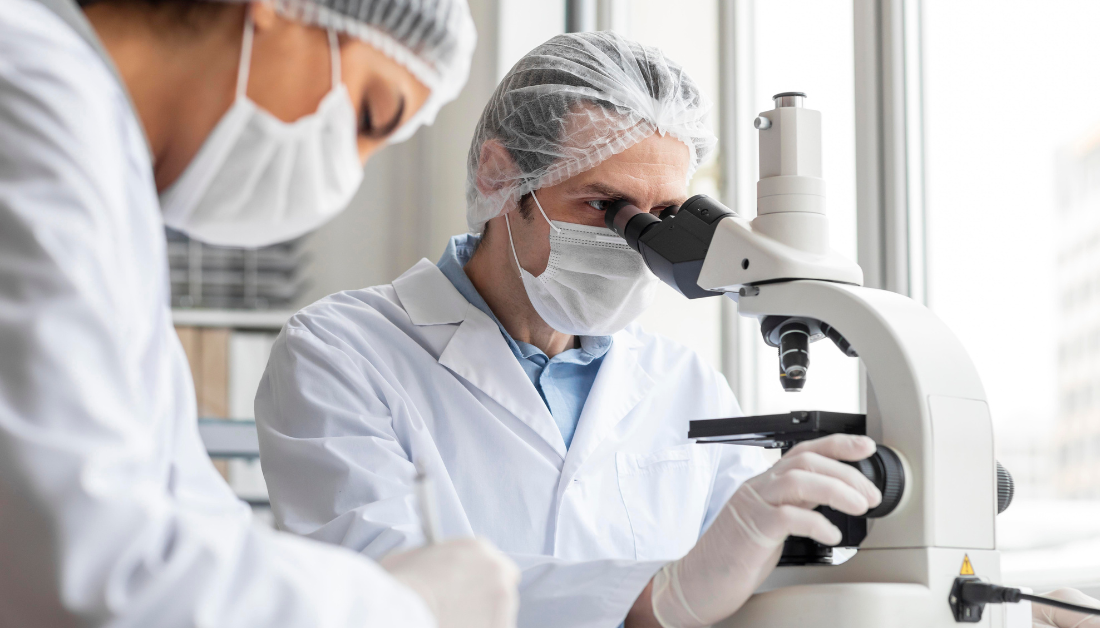
Image by Freepik

Biochemical researchers at Case Western Reserve University have discovered a new role of a critical protein that causes cancer growth, a discovery that they predict could lead to more effective treatments for a variety of malignancies and other ailments.
LSD1 (lysine-specific histone demethylase 1A) is the protein in query, and it acts like a traffic cop inside human cells. It modulates gene expression and affects gene activity throughout embryonic development.
In recent years, scientists have shown that overexpression of LSD1 (creating too many proteins) can contribute to the development of cancer and heart disease.
And, more recently, some researchers have attempted to decrease cancer growth by inhibiting the catalytic activity of LSDI—the chemical reaction that promotes cell growth but also appears to contribute to its overexpression.
However, Kaixiang Cao, an assistant professor of biochemistry, is leading a team that seeks to challenge that assumption: the medical school researchers argue that they can achieve far greater success in inhibiting or preventing cancer growth in stem cells by degrading the entire LSD1 protein rather than simply short-circuiting the chemical reaction that leads to its overexpression.
“Our findings really challenge the current paradigm,” Cao said.
“We need a really precise and effective way of targeting these proteins, and our research shows that stopping that catalysis might be effective (at stopping the overexpression) 15% of the time, while our approach is closer to 80%,” Cao said. “So, if we can develop a degrader of LSD1, we can help the patient go through less therapy—even if we cannot completely cure cancer.”
Cao said he and his team were surprised LSD1 functions mainly in a catalytic-independent manner, but now that they’ve provided to the research community a “theoretical foundation that this is going to be a more effective way to treat these diseases,” they’ll begin to test further, first in cancerous tissues, then animal models and eventually human trials.
“This is the future—you add the degrader, and it will kill the protein completely,” he said. “The technique is already there because it has been done to other proteins by other researchers—but not yet to LSD1.”
For more information:
Demethylase-independent roles of LSD1 in regulating enhancers and cell fate transition, Nature Communications

 Coffee Consumption Linked to Lower Recurrent VTE Risk
Key points at a glance Study.
 Body Roundness Index Linked to Higher Heart Attack Risk
Key findings at a glance Study.
 Maternal Diet Fails to Reduce Infant Egg and Peanut Allergy
Key Points A large Australian randomized.
 Visual Impairment Linked to Higher Dementia Risk
Key findings at a glance A.
 Long-Acting HIV Treatment May Help Drug-Resistant Cases
Key Takeaways A UCSF study found.
 Night Shift Work Alters Key Circadian Gene Expression
A recent study published in Frontiers.
 Tirzepatide Weight Loss: Fat Mass and Muscle Findings
Key points Tirzepatide was associated with.
 Coffee and Gut Microbiome: Brewing and Metabolic Effects
Key Points Coffee contains caffeine, chlorogenic.
 Low-Dose Radiation Therapy Shows Promise in Early Knee OA
Key Points Low-dose radiation therapy was.
 Oral Hormone Replacement Therapy Raises Blood Clot Risk
Key Points Oral hormone replacement therapy.
Leave a Comment