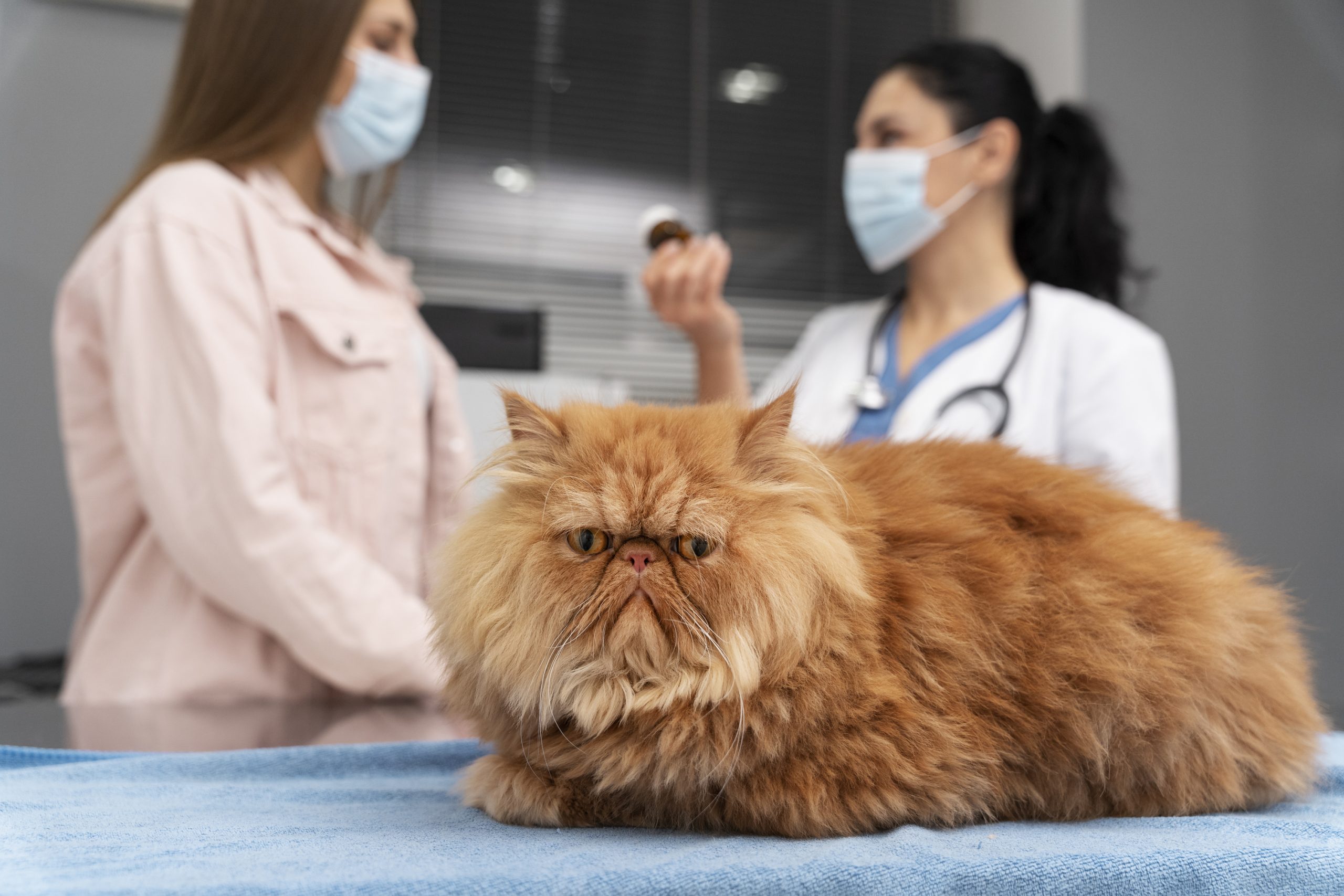
Image by Freepik

According to this research, cats can play a role in the spread of SARS-CoV-2, and their contaminated environment (pens in this study) can be contagious. The findings were published in Microbiology Spectrum. “In practice, after the introduction of SARS-CoV-2 in our household, we should see our cat as part of the family regarding Covid-19 transmission,” said study co-author Wim van der Poel DVM, Ph.D., Professor of Emerging and Zoonotic Viruses, Wageningen University and Research, in the Netherlands.
Dr. van der Poel and colleagues undertook the study to acquire a better understanding of the risk of COVID-19 infection in cats infected with SARS-CoV-2. In the study, 16 cats were either directly exposed to SARS-CoV-2 virus taken from a naturally infected human patient, indirectly exposed from a directly exposed cat, or indirectly exposed from a pen containing an infected cat. Throughout the trial, all cats were sampled on a regular basis. SARS-CoV-2 was detected in nasal, oropharyngeal, and blood samples, as well as environmental samples. SARS-CoV-2 antibody development was also examined in blood samples.
The cats were sampled throughout a three-week period, beginning on the day of direct viral introduction. During this time, nasal and oropharyngeal samples were collected three times. During this time, oral and rectal samples were collected 15 times. The transmission of SARS-CoV-2 between cats was studied using both direct and indirect contact.
Cats are susceptible to SARS-CoV-2, and infected cats can transfer the virus to other cats and into their surroundings, according to the study. They also discovered that the contaminated surroundings can be infectious, but that the infectiousness fades quickly.
“COVID-19 transmission between cats is efficient and can be sustained,” said Dr. van der Poel. “Infections of cats via exposure to a SARS-CoV-2-contaminated environment cannot be discounted if cats are exposed shortly after contamination.”
The average length of infectiousness was around one-third of a day. The time that the virus was discovered in excreta (oral/nasal fluid or feces) was used to calculate the duration of infectiousness.
“We did not expose humans to the infectious cats. Our animal handlers were always fully protected,” said Dr. van der Poel. “We must assume that cat owners can be infected by SARS-CoV-2 infected cats since these cats excrete infectious virus.”
The researchers said they will continue to study SARS-CoV-2 susceptibility in different animal species and focus on virus transmission risks.

 Body Roundness Index Linked to Higher Heart Attack Risk
Key findings at a glance Study.
 Maternal Diet Fails to Reduce Infant Egg and Peanut Allergy
Key Points A large Australian randomized.
 Visual Impairment Linked to Higher Dementia Risk
Key findings at a glance A.
 Long-Acting HIV Treatment May Help Drug-Resistant Cases
Key Takeaways A UCSF study found.
 Night Shift Work Alters Key Circadian Gene Expression
A recent study published in Frontiers.
 Tirzepatide Weight Loss: Fat Mass and Muscle Findings
Key points Tirzepatide was associated with.
 Coffee and Gut Microbiome: Brewing and Metabolic Effects
Key Points Coffee contains caffeine, chlorogenic.
 Low-Dose Radiation Therapy Shows Promise in Early Knee OA
Key Points Low-dose radiation therapy was.
 Oral Hormone Replacement Therapy Raises Blood Clot Risk
Key Points Oral hormone replacement therapy.
 GLP-1 Health Information: Quality, Completeness, & Engagement
Key Points A study assessed 128.
Leave a Comment