
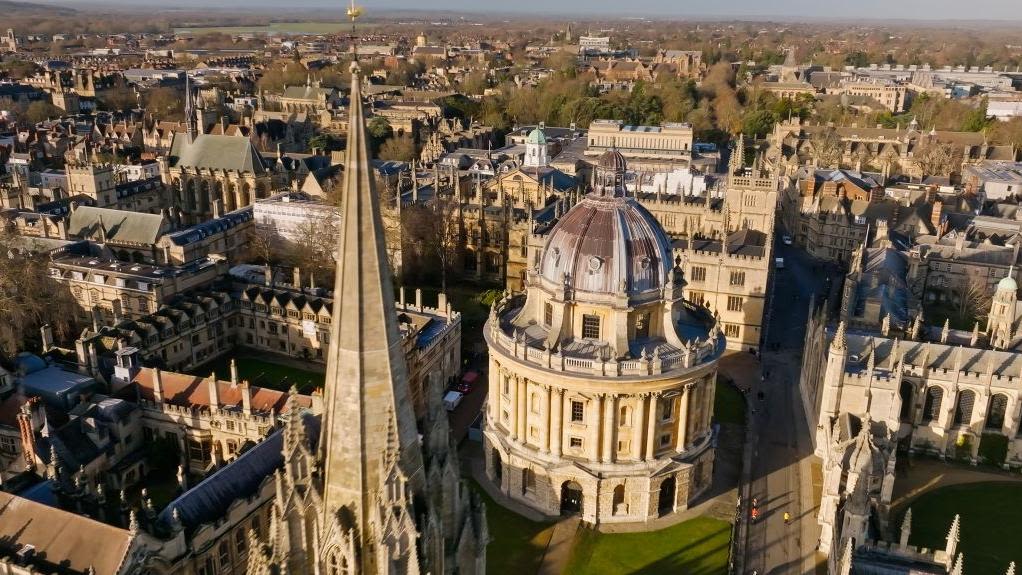
Only 30 prizes are awarded throughout the UK each year, with the 2024 prizes covering the following subject areas: Classics, Earth Sciences, Physics, Politics and International Relations, Psychology, Visual and Performing Arts. Each prize winner receives £100,000 which can be used for any purpose related to the advancement of their research. The University of Oxford was the only institution this year to have four award winners.
Among the awarded researchers, one is from the Medical Sciences Division:
Associate Professor Miriam Klein-Flugge (Department of Experimental Psychology), whose prize recognises her work on experimental psychology, and cognitive and computational neuroscience.
Associate Professor Miriam Klein-Flugge’s research group studies human cognitive processes, with a particular focus on motivation and decision making. She intends to use the Philip Leverhulme Prize funds to continue her research on human decision-making and behavioural flexibility. This will involve developing innovative experiments which combine novel ultrasound brain stimulation techniques alongside more realistic methods of measuring people’s behaviour, such as virtual reality simulations or tracking behaviour over time through smartphone apps. This will enable her to explore the causal relationships between different decision-making processes in real-world situations. Her long-term vision is to conduct fundamental research that provides a platform for translation to psychiatric disease.
She said: ‘This recognition is a testament to the incredible people I’ve had the fortune to work with throughout my career. It also reflects the increasingly interdisciplinary nature of science and psychology, highlighting the importance of collaboration across different fields. I believe it’s this rich exchange of ideas that truly drives innovation.’
Other awards were granted to:
Associate Professor Natalia Ares (Department of Engineering Science), who received the Philip Leverhulme Prize for her work on experimental quantum physics.
Professor Federica Genovese (Department of Politics and International Relations), who was awarded a prize for her work on the international politics and political economy of climate change.
Professor Louise Slater (School of Geography and the Environment), whose prize was for her work on floods, droughts, and climate impacts.
Congratulations to all the awardees!

more recommended stories
 Coffee and Gut Microbiome: Brewing and Metabolic Effects
Key Points Coffee contains caffeine, chlorogenic.
 Low-Dose Radiation Therapy Shows Promise in Early Knee OA
Key Points Low-dose radiation therapy was.
 Oral Hormone Replacement Therapy Raises Blood Clot Risk
Key Points Oral hormone replacement therapy.
 GLP-1 Health Information: Quality, Completeness, & Engagement
Key Points A study assessed 128.
 DNA Damage Response May Drive Biological Aging
Key Points Chronic DNA damage response.
 Maternal Diet Fails to Reduce Infant Egg and Peanut Allergy
Key Points A large Australian randomized.
 Psychedelic-Assisted Psychotherapy: Music in Treatment
Key Takeaways Psychedelic-assisted psychotherapy combines psychedelic.
 Cardiovascular Frailty Links Heart Health and Aging
Key Points Cardiovascular frailty may connect.
 Laser Blended Vision: Simple Test Predicts Success
Key Points A simple phoropter-based test.
 Pink Noise Boosts Brain Waste Clearance During Sleep
Key Points Pink noise delivered during.
Leave a Comment