

Researchers have long questioned why 40% of children with the rare neurodevelopmental condition KBG syndrome had heart problems. A new, ground-breaking study provides answers. There is now strong evidence between the brain and the heart.
Unusual facial development, skeletal deformities, cerebral underdevelopment, and cardiac issues are all possible side effects of KBG syndrome. Mutations in the ANKRD11 gene, which is essential for brain development, produce the condition. However, it was not until recently that researchers at the University of Alberta discovered a connection between the gene and cardiac issues, such as issues with heart valves and interventricular walls.
Leading the study was Anastassia Voronova, an associate professor in the Faculty of Medicine and Dentistry, working with a team from the U of A’s Core Research Facilities with state-of-the-art Vizgen Merscope equipment.
The ANKRD11 gene is essential for proper heart development. Voronova’s team found that mice lacking this gene in their neural crest cells had abnormal heart formation and function. These included enlarged heart ventricles, which hampered the heart’s ability to pump blood, and inefficient blood circulation as a result of the heart’s outflow tract not properly forming. A number of significant signaling pathways that influence cell growth and function were also impacted.
The study by this group builds on their earlier research, which was published earlier this year and demonstrated the significance of ANKRD11 for brain cell development. These mouse results were also observed in KBG disease patients, which resulted in the identification of a distinct clinical phenotype: olfactory deficiency.
In order to provide improved clinical care and therapy for children with KBG syndrome, the next stages involve examining how the heart and brain interact with one another during development. The results of the study and other recent research in this field have already begun to impact clinical procedures: children with KBG syndrome are now advised to have heart exams.
“The problem with rare disorders is that not all patients are evaluated the same way across the world. By showing a clear role of ANKRD11 in heart development, our work paves the way for including heart evaluations in clinical guidelines across the world. This will help to ensure every child diagnosed with KBG syndrome will have their heart evaluated and corrected in a timely manner if needed.”- Anastassia Voronova, Associate Professor in the Faculty of Medicine and Dentistry, University of Alberta

more recommended stories
 Brain-Computer Interface Uses EEG in Unresponsive Patients
Key findings at a glance Mind-controlled.
 Gamma Oscillations Restored in Alzheimer’s Disease Mice
Key takeaways Researchers restored parvalbumin (PV).
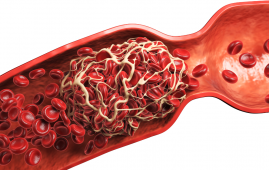 Coffee Consumption Linked to Lower Recurrent VTE Risk
Key points at a glance Study.
 Body Roundness Index Linked to Higher Heart Attack Risk
Key findings at a glance Study.
 Maternal Diet Fails to Reduce Infant Egg and Peanut Allergy
Key Points A large Australian randomized.
 Visual Impairment Linked to Higher Dementia Risk
Key findings at a glance A.
 Long-Acting HIV Treatment May Help Drug-Resistant Cases
Key Takeaways A UCSF study found.
 Night Shift Work Alters Key Circadian Gene Expression
A recent study published in Frontiers.
 Tirzepatide Weight Loss: Fat Mass and Muscle Findings
Key points Tirzepatide was associated with.
 Coffee and Gut Microbiome: Brewing and Metabolic Effects
Key Points Coffee contains caffeine, chlorogenic.
Leave a Comment