
Investing in Teen Mental Health Saves $52 Billion Over Decade

Addressing adolescent mental health is no longer just a moral issue—it’s an economic necessity. A recent study published in PLOS Medicine shows how preventive mental health policies can yield substantial benefits in labor participation, income, and societal well-being while reducing healthcare costs.
Government analyses often treat adolescent mental health policies as costs, neglecting their long-term societal returns. This study bridges that gap, demonstrating that such investments reduce reliance on government programs and enhance economic productivity.
Investing in adolescent mental health is not just ethically sound—it’s financially prudent. By addressing this early, governments can reduce fiscal pressures, enhance productivity, and build a healthier, more resilient society. With $52 billion in potential savings, the case for increased funding has never been clearer.
Register for Effective Management of Psychiatric Care for more insights.
More Information: Counts, N. Z., Kreif, N., Creedon, T. B., et al. (2025). Psychological distress in adolescence and later economic and health outcomes in the United States population: A retrospective and modeling study. PLOS Medicine. doi: https://doi.org/10.1371/journal.pmed.1004506.https://journals.plos.org/plosmedicine/article?id=10.1371/journal.pmed.1004506.

 Gamma Oscillations Restored in Alzheimer’s Disease Mice
Key takeaways Researchers restored parvalbumin (PV).
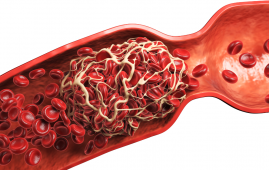 Coffee Consumption Linked to Lower Recurrent VTE Risk
Key points at a glance Study.
 Body Roundness Index Linked to Higher Heart Attack Risk
Key findings at a glance Study.
 Maternal Diet Fails to Reduce Infant Egg and Peanut Allergy
Key Points A large Australian randomized.
 Visual Impairment Linked to Higher Dementia Risk
Key findings at a glance A.
 Long-Acting HIV Treatment May Help Drug-Resistant Cases
Key Takeaways A UCSF study found.
 Night Shift Work Alters Key Circadian Gene Expression
A recent study published in Frontiers.
 Tirzepatide Weight Loss: Fat Mass and Muscle Findings
Key points Tirzepatide was associated with.
 Coffee and Gut Microbiome: Brewing and Metabolic Effects
Key Points Coffee contains caffeine, chlorogenic.
 Low-Dose Radiation Therapy Shows Promise in Early Knee OA
Key Points Low-dose radiation therapy was.
Leave a Comment