
Image by frimufilms on Freepik

According to a study published in JAMA Network Open, large language models (LLMs) like ChatGPT can reply to patient-written ophthalmology inquiries and usually generate suitable responses.
Stanford University’s Isaac A. Bernstein and colleagues compared the quality of ophthalmology advice generated by an LLM chatbot to ophthalmologist-written guidance. The researchers examined deidentified data from an online medical forum where patients’ inquiries were answered by ophthalmologists. A masked panel of eight board-certified ophthalmologists were asked to distinguish between ChatGPT chatbot responses and ophthalmologist responses.
Two hundred user questions and replies were evaluated. The researchers discovered that the average accuracy for distinguishing between artificial intelligence (AI) and human responses was 61.3 percent. Of 800 chatbot-written answers evaluated, 21.0 and 64.6 percent were classified as human-written and AI-written, respectively. When compared to human responses, chatbot responses were more frequently rated as probably or certainly written by AI. The chance of chatbot responses including incorrect or improper material, as well as the likelihood of injury, was equivalent to human responses.
“We intend for this study to catalyze more extensive and nuanced dialogue and joint efforts surrounding the use of LLMs in ophthalmology among various health care stakeholders, including patients, clinicians, researchers, and policy makers,” the authors write. “The primary goal is to prudently leverage these early research findings to shape the responsible implementation of LLMs in the field of ophthalmology.”

 Gamma Oscillations Restored in Alzheimer’s Disease Mice
Key takeaways Researchers restored parvalbumin (PV).
 Long-Acting HIV Treatment May Help Drug-Resistant Cases
Key Takeaways A UCSF study found.
 Coffee and Gut Microbiome: Brewing and Metabolic Effects
Key Points Coffee contains caffeine, chlorogenic.
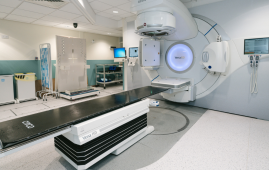 Low-Dose Radiation Therapy Shows Promise in Early Knee OA
Key Points Low-dose radiation therapy was.
 GLP-1 Health Information: Quality, Completeness, & Engagement
Key Points A study assessed 128.
 DNA Damage Response May Drive Biological Aging
Key Points Chronic DNA damage response.
 Psychedelic-Assisted Psychotherapy: Music in Treatment
Key Takeaways Psychedelic-assisted psychotherapy combines psychedelic.
 Cardiovascular Frailty Links Heart Health and Aging
Key Points Cardiovascular frailty may connect.
 Laser Blended Vision: Simple Test Predicts Success
Key Points A simple phoropter-based test.
 Rett Syndrome: Carotid Body Linked to Breathing Dysfunction
Key Points Rett syndrome is associated.
Leave a Comment