
Image by Freepik

A recent study has discovered that the brains of ultramarathoners competing in grueling long-distance events may retain hints about evolutionary past.
Loughborough University researchers revealed that athletes who lose weight during these competitions, which may last days and span hundreds of kilometers, exhibit considerable cognitive function modification to increase foraging abilities.
This may improve your ability to find food and your chances of surviving during times of energetic stress. These changes are thought to be the result of the athletes’ brains remodeling in response to an unfavorable change in their environment.
“Throughout the human evolutionary journey, our ancestors regularly faced food insecurity and energetic stress,” Dr Danny Longman, a Lecturer in Physiology in the School of Sport, Exercise and Health Sciences, noted.
“Here, we worked with ultramarathoners to study how our brains might adapt during conditions of energetic stress. In runners covering distances of 250km (155 miles), we found a significant increase in performance in cognitive tasks linked to foraging ability. This has clear adaptive value, as an improved ability to find food would increase survival chances.”
The research, conducted in partnership with Professors Jay Stock (Western University, Canada) and Jonathan Wells (University College London), focused on a group of ultra-endurance athletes who competed in two 5-day 250km footraces in Jordan and Sri Lanka.

 Gamma Oscillations Restored in Alzheimer’s Disease Mice
Key takeaways Researchers restored parvalbumin (PV).
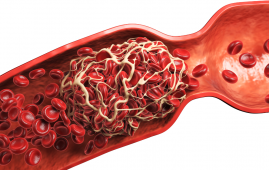 Coffee Consumption Linked to Lower Recurrent VTE Risk
Key points at a glance Study.
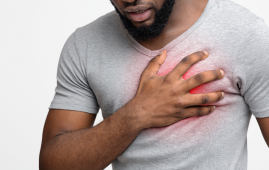 Body Roundness Index Linked to Higher Heart Attack Risk
Key findings at a glance Study.
 Maternal Diet Fails to Reduce Infant Egg and Peanut Allergy
Key Points A large Australian randomized.
 Visual Impairment Linked to Higher Dementia Risk
Key findings at a glance A.
 Long-Acting HIV Treatment May Help Drug-Resistant Cases
Key Takeaways A UCSF study found.
 Night Shift Work Alters Key Circadian Gene Expression
A recent study published in Frontiers.
 Tirzepatide Weight Loss: Fat Mass and Muscle Findings
Key points Tirzepatide was associated with.
 Coffee and Gut Microbiome: Brewing and Metabolic Effects
Key Points Coffee contains caffeine, chlorogenic.
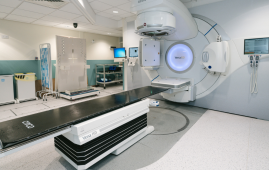 Low-Dose Radiation Therapy Shows Promise in Early Knee OA
Key Points Low-dose radiation therapy was.
Leave a Comment