Image by Freepik

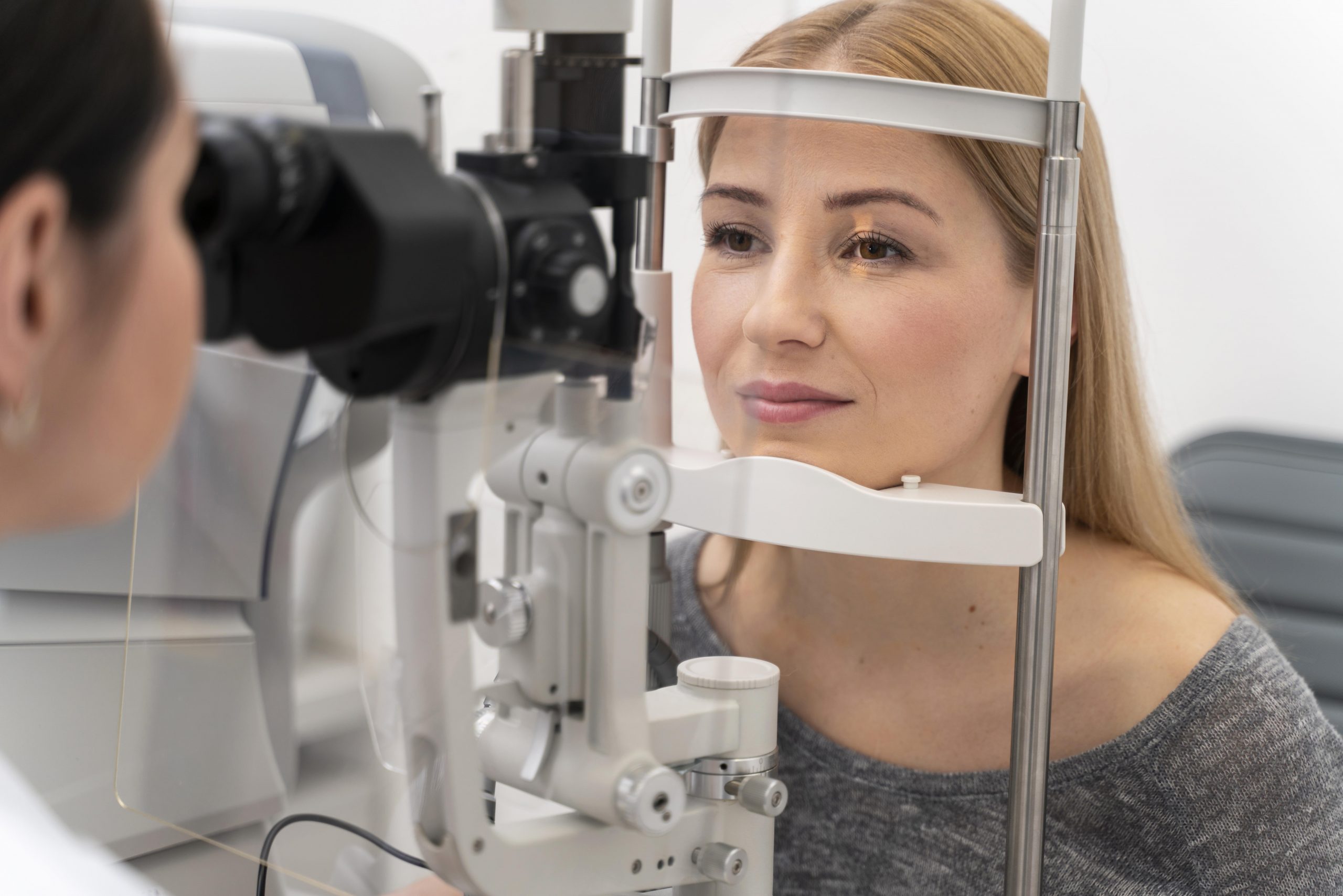
An injectable biomaterial activated by low-energy blue light pulses offers enormous promise for on-the-spot repair of the domed outer layer of the eye, according to a team of University of Ottawa researchers and partners.
The multidisciplinary researchers’ intriguing results, guided by biomimetic design—innovation inspired by nature—show that a unique light-activated material may be utilized to successfully reshape and thicken injured corneal tissue, facilitating healing and recovery.
This method has the potential to revolutionize corneal repair; tens of millions of individuals worldwide suffer from corneal disorders, yet only a small percentage are candidates for corneal transplantation. Transplant surgeries are the current gold standard for diseases that cause thinning corneas, such as keratoconus, a poorly known eye condition that causes vision loss in many people.
“Our technology is a leap in the field of corneal repair. We are confident this could become a practical solution to treat patients living with diseases that negatively impact corneal shape and geometry, including keratoconus,” says Dr. Emilio Alarcon, an Associate Professor at the uOttawa Faculty of Medicine and researcher at the BioEngineering and Therapeutic Solutions (BEaTS) group at the University of Ottawa Heart Institute.
The cornea is the eye’s protective, dome-like surface located in front of the iris and pupil. It directs and controls light beams into the eye, allowing for good vision. It is generally clear. However, corneal scarring occurs as a result of damage or infection.
The work of the interdisciplinary team was published in Advanced Functional Materials.
The team’s biomaterials are made up of short peptides and naturally occurring polymers called glycosaminoglycans. The substance is injected into ocular tissue as a viscous liquid after a tiny pocket is surgically formed. Within minutes of being pulsed with low-energy blue light, the injected peptide-based hydrogel hardens and develops into a tissue-like 3D structure. According to Dr. Alarcon, this then transforms into a translucent substance with qualities identical to those recorded in pig corneas.
In vivo tests on a rat model revealed that the light-activated hydrogel may thicken corneas without causing any negative effects. The research team, which used a significantly lower blue light dosage than in previous experiments, also successfully tested the device in an ex vivo pig cornea model. Prior to clinical human trials, massive animal models will need to be tested.
“Our material was engineered to harvest the blue light energy to trigger the on-the-spot assembling of the material into a cornea-like structure. Our cumulative data indicates that the materials are non-toxic and remain for several weeks in an animal model. We anticipate our material will remain stable and be non-toxic in human corneas,” says Dr. Alarcon, whose uOttawa lab focuses on developing new materials with regenerative capabilities for tissue of the heart, skin, and cornea.
It took seven years for the rigorous research to be published.
“We had to engineer each part of the components involved in the technology, from the light source to the molecules used in the study. The technology was developed to be clinically translatable, meaning all components must be designed to be ultimately manufacturable following strict standards for sterility,” Dr. Alarcon says.
The research findings are also the subject of a patent application, which is currently being licensed.
Dr. Alarcon was the study’s principal author and oversaw the material design component of the research, while Dr. Marcelo Muoz and Aidan MacAdam of the University of Ottawa were instrumental in developing the unique technology. Dr. May Griffith, an expert in cornea regeneration, and Dr. Isabelle Brunette, an ophthalmology and corneal transplant expert, were among the interdisciplinary collaborators.

 Gamma Oscillations Restored in Alzheimer’s Disease Mice
Key takeaways Researchers restored parvalbumin (PV).
 Coffee Consumption Linked to Lower Recurrent VTE Risk
Key points at a glance Study.
 Body Roundness Index Linked to Higher Heart Attack Risk
Key findings at a glance Study.
 Maternal Diet Fails to Reduce Infant Egg and Peanut Allergy
Key Points A large Australian randomized.
 Visual Impairment Linked to Higher Dementia Risk
Key findings at a glance A.
 Long-Acting HIV Treatment May Help Drug-Resistant Cases
Key Takeaways A UCSF study found.
 Night Shift Work Alters Key Circadian Gene Expression
A recent study published in Frontiers.
 Tirzepatide Weight Loss: Fat Mass and Muscle Findings
Key points Tirzepatide was associated with.
 Coffee and Gut Microbiome: Brewing and Metabolic Effects
Key Points Coffee contains caffeine, chlorogenic.
 Low-Dose Radiation Therapy Shows Promise in Early Knee OA
Key Points Low-dose radiation therapy was.
Leave a Comment