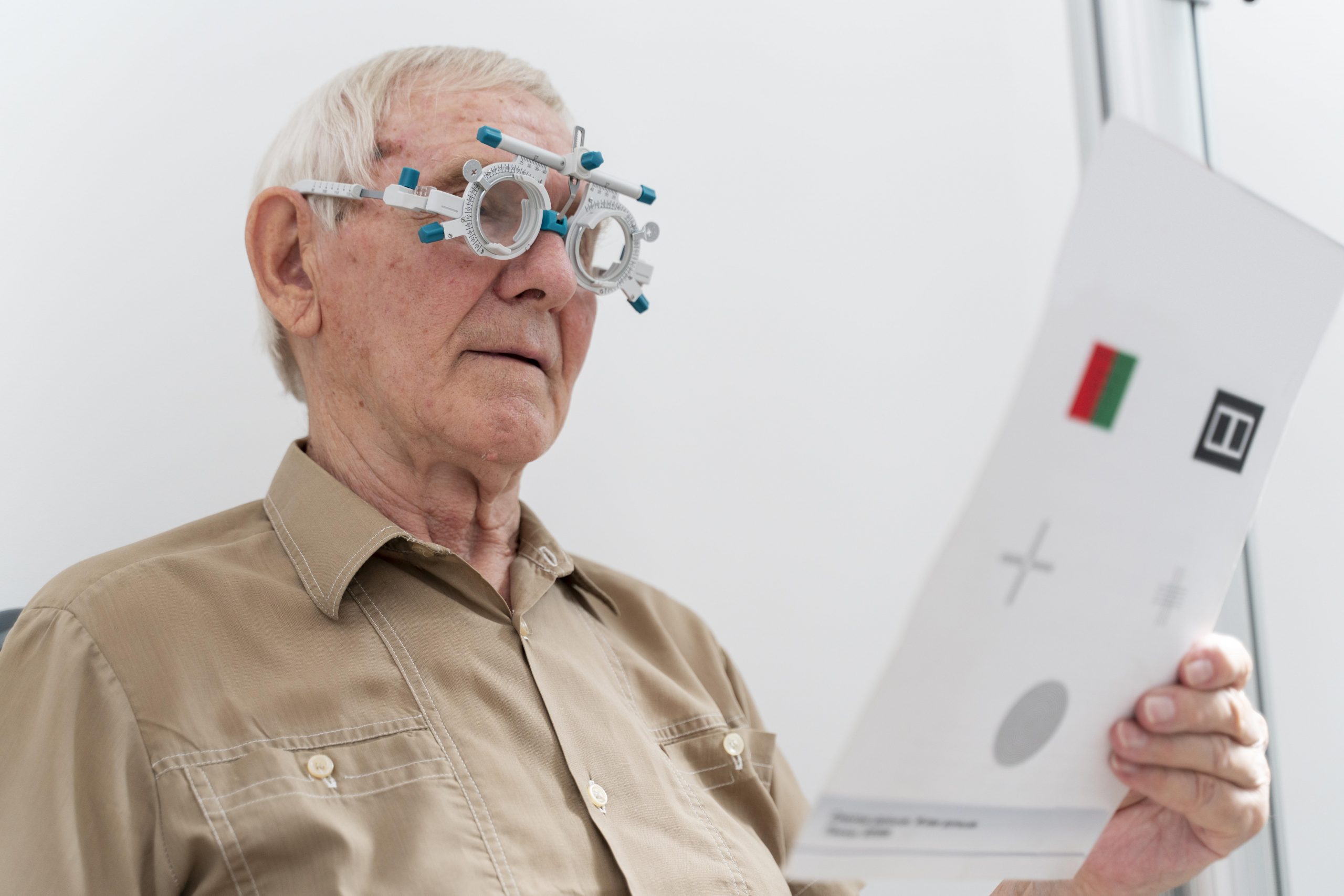
Image by Freepik

According to a new study, sight loss in persons over the age of 71 may be connected to dementia. The findings were published in JAMA Ophthalmology on July 13th.
The researchers from the University of Michigan in the United States examined data from over 3,000 US people over the age of 71 who were part of a larger study called the National Health and Aging Trends Study (NHATS). The participants’ eyesight was evaluated in this larger study, and their scores for short-distance vision, long-distance vision, and their ability to recognize objects against varied backgrounds were recorded. The NHATS study data also revealed whether the subjects had dementia.
They discovered that persons with vision loss were more likely to have dementia than people with normal vision.
Up to 40% of dementia cases may be influenced by 12 risk factors, such as smoking, high blood pressure, and hearing loss, which we may be able to prevent or control. Sight loss is not now one of the 12 major risk factors for dementia, but new research published today reveals a relationship between sight loss and dementia.
Dr. Susan Mitchell, Head of Policy at Alzheimer’s Research UK, said, “This is a crucial time for dementia research, as evidence builds about how factors such as sight loss are linked to dementia. Studies like this are crucial for identifying possible new dementia risk factors and ultimately working out how to potentially prevent some cases of dementia from happening in the first place.”
“This new study provides important new evidence linking sight loss to dementia and ties in with previous studies. But this isn’t definitive, and it will be important for future studies to find out precisely what is causing this apparent link, as this will determine what, if any, potential there is for prevention.”
“There are several possibilities—for example, diabetes is a key risk factor for dementia, and this condition can also cause vision problems. Or it might be that there are shared pathways in the brain that cause both vision loss and a decline in memory and thinking abilities.
“Some cases of sight loss are preventable, and others can be treated successfully—if this link is confirmed, this could mean people who take steps to minimize sight problems as they get older could also help reduce their risk of conditions like dementia.”

 Brain-Computer Interface Uses EEG in Unresponsive Patients
Key findings at a glance Mind-controlled.
 Gamma Oscillations Restored in Alzheimer’s Disease Mice
Key takeaways Researchers restored parvalbumin (PV).
 Coffee Consumption Linked to Lower Recurrent VTE Risk
Key points at a glance Study.
 Body Roundness Index Linked to Higher Heart Attack Risk
Key findings at a glance Study.
 Maternal Diet Fails to Reduce Infant Egg and Peanut Allergy
Key Points A large Australian randomized.
 Visual Impairment Linked to Higher Dementia Risk
Key findings at a glance A.
 Long-Acting HIV Treatment May Help Drug-Resistant Cases
Key Takeaways A UCSF study found.
 Night Shift Work Alters Key Circadian Gene Expression
A recent study published in Frontiers.
 Tirzepatide Weight Loss: Fat Mass and Muscle Findings
Key points Tirzepatide was associated with.
 Coffee and Gut Microbiome: Brewing and Metabolic Effects
Key Points Coffee contains caffeine, chlorogenic.
Leave a Comment