Image by Freepik

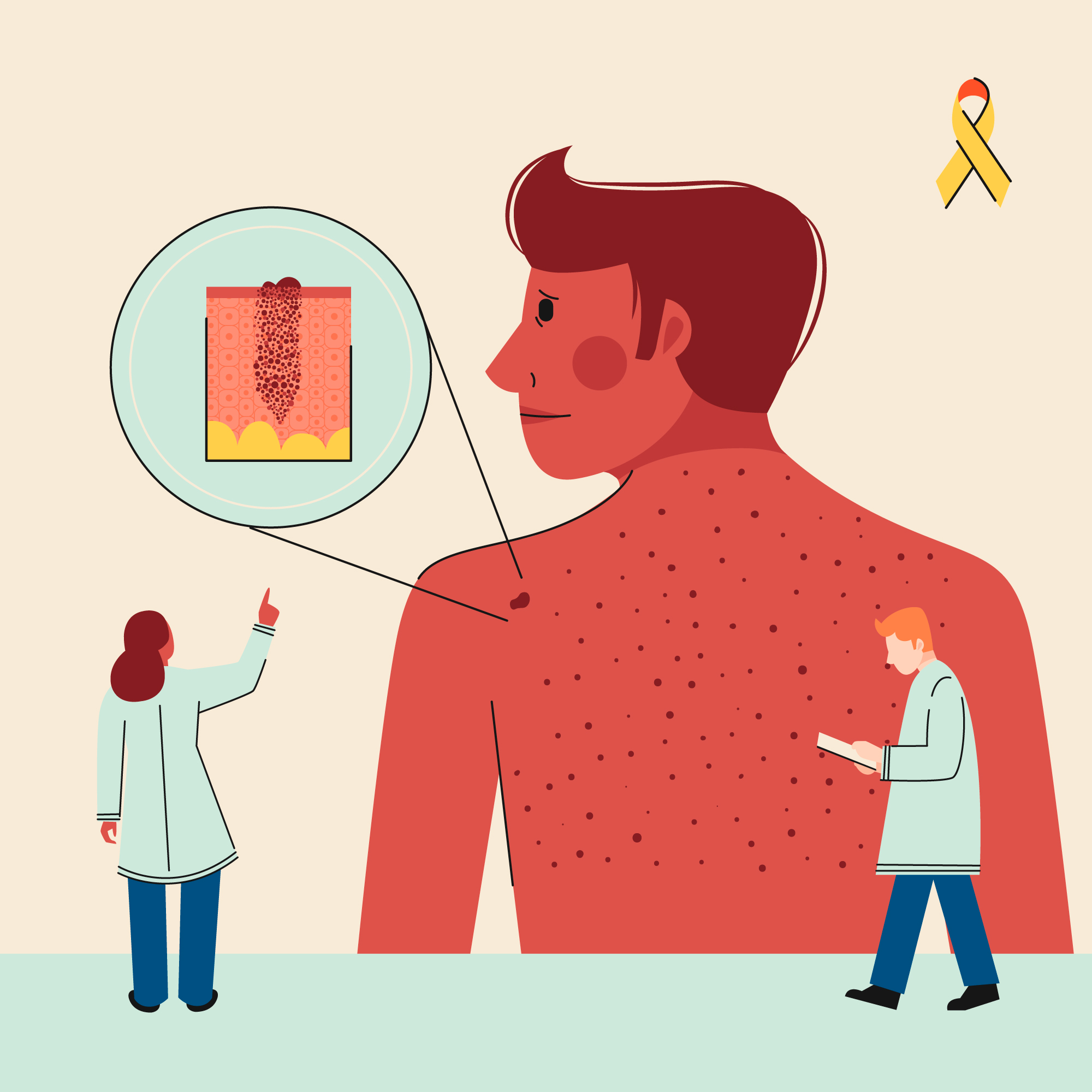
Sanford Burnham Prebys study has helped explain how melanoma evades the immune system and may guide the development of future medicines for the disease. The researchers discovered that a protein known to be active in immune cells is also active inside melanoma cells, promoting tumor growth. The findings, which were published in the journal Science Advances, indicate that targeting this protein with novel medications could provide a potent double strike to melanoma tumors.
“The immune system’s control of a tumor is influenced by both internal factors within tumor cells, as well as factors from the tumor’s surroundings,” says first author Hyungsoo Kim, Ph.D., a research assistant professor at Sanford Burnham Prebys in the lab of senior author Ze’ev Ronai, Ph.D. “We found that the protein we’re studying is involved in both, which makes it an ideal target for new cancer therapies.”
The invention of immunotherapy, a strategy that helps increase the immune system’s ability to fight cancer on its own without the need of hazardous chemotherapy medications, was one of the most significant discoveries in cancer therapy in the previous century.
Immunotherapy is now the first-line therapy for several cancers,” adds Kim, “but its success is limited because many cancers either do not respond to it or become resistant over time.” “Improving the efficacy of immunotherapy remains an important goal.
The research team studied data from patient tumors to identify genes that may correlate with patients’ responsiveness to immunotherapy in order to develop approaches to boost immunotherapy in melanoma. This led to the discovery of NR2F6, a protein that helps cancers avoid the immune system and was present not only in tumor cells but also in noncancerous cells surrounding them.
“Often we find that a protein has the opposite effect outside of tumors compared to what it does within a tumor, which is less effective for therapy,” says Kim. “In the case of NR2F6, we found that it elicits the same change in the tumor and in its surrounding tissues, pointing to a synergistic effect. This means that treatments that block this protein’s activity could be twice as effective.”
To validate their findings in mice, the researchers genetically deleted the NR2F6 protein from both melanoma tumors and their surroundings. When this impact happens in either the tumor or its microenvironment alone, it inhibits melanoma growth more strongly. The reduction of NR2F6 in both tumors and their microenvironment improved the cancer’s response to immunotherapy.
“This tells us that NR2F6 helps melanoma evade the immune system, and without it, the immune system can more readily suppress tumor growth,” adds Kim.
The team is collaborating with the Institute’s Conrad Prebys Center for Chemical Genomics to explore new medications that can target NR2F6 in order to enhance their discoveries.
“Discovering drugs that can target this protein are expected to offer a new way to treat melanomas, and possibly other tumors, that would otherwise resist immunotherapy,” says Kim.

 Brain-Computer Interface Uses EEG in Unresponsive Patients
Key findings at a glance Mind-controlled.
 Gamma Oscillations Restored in Alzheimer’s Disease Mice
Key takeaways Researchers restored parvalbumin (PV).
 Coffee Consumption Linked to Lower Recurrent VTE Risk
Key points at a glance Study.
 Body Roundness Index Linked to Higher Heart Attack Risk
Key findings at a glance Study.
 Maternal Diet Fails to Reduce Infant Egg and Peanut Allergy
Key Points A large Australian randomized.
 Visual Impairment Linked to Higher Dementia Risk
Key findings at a glance A.
 Long-Acting HIV Treatment May Help Drug-Resistant Cases
Key Takeaways A UCSF study found.
 Night Shift Work Alters Key Circadian Gene Expression
A recent study published in Frontiers.
 Tirzepatide Weight Loss: Fat Mass and Muscle Findings
Key points Tirzepatide was associated with.
 Coffee and Gut Microbiome: Brewing and Metabolic Effects
Key Points Coffee contains caffeine, chlorogenic.
Leave a Comment