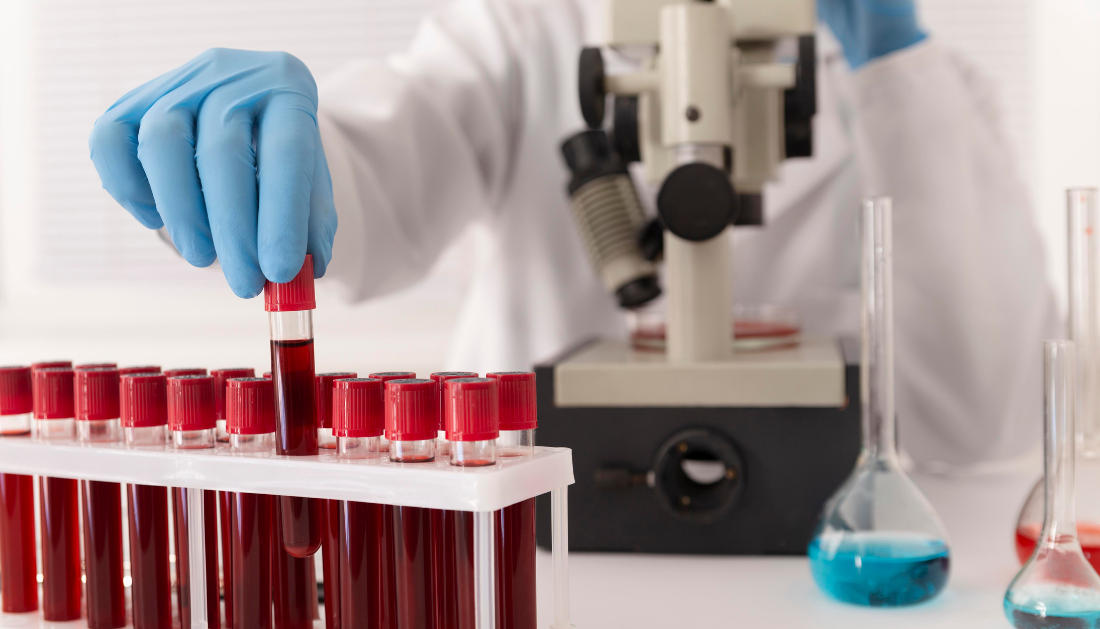
Image by Freepik

The Centre for Trauma Sciences, situated at Queen Mary University of London, aims to reduce the number of deaths caused by excessive bleeding following significant trauma. The CRYOSTAT-2 experiment, which is supported by the National Institute of Health and Care Research (NIHR) and Barts Charity, is the largest ever done in severely bleeding trauma patients. The trial, a collaboration between the Centre for Trauma Sciences and the NHS Blood and Transplant Clinical Trials Unit, looked into whether giving bleeding major trauma patients additional blood-clotting factors right away, rather than later in the process (as is currently done), would improve survival rates.
After discovering that trauma patients suffer a severe clotting condition, the Centre discovered that a key component of this was a loss of fibrinogen, which is the core protein necessary to form blood clots. When fibrinogen levels are found to be low, trauma patients are given fibrinogen concentrates to assist restore their levels and support coagulation.
Researchers discovered that they could promptly give all bleeding trauma patients a significant dosage of fibrinogen (as the blood component cryoprecipitate) as soon as they arrived in the emergency department in the previous CRYOSTAT study. The results in terms of the ability to fix fibrinogen levels were promising, thus the team created CRYOSTAT-2.
The CRYOSTAT-2 trial included almost 1,600 patients with life-threatening injuries from all 26 major trauma centers in the United Kingdom and one trauma center in the United States. All patients got standard, best-practice treatments for serious bleeding, with half also receiving additional doses of cryoprecipitate as soon as they arrived.
To the researchers’ astonishment, the findings (published today in JAMA) revealed that receiving additional doses of cryoprecipitate did not increase patients’ overall survival chances. Looking deeper, some patients looked to do better, while others appeared to fare worse.
Karim Brohi, Professor of Trauma Sciences at Queen Mary University of London, CRYOSTAT-2 Co-Chief Investigator, and Consultant Surgeon at Barts NHS Trust and the Royal London Hospital, stated:
“While the results surprised us, they fit with our current thinking that one-size-fits-all does not work for trauma patients.” To allow more precision approaches to treating severe bleeding and irregular clotting, we need to bring early diagnostic testing closer to the patient in the emergency room (or even sooner at the scene of injury). In other words, provide fibrinogen to those who need it right away, but not to those who don’t.”
Professor Simon Stanworth, Co-Chief Investigator for CRYOSTAT-2 and Consultant Haematologist for NHS Blood and Transplant at the John Radcliffe Hospital in Oxford, stated:
“This large national trial answered an important question about whether patients with major trauma and major bleeding benefited from receiving a higher dose of a blood component called cryoprecipitate as soon as possible after injury and arrival in the hospital.” Cryoprecipitate contains fibrinogen, a blood protein that aids in the formation of clots. The trial, which was carried out across the UK as a collaboration between trauma teams, hospital blood bank laboratories, and the NHS Blood and Transplant Clinical Trials Unit, found no improvement. We need to figure out why this is happening and whether there are some people who could benefit from cryoprecipitate.”

 Brain-Computer Interface Uses EEG in Unresponsive Patients
Key findings at a glance Mind-controlled.
 Gamma Oscillations Restored in Alzheimer’s Disease Mice
Key takeaways Researchers restored parvalbumin (PV).
 Coffee Consumption Linked to Lower Recurrent VTE Risk
Key points at a glance Study.
 Body Roundness Index Linked to Higher Heart Attack Risk
Key findings at a glance Study.
 Maternal Diet Fails to Reduce Infant Egg and Peanut Allergy
Key Points A large Australian randomized.
 Visual Impairment Linked to Higher Dementia Risk
Key findings at a glance A.
 Long-Acting HIV Treatment May Help Drug-Resistant Cases
Key Takeaways A UCSF study found.
 Night Shift Work Alters Key Circadian Gene Expression
A recent study published in Frontiers.
 Tirzepatide Weight Loss: Fat Mass and Muscle Findings
Key points Tirzepatide was associated with.
 Coffee and Gut Microbiome: Brewing and Metabolic Effects
Key Points Coffee contains caffeine, chlorogenic.
Leave a Comment