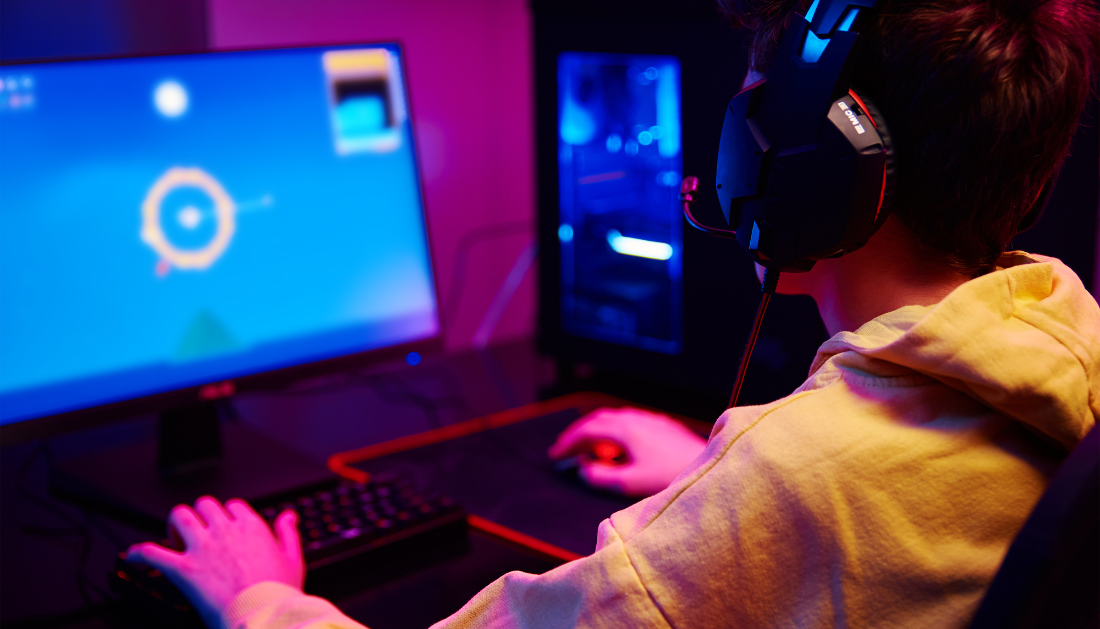
Action Video Gaming and Brain Health Connection

A recent study published in Brain Science examined whether long-term engagement with action video games is associated with changes in brain structure, particularly in regions related to attention and visuospatial processing.
Using advanced MRI techniques, researchers compared 27 habitual gamers, playing at least five hours weekly for a year, with 19 non-gamers. They discovered that gamers had greater cortical thickness in right parietal brain regions and stronger occipito-parietal white matter connectivity, which are linked to visual processing, decision-making, and sensorimotor coordination.
However, researchers emphasized that the findings do not confirm that gaming causes these changes, only that a strong association exists.
Participants underwent high-resolution MRI scans and diffusion imaging to assess both gray matter and white matter pathways.
Cortical Thickness: Gamers showed increased thickness in the inferior and superior parietal lobules, precuneus, and supramarginal gyrus, with near-significant effects in the postcentral gyrus.
White Matter Connectivity: Higher quantitative anisotropy (QA) values were observed in dorsal-stream pathways, indicating stronger connectivity between occipital and parietal regions.
These structural differences align with the demands of action gaming, which requires rapid spatial awareness, precise motor control, and quick decision-making.
The study suggests that frequent gaming may be linked to enhanced visuospatial and attentional networks, offering potential cognitive benefits. Such findings could have applications in cognitive training programs for individuals with attention deficits or visuospatial impairments.
However, the researchers highlighted key limitations:
Further longitudinal research is needed to determine whether gaming actively strengthens these pathways or if individuals with naturally stronger visuospatial networks are more drawn to action gaming.
The results indicate a strong link between action video games and brain structure related to attention and visuospatial skills. While promising, these findings should be interpreted cautiously. Future studies may reveal whether gaming could serve as a non-invasive tool for cognitive training in healthcare settings.
Mukherjee, C., Cahill, K., Dhamala, M. (2025). Action Video Gaming Enhances Brain Structure: Increased Cortical Thickness and White Matter Integrity in Occipital and Parietal Regions. Brain Science. DOI: 10.3390/brainsci15090956. https://www.mdpi.com/2076-3425/15/9/956

 Visual Impairment Linked to Higher Dementia Risk
Key findings at a glance A.
 Long-Acting HIV Treatment May Help Drug-Resistant Cases
Key Takeaways A UCSF study found.
 Epilepsy Drugs May Interact With Hormonal Contraceptives
Key points: Nearly one-third of people.
 Night Shift Work Alters Key Circadian Gene Expression
A recent study published in Frontiers.
 Tirzepatide Weight Loss: Fat Mass and Muscle Findings
Key points Tirzepatide was associated with.
 Coffee and Gut Microbiome: Brewing and Metabolic Effects
Key Points Coffee contains caffeine, chlorogenic.
 Low-Dose Radiation Therapy Shows Promise in Early Knee OA
Key Points Low-dose radiation therapy was.
 Oral Hormone Replacement Therapy Raises Blood Clot Risk
Key Points Oral hormone replacement therapy.
 GLP-1 Health Information: Quality, Completeness, & Engagement
Key Points A study assessed 128.
 DNA Damage Response May Drive Biological Aging
Key Points Chronic DNA damage response.
Leave a Comment